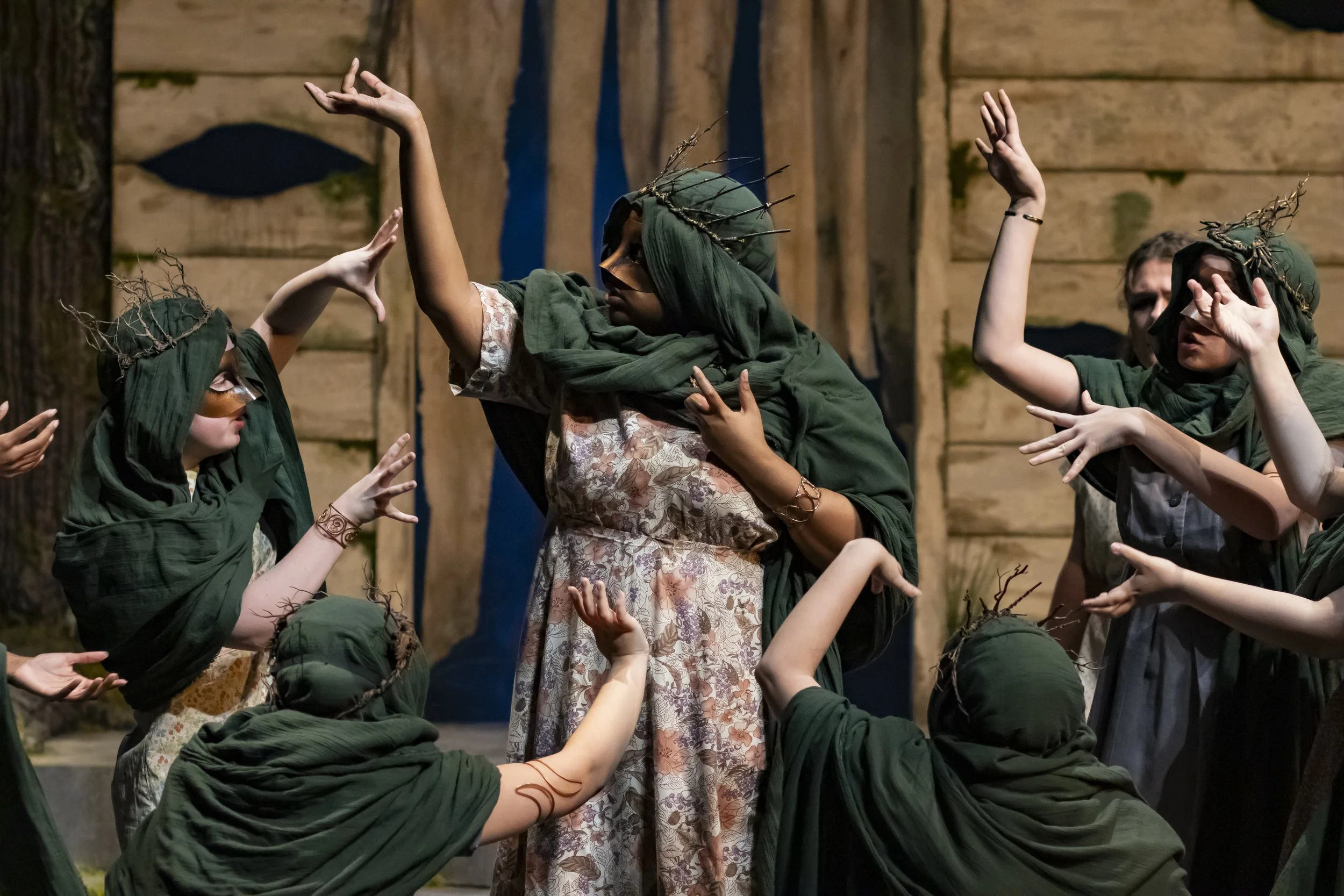
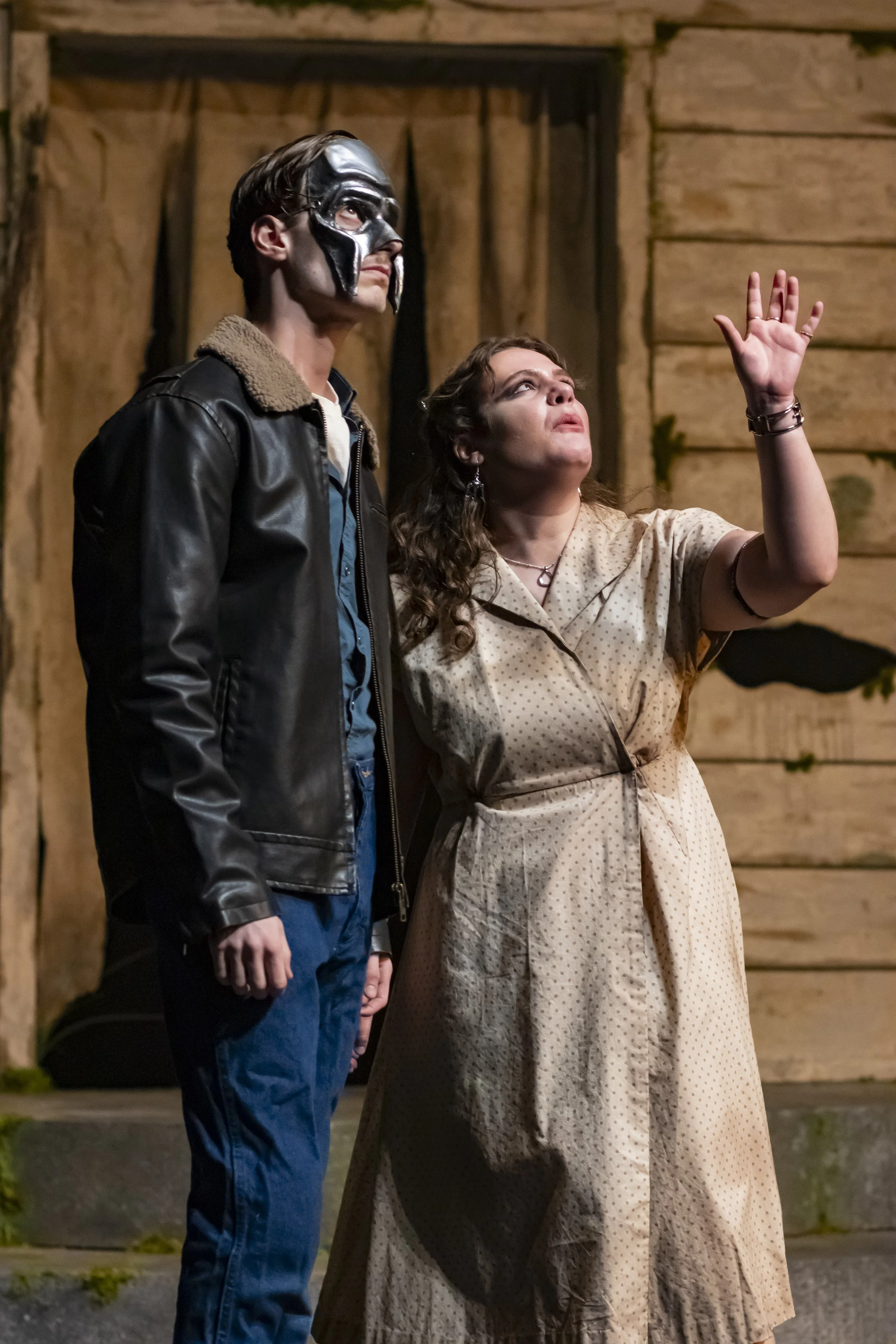
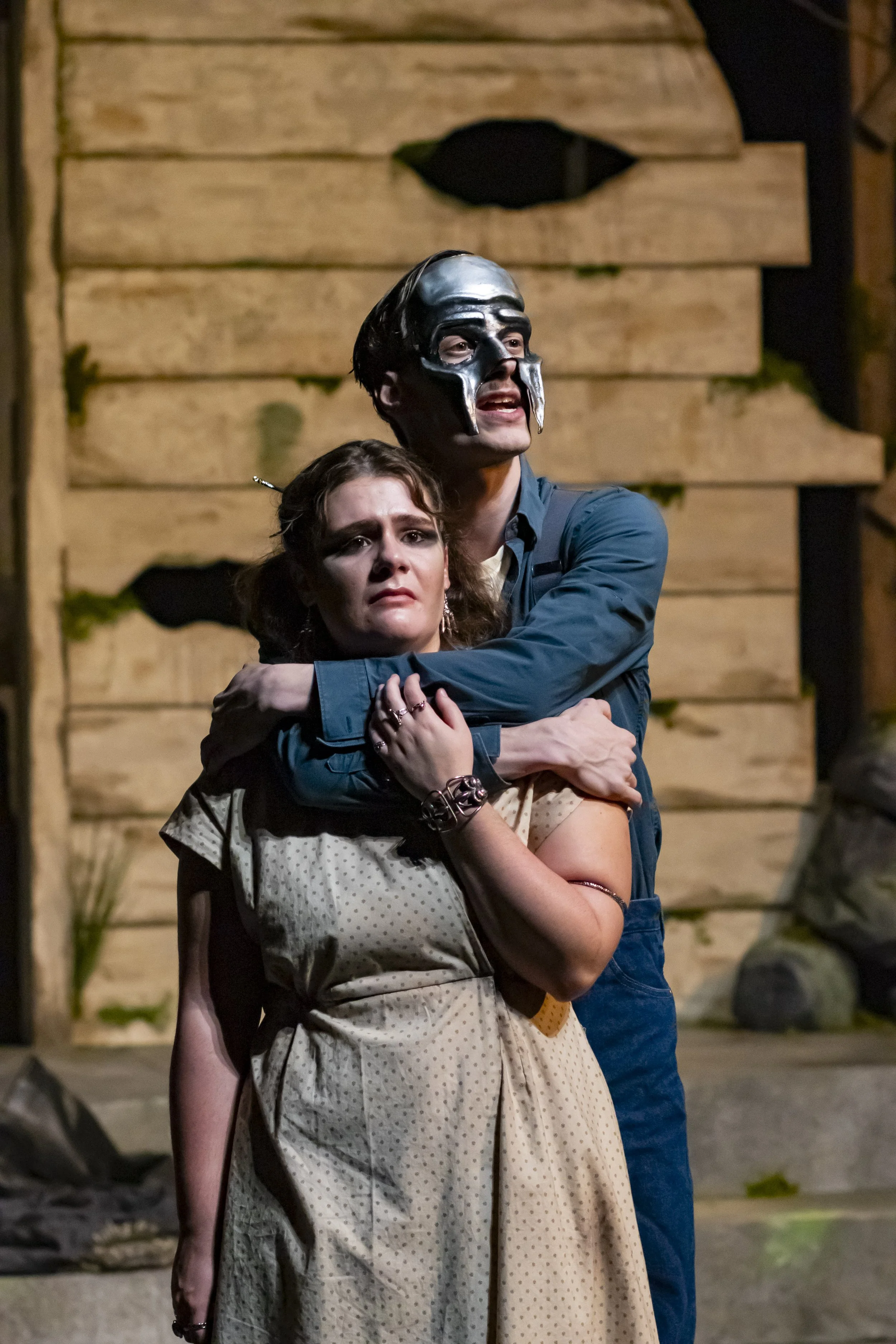
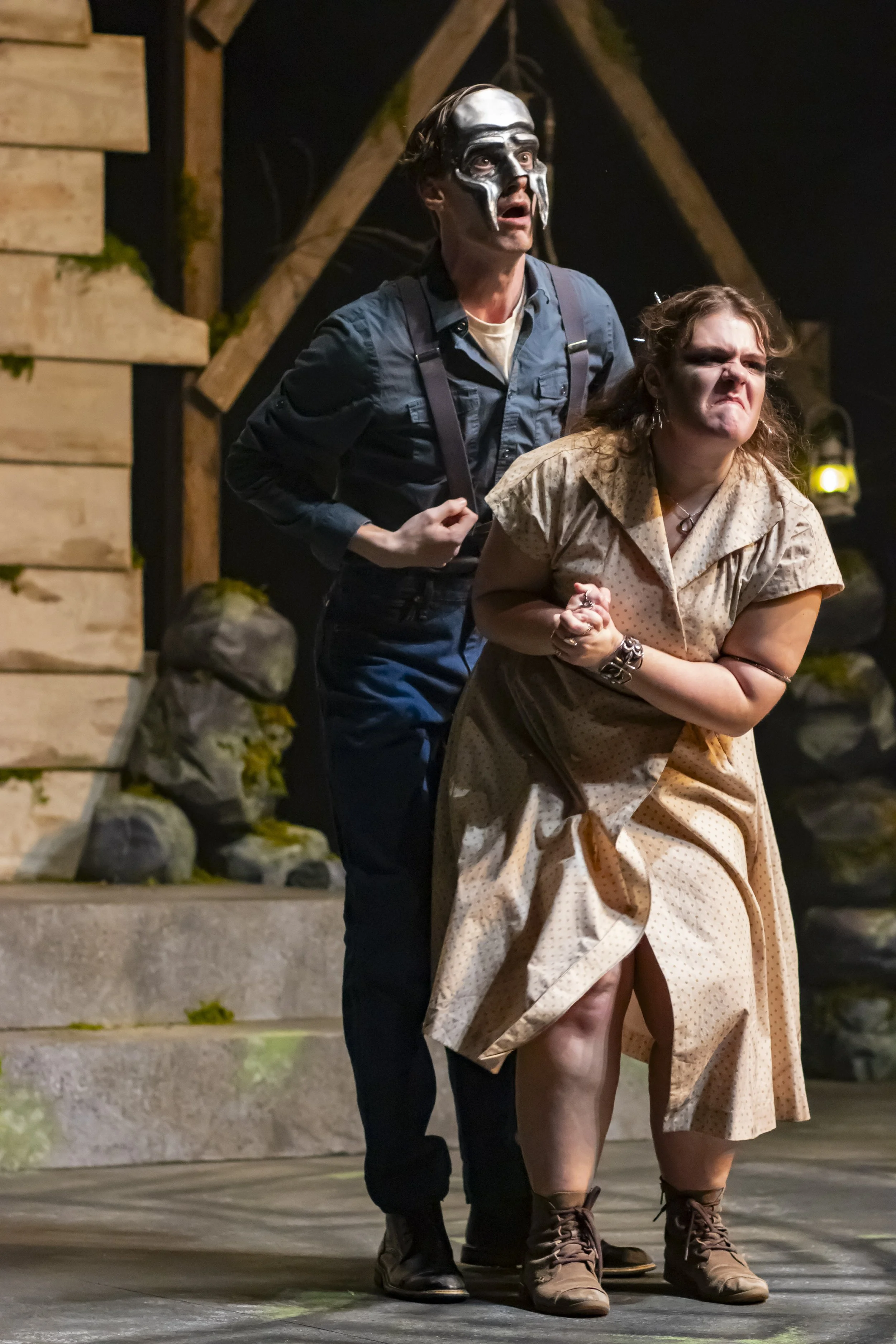
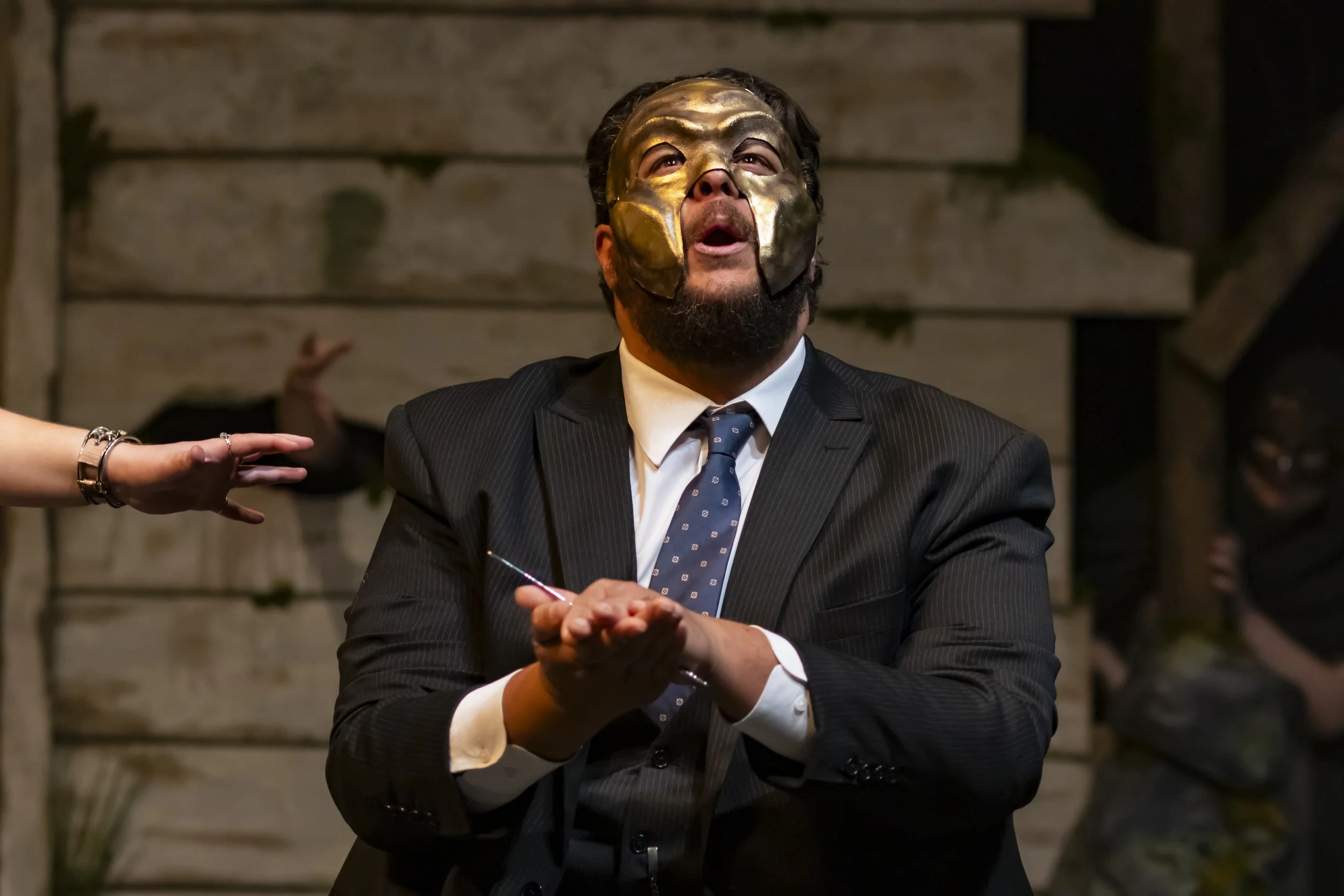
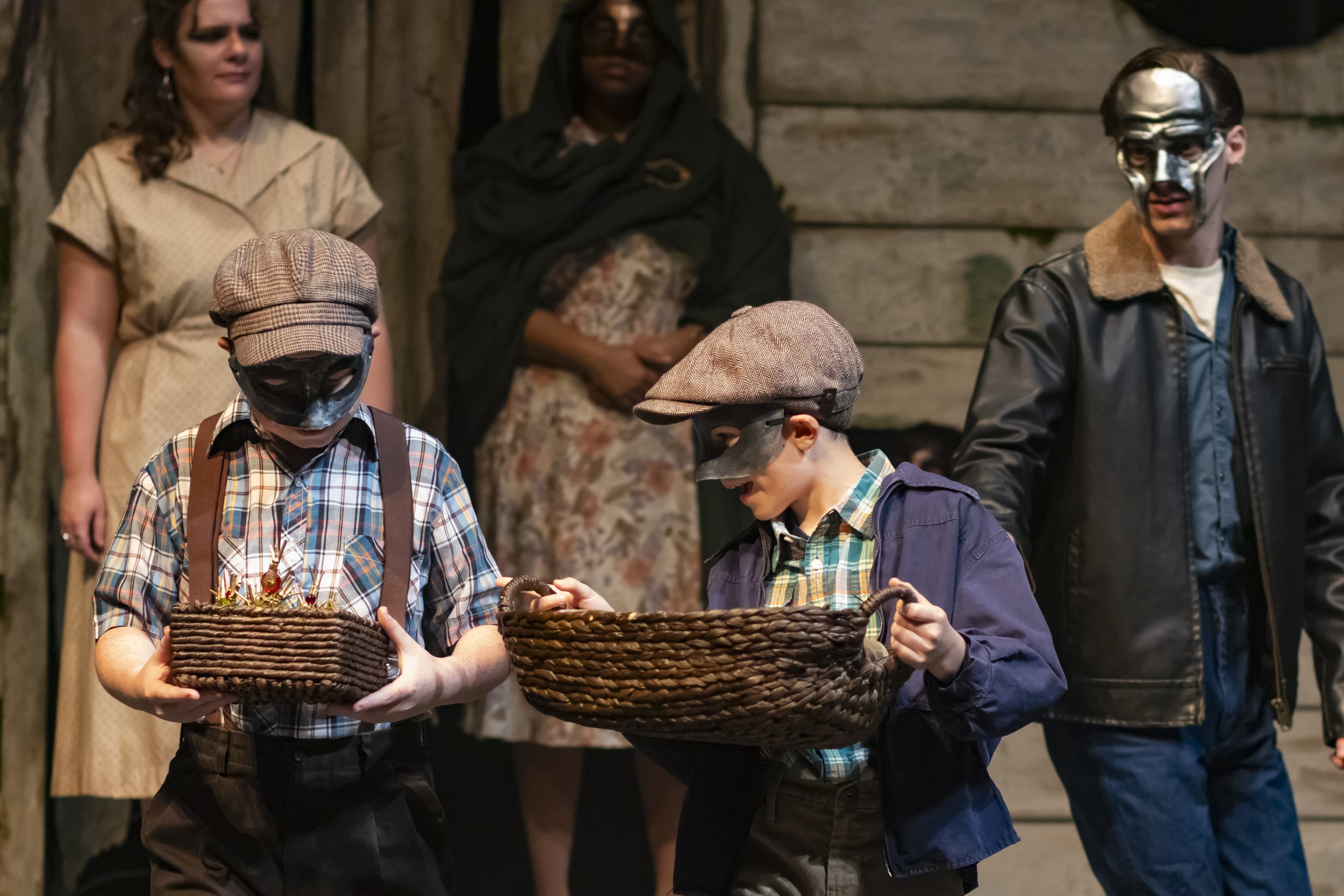
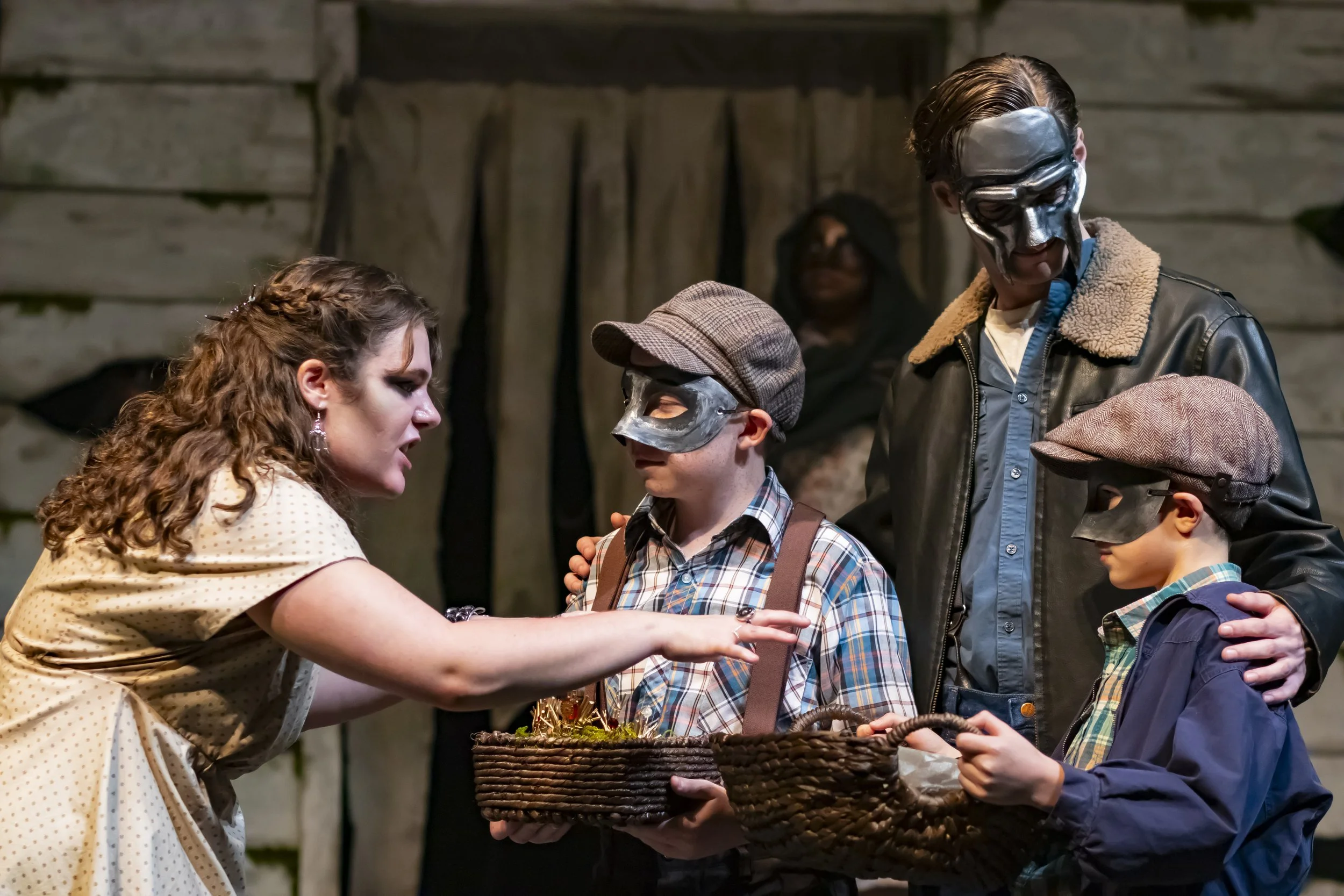
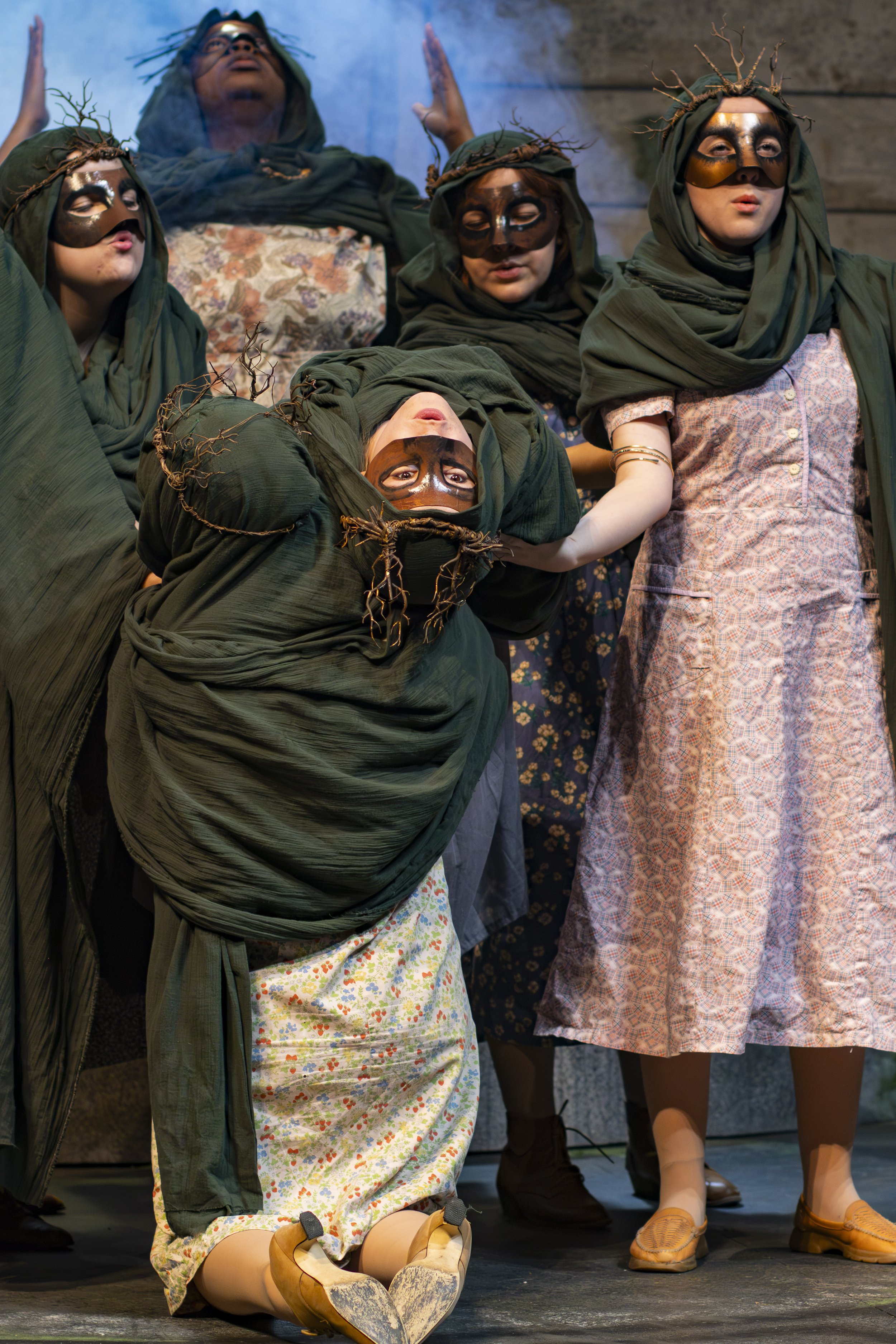
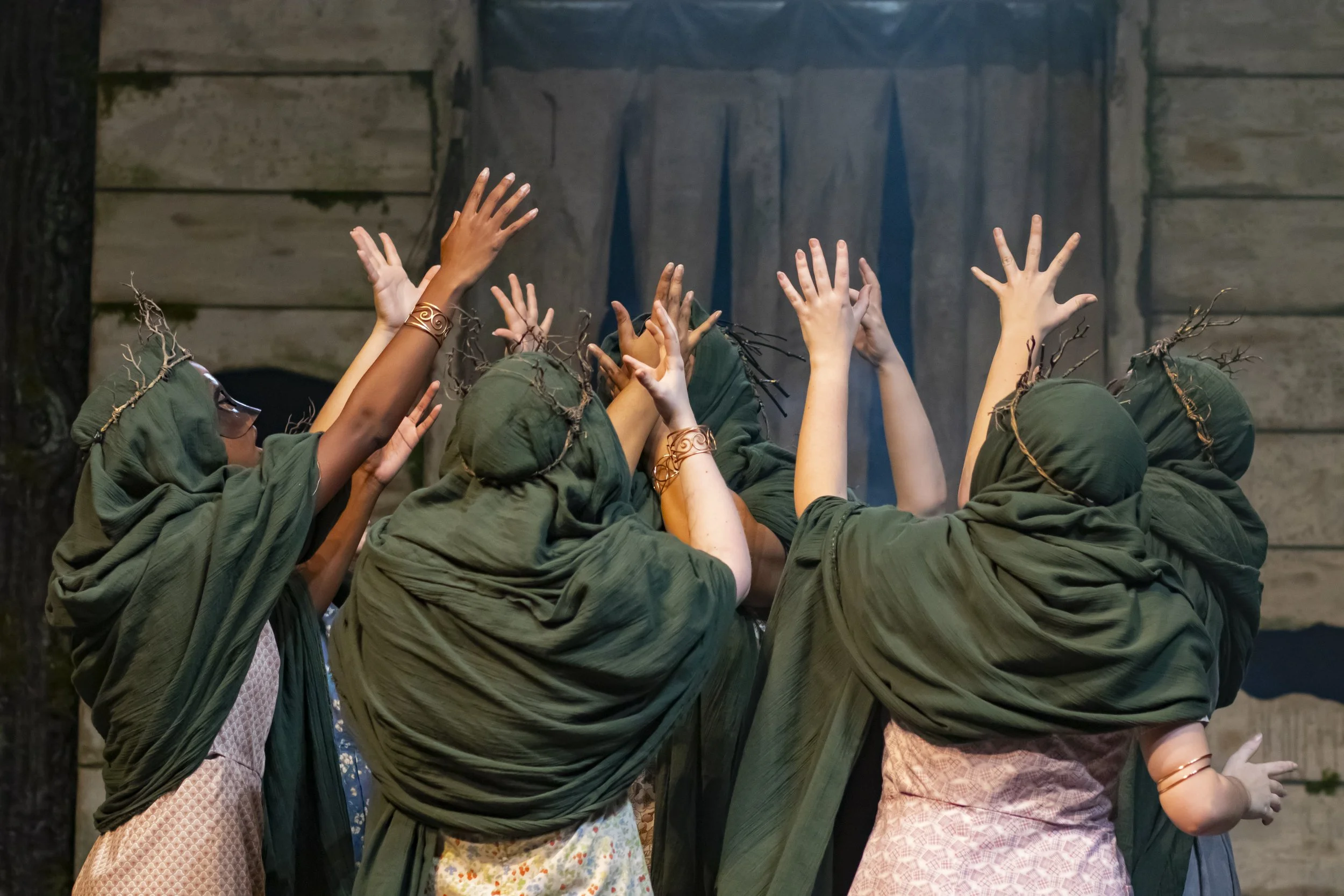
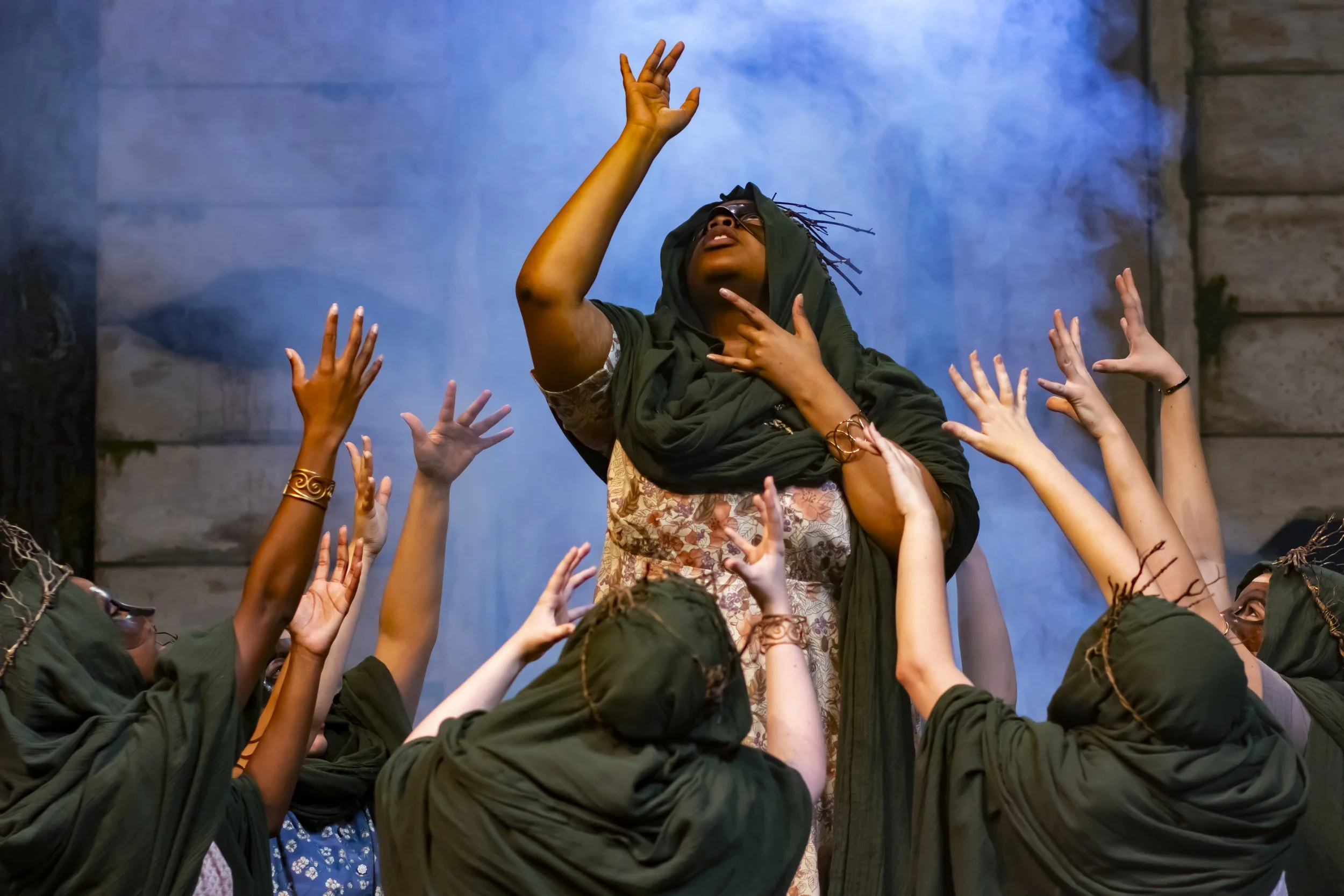
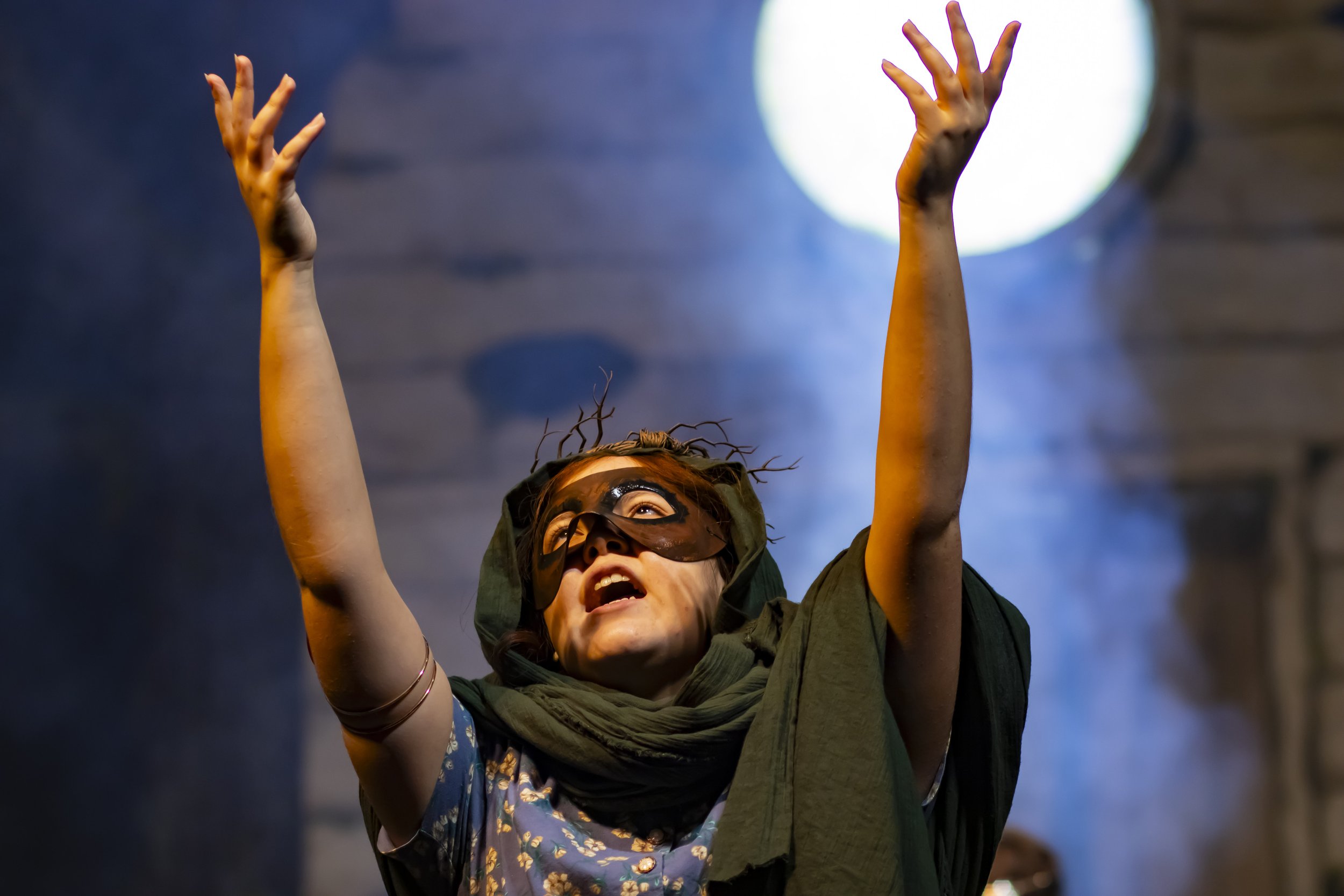
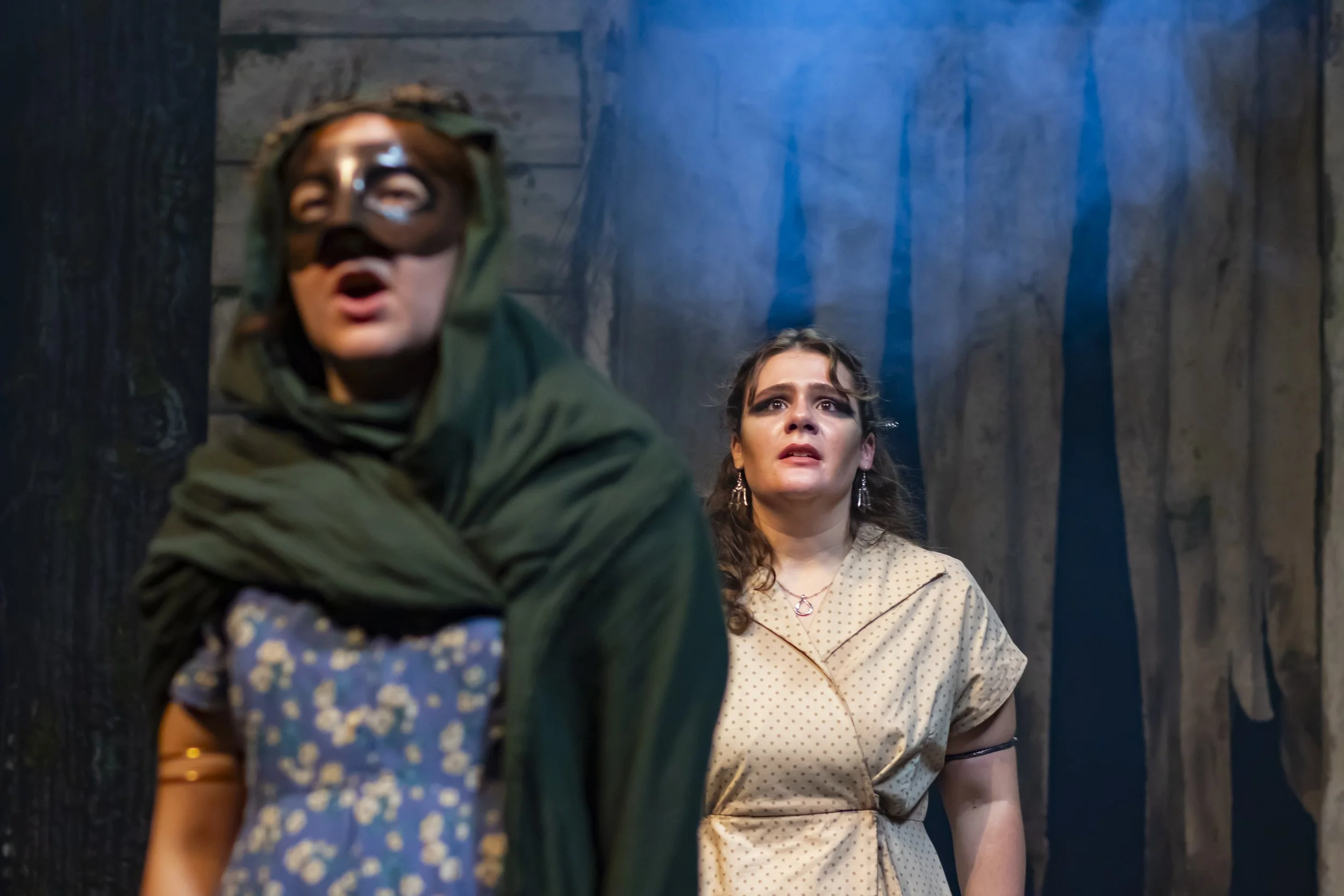
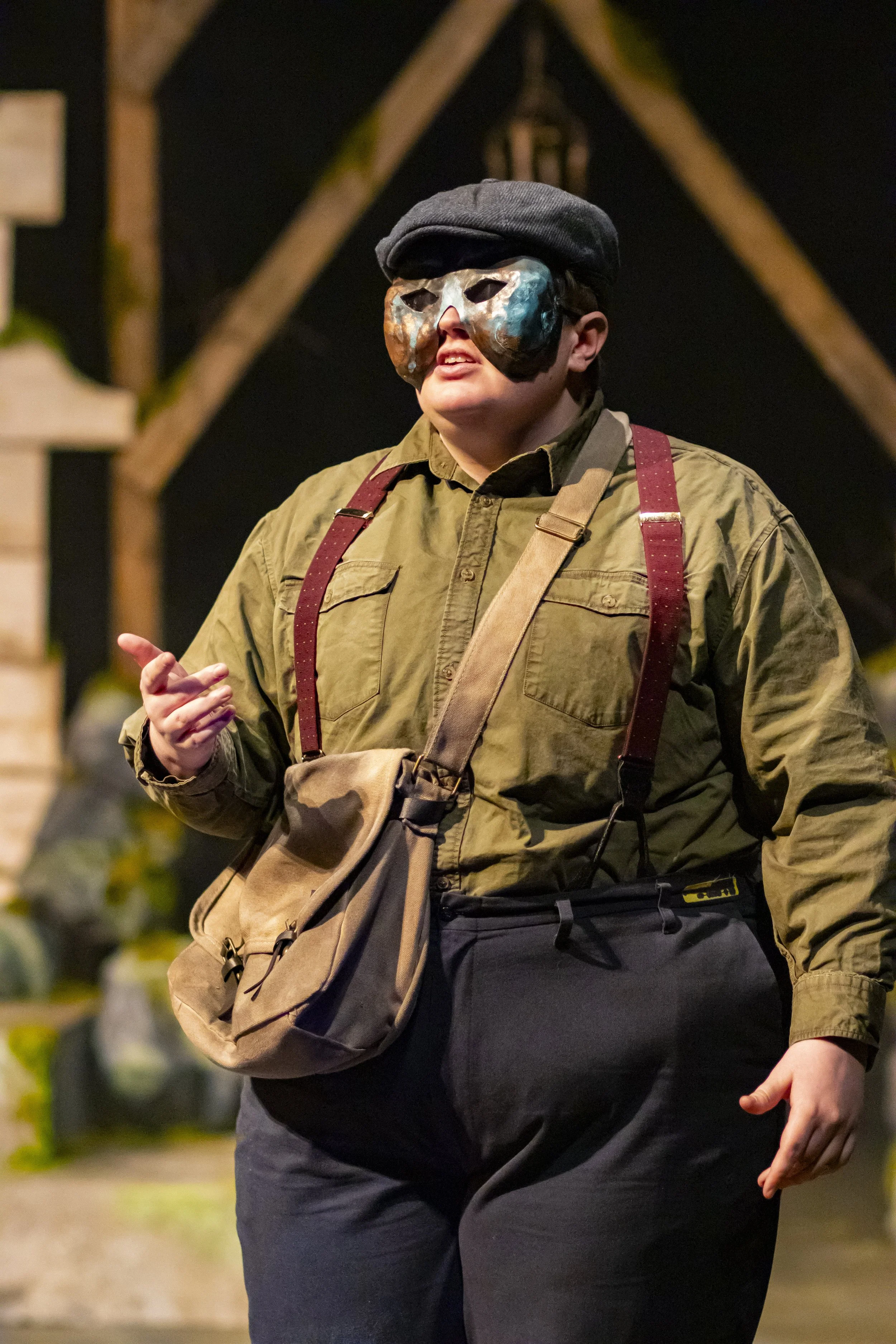
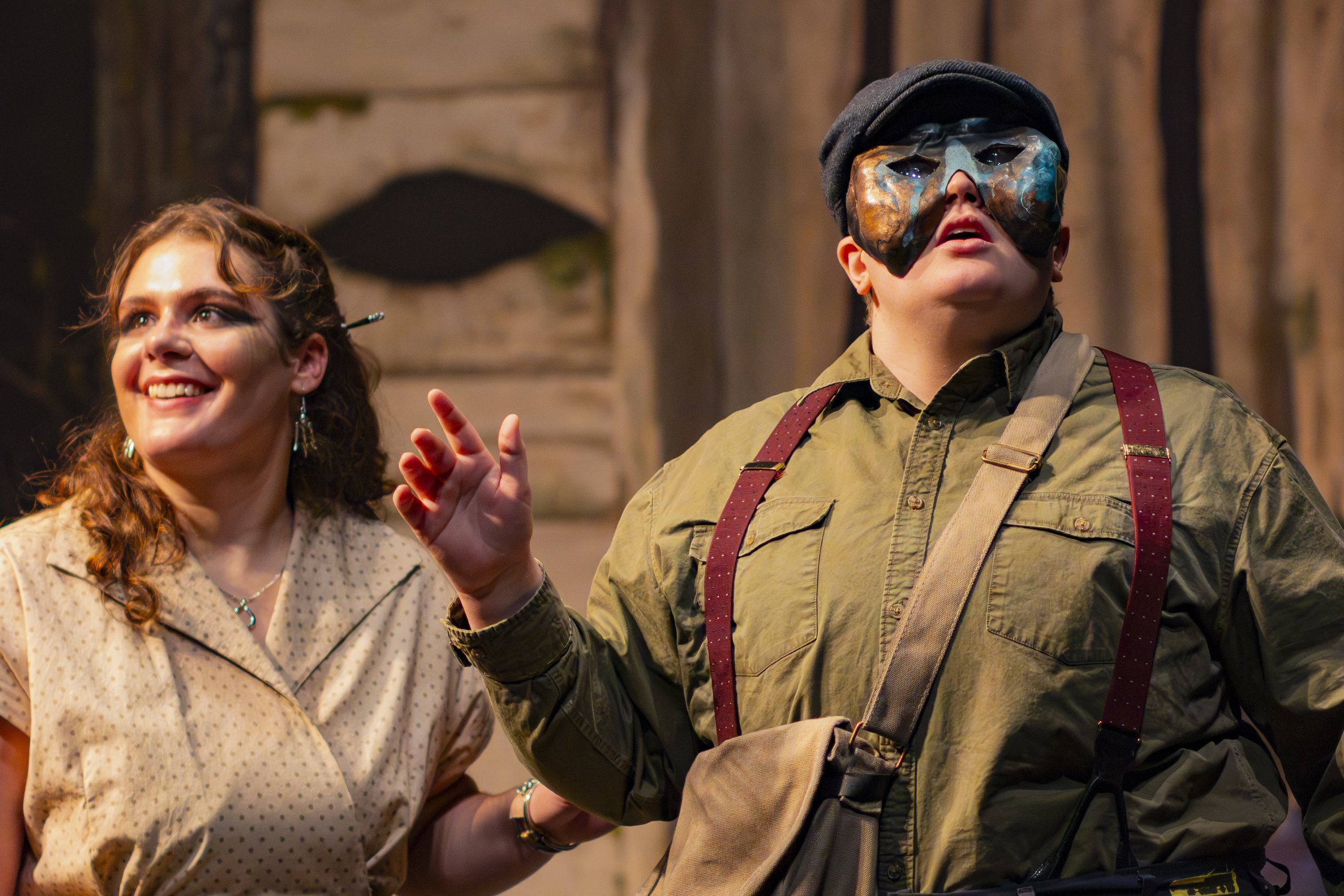
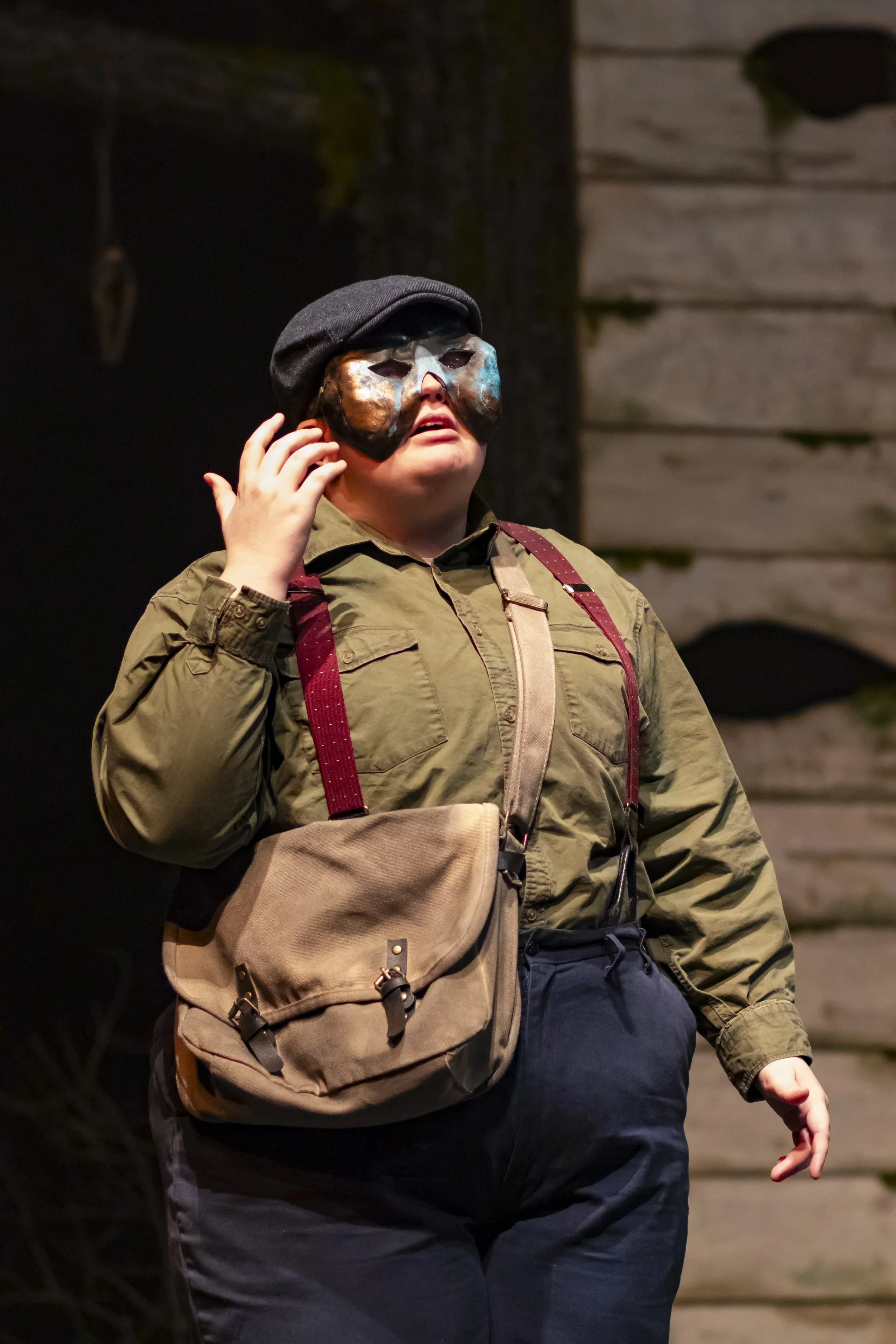
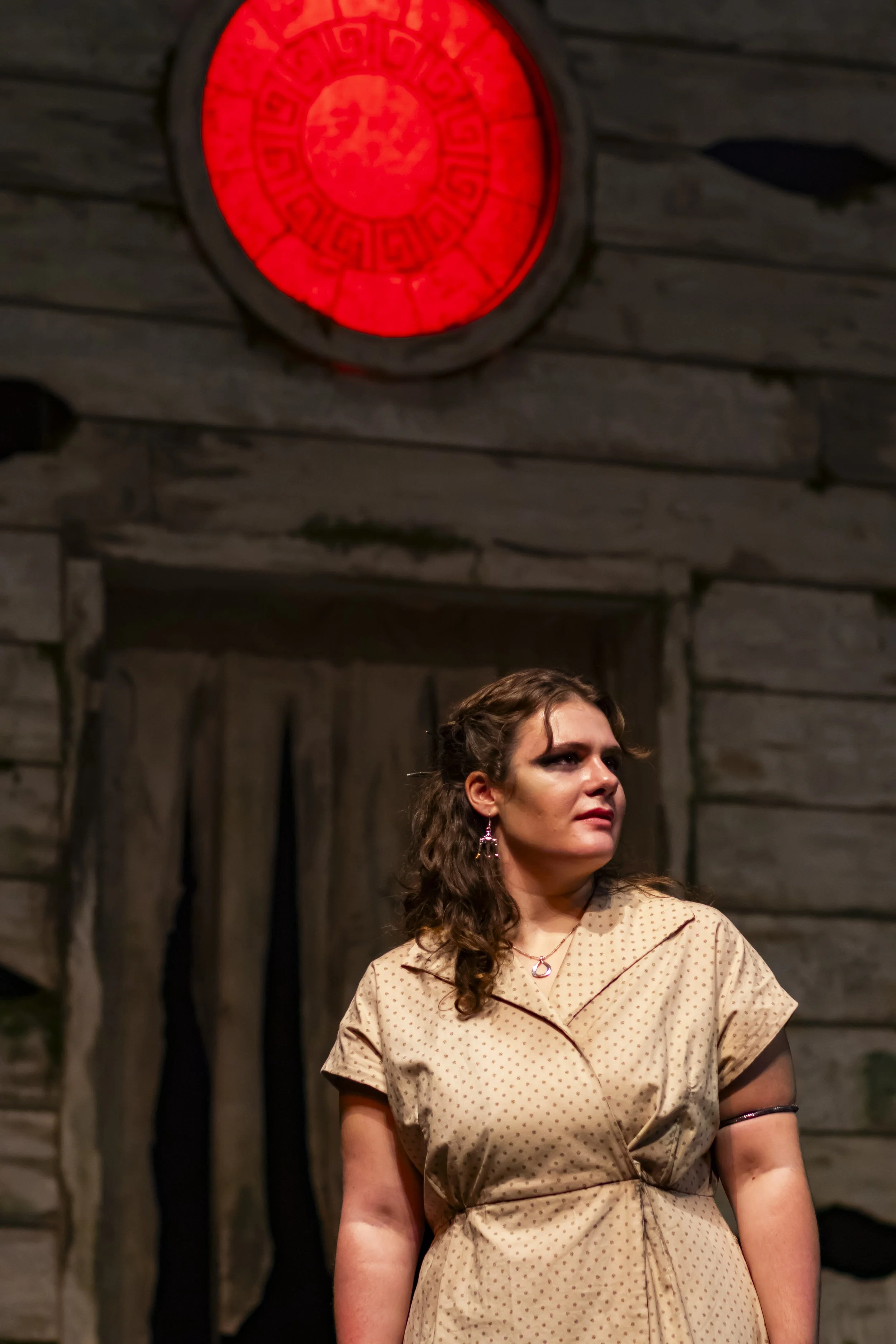
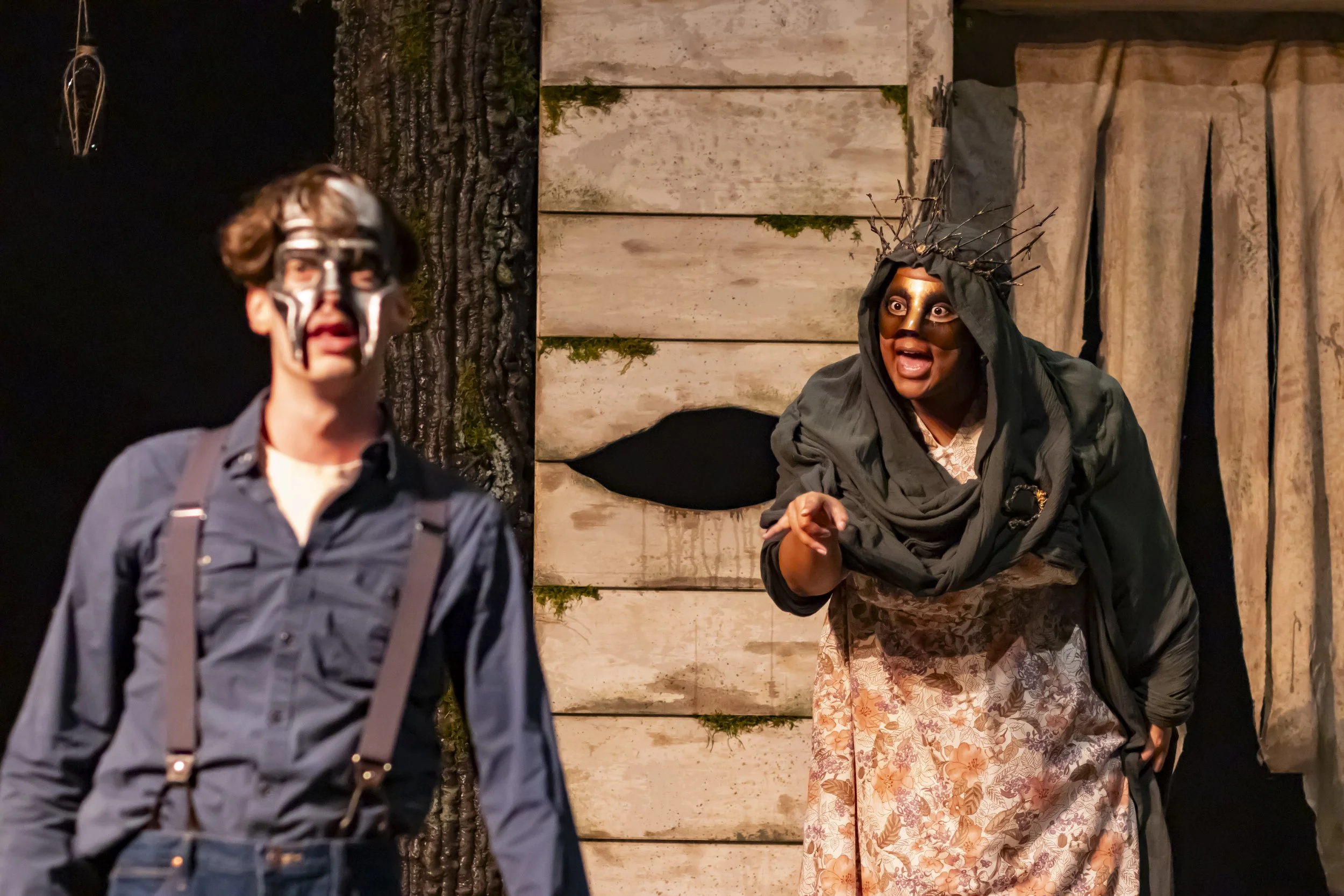
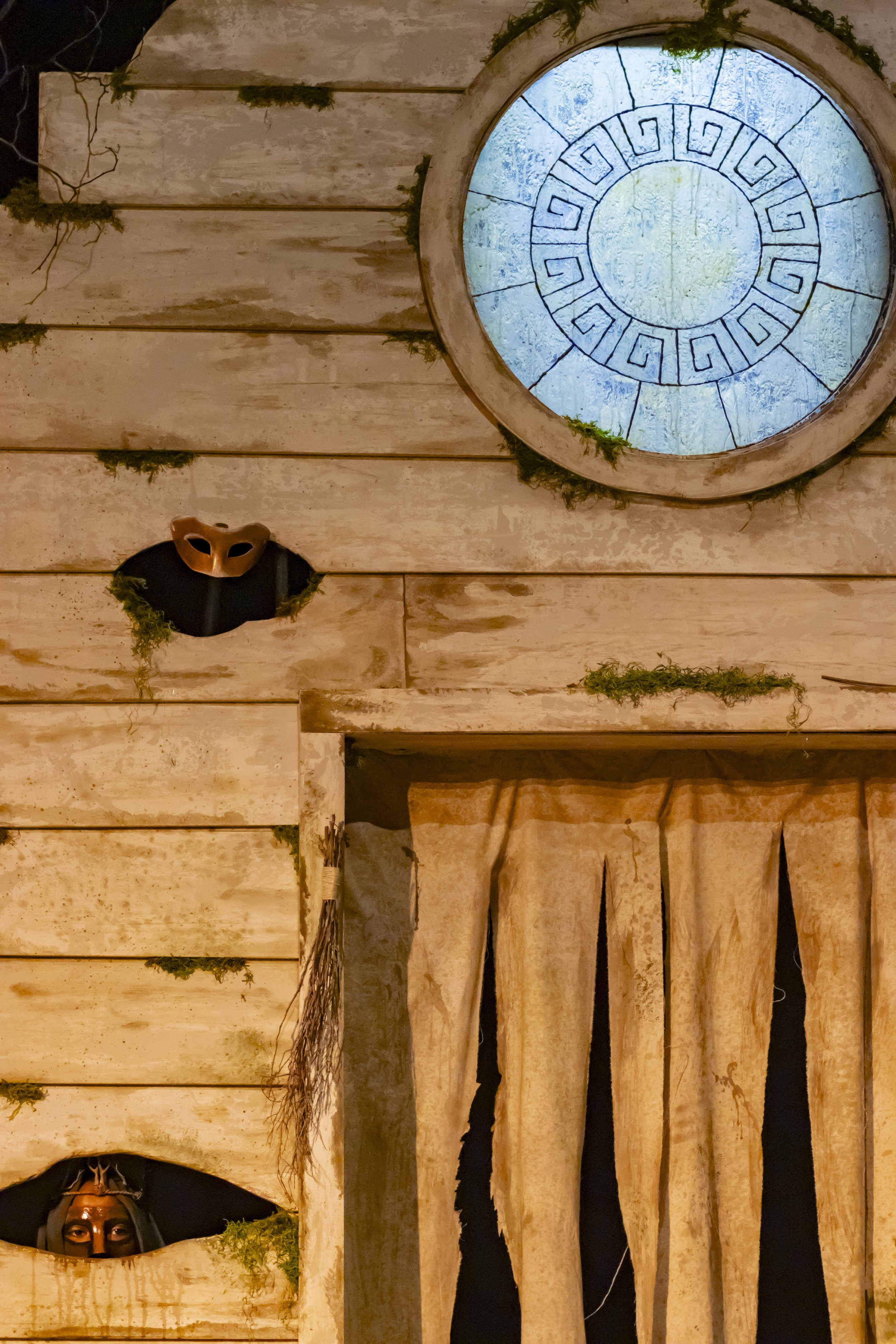
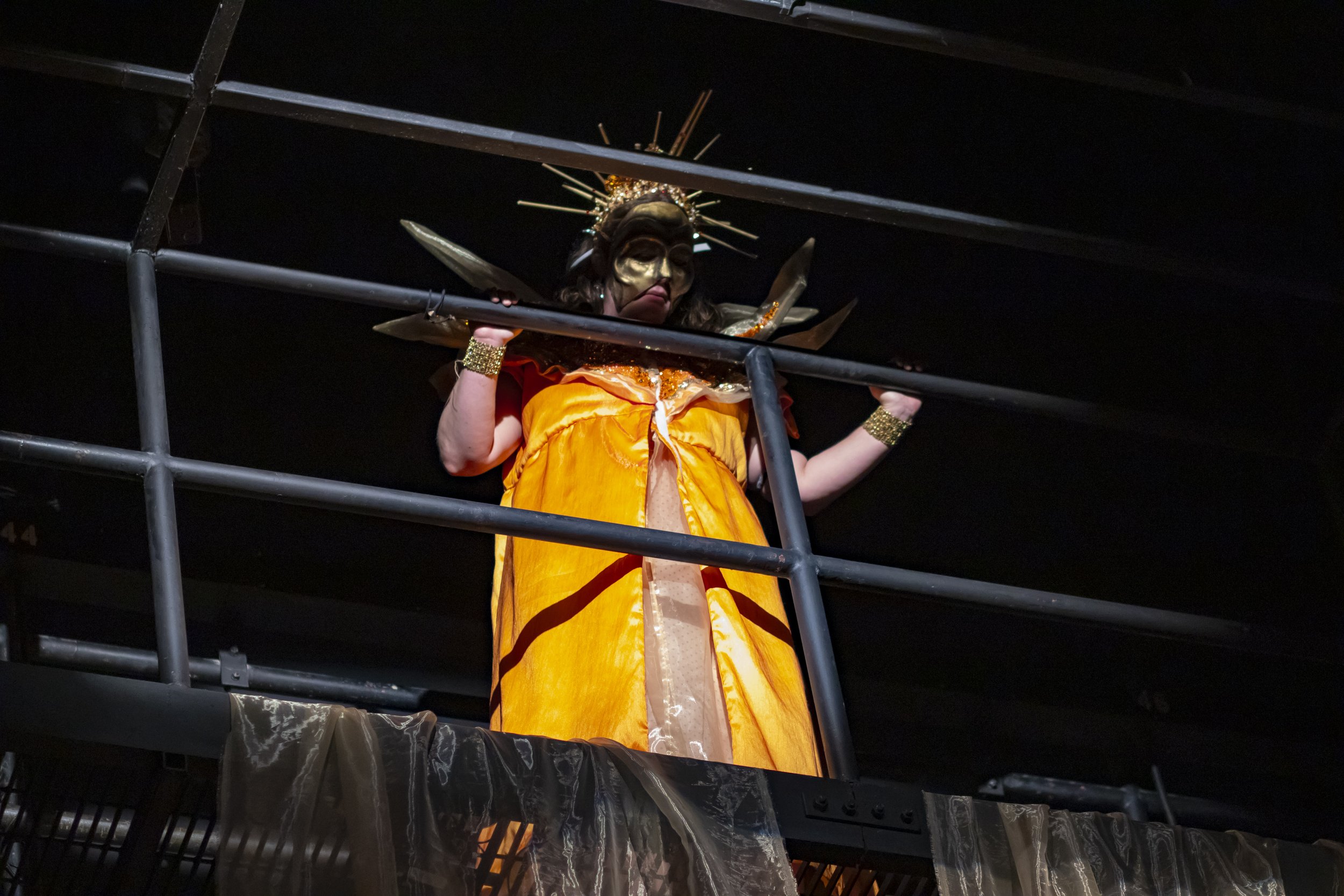
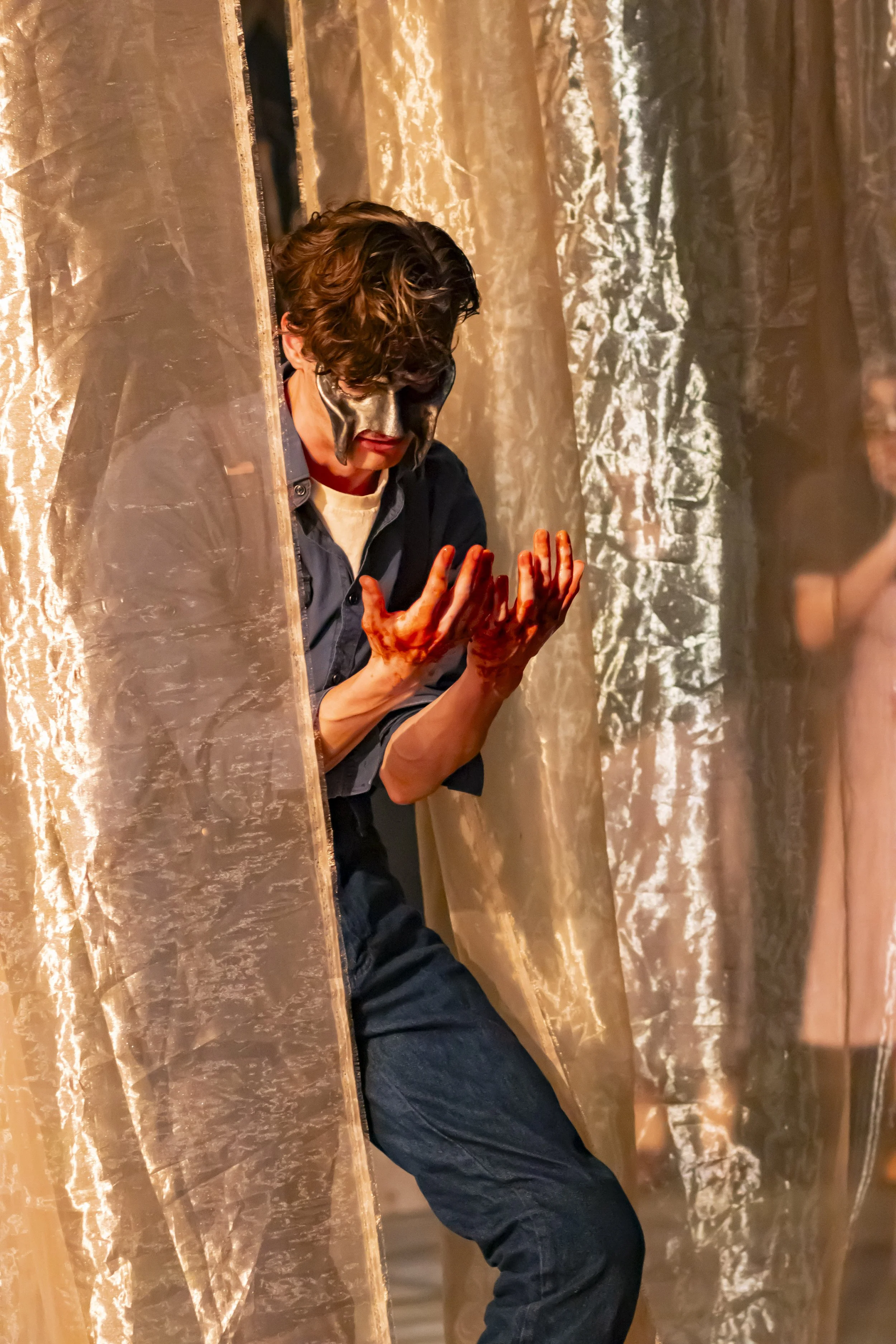
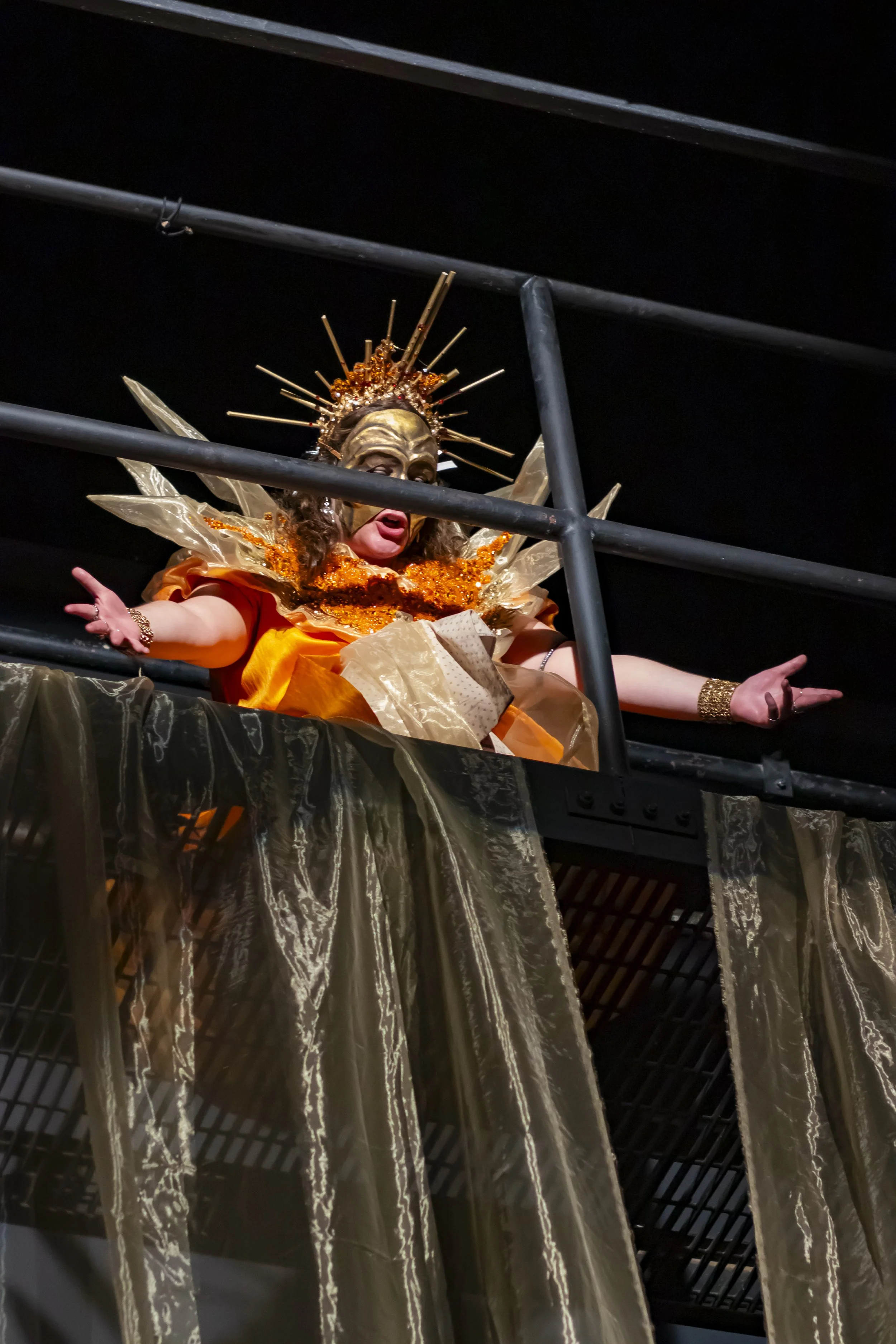
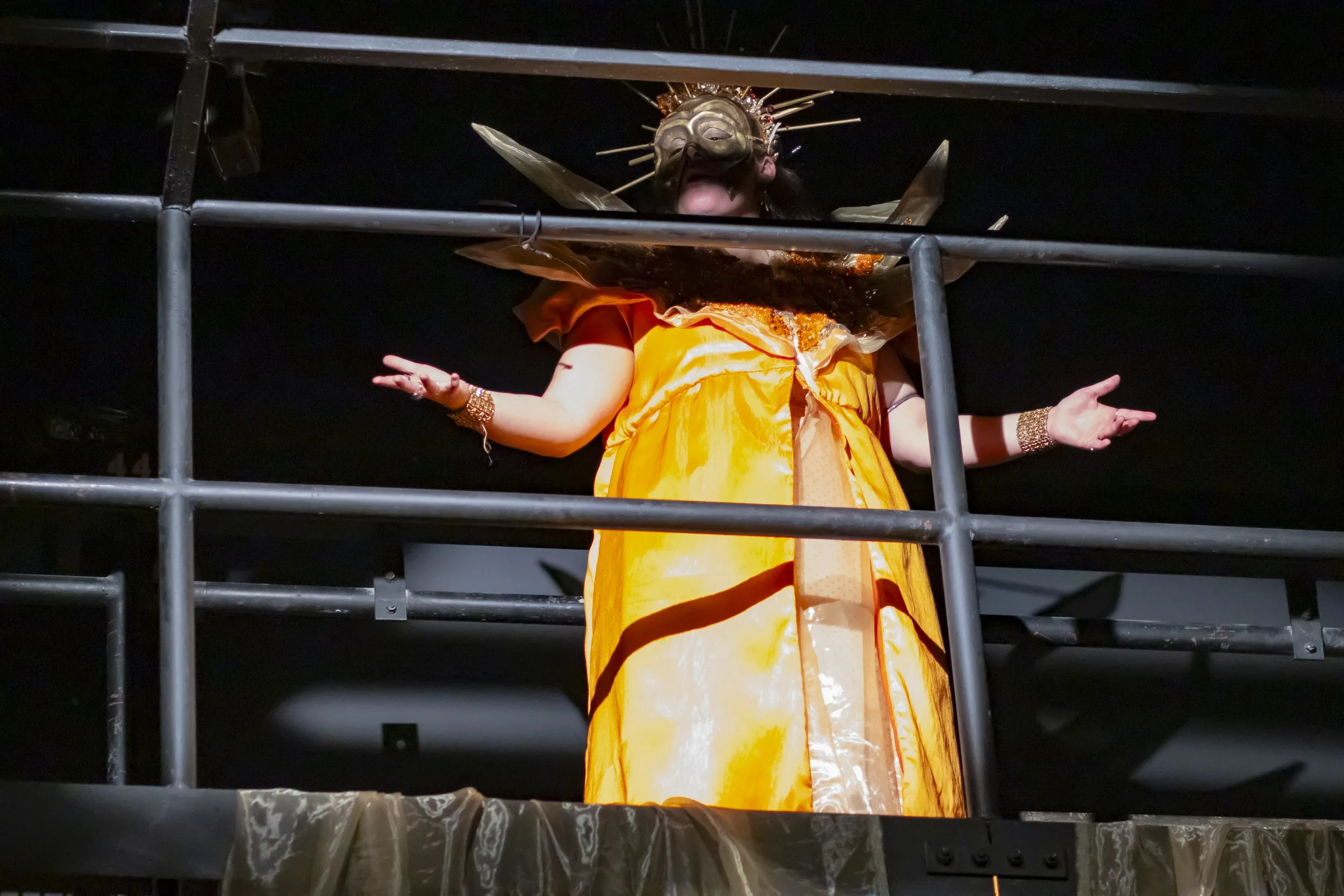
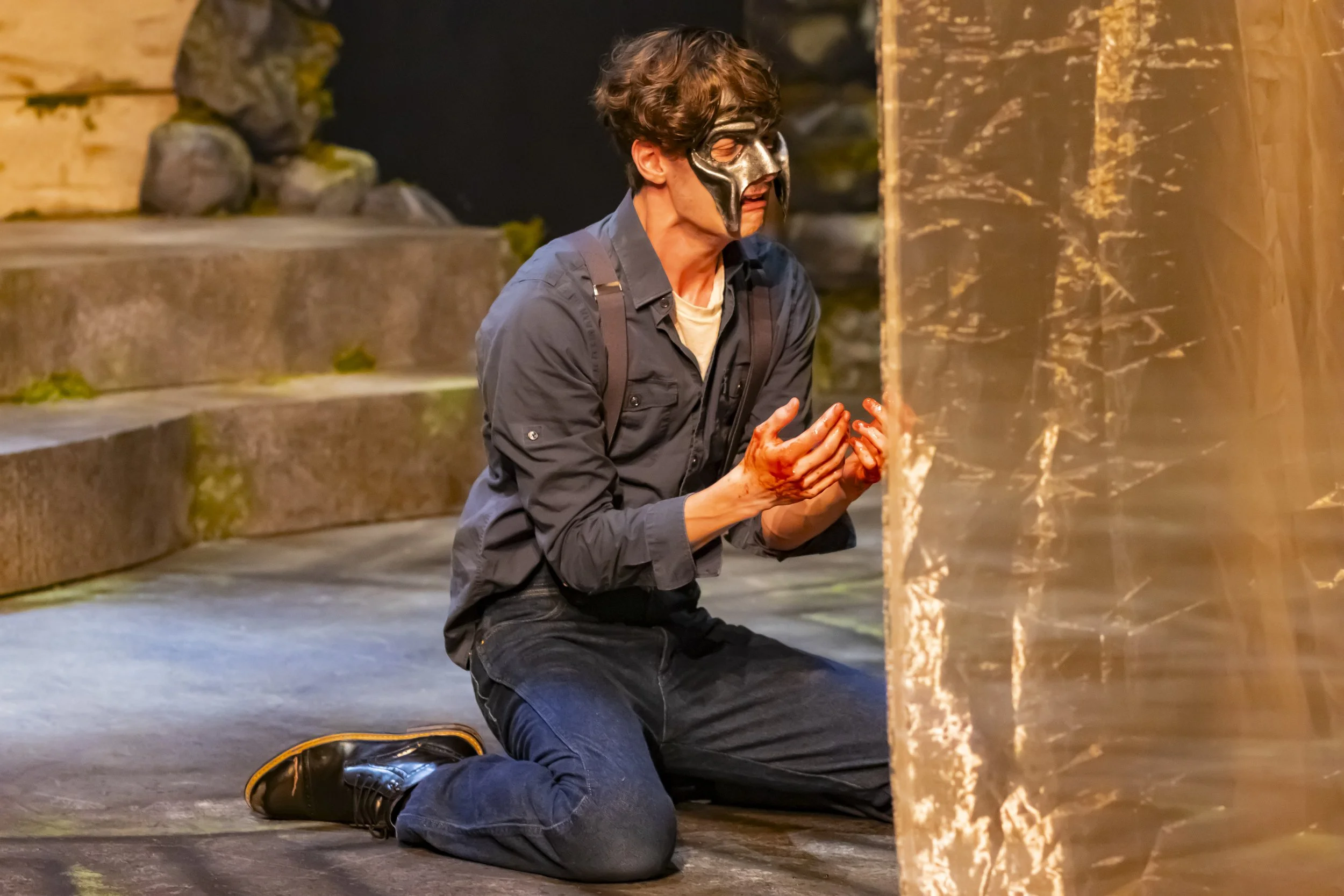
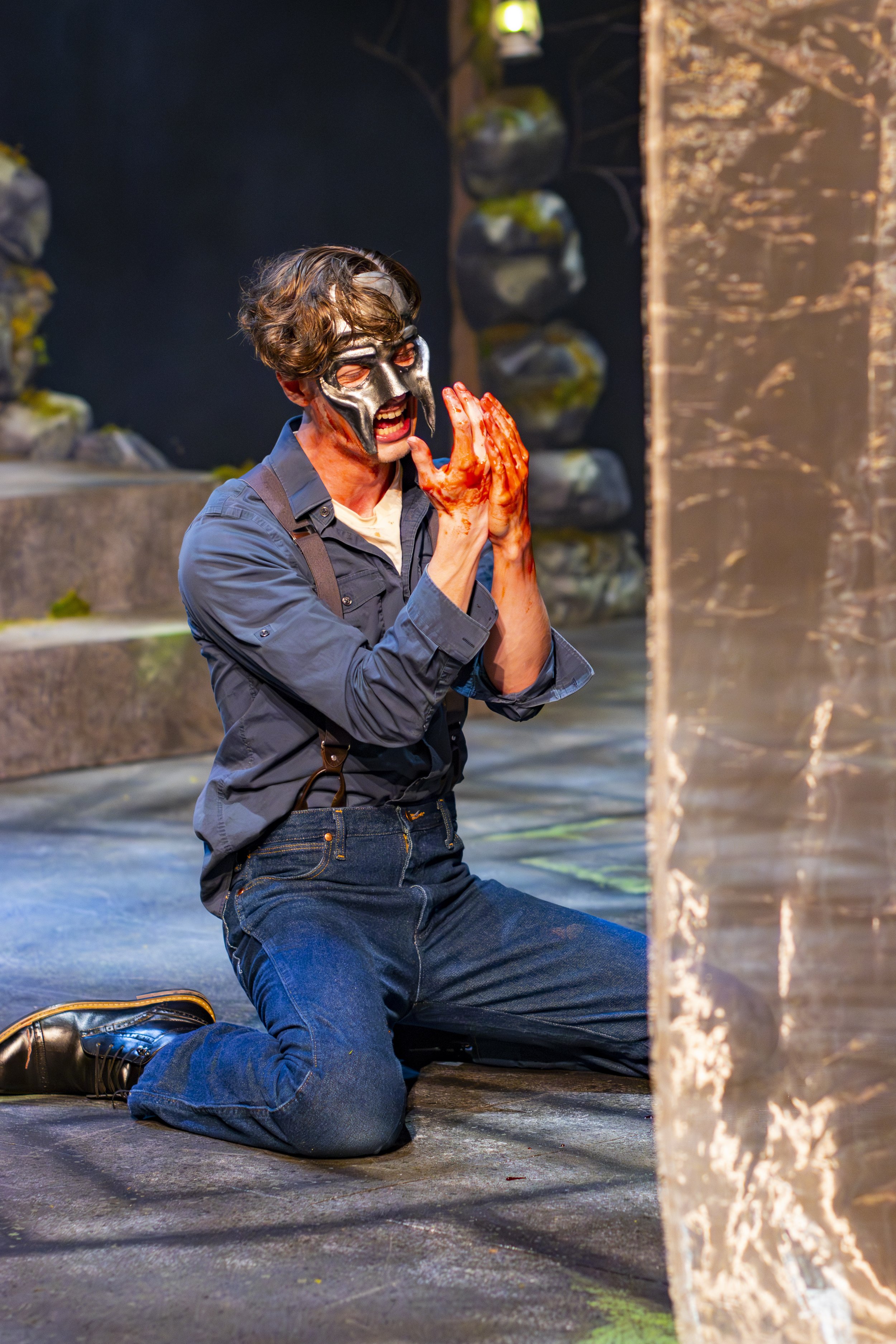
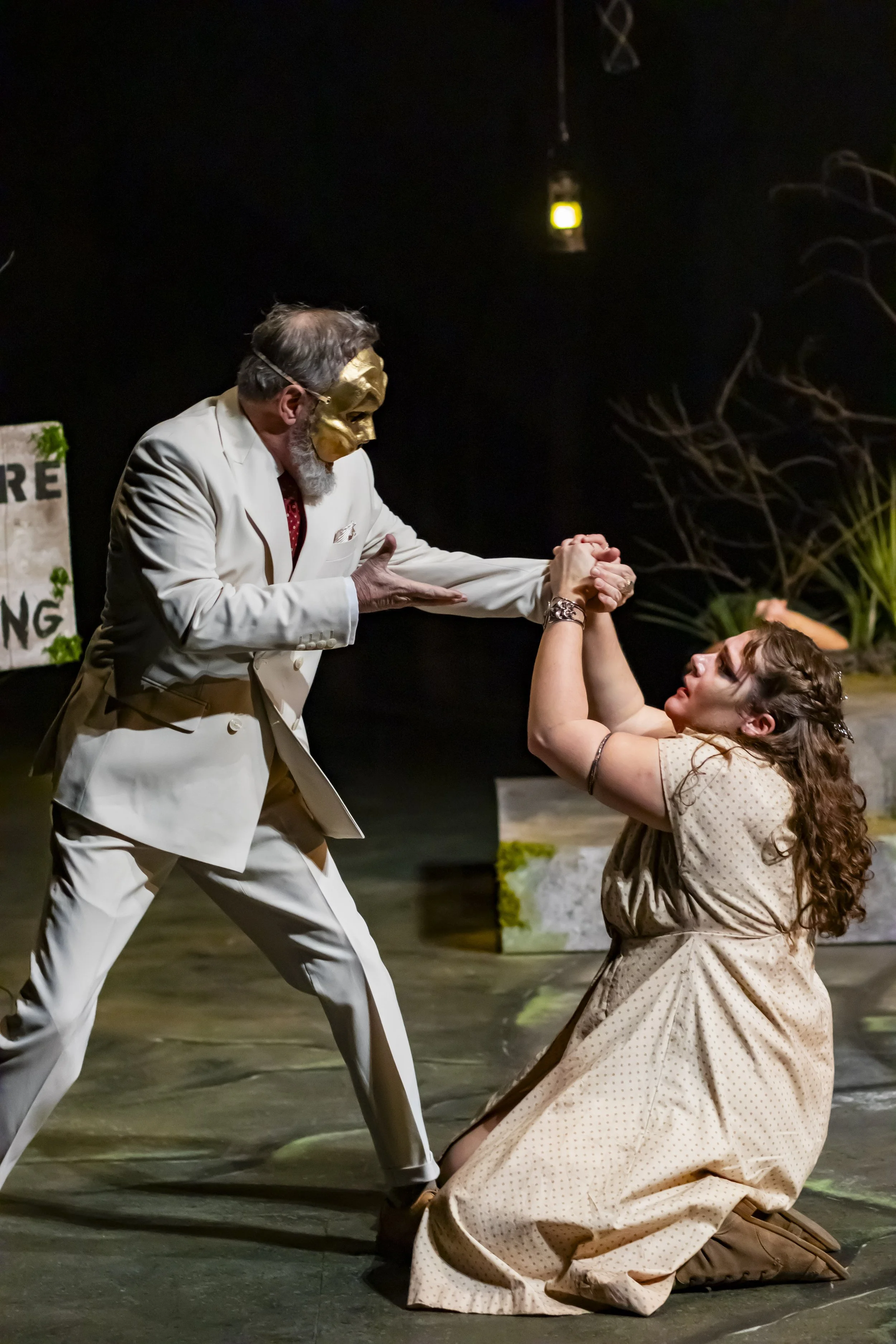
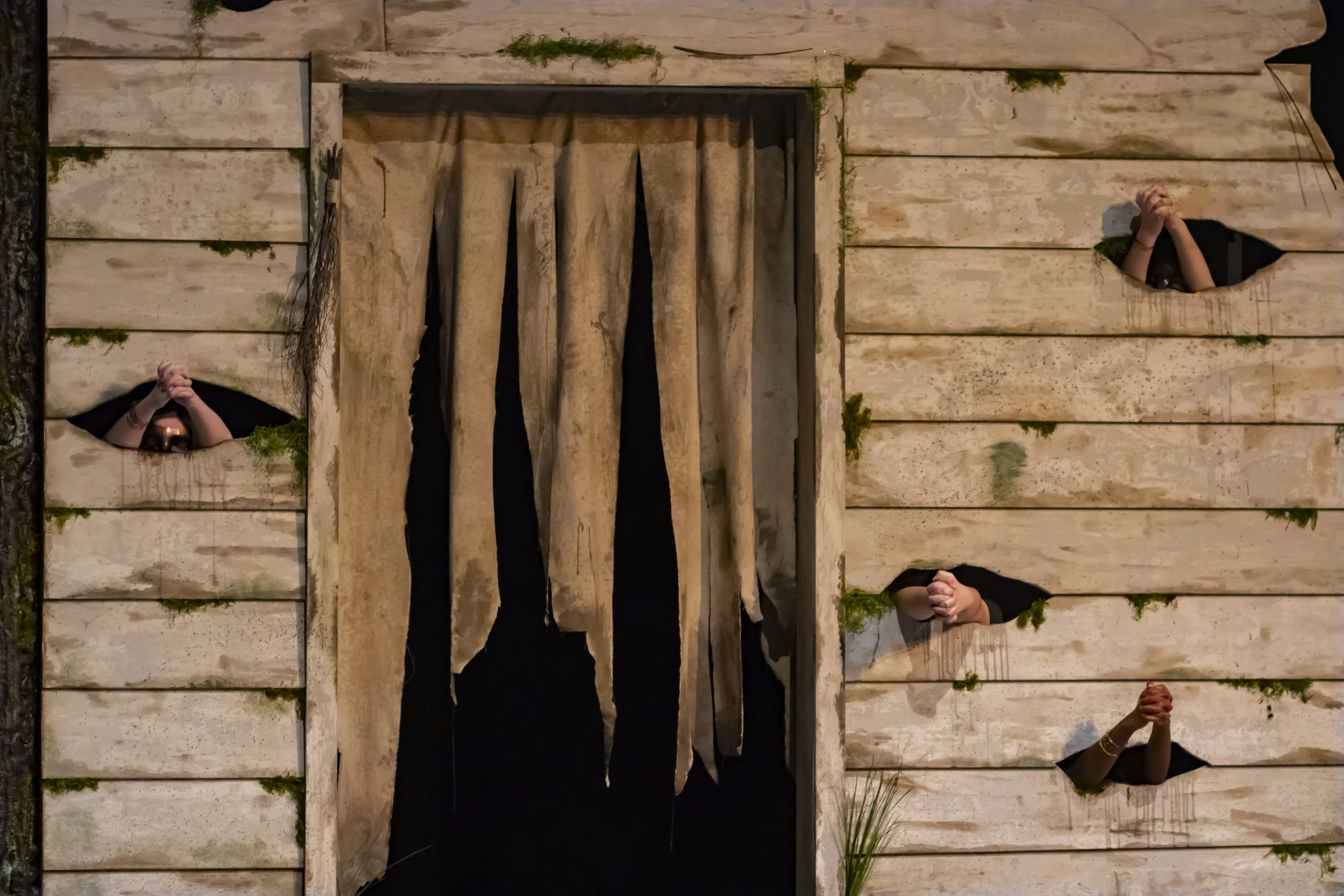
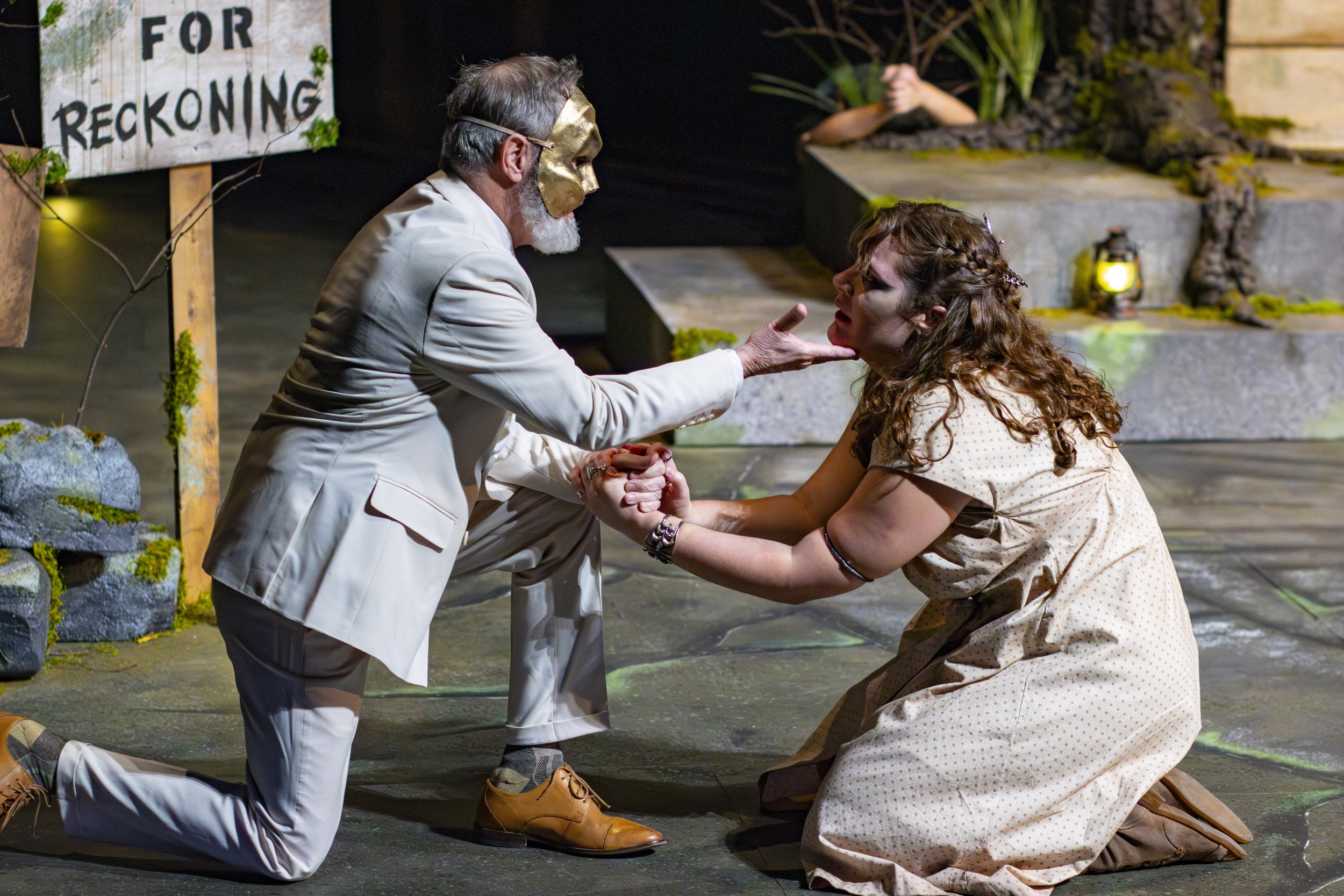
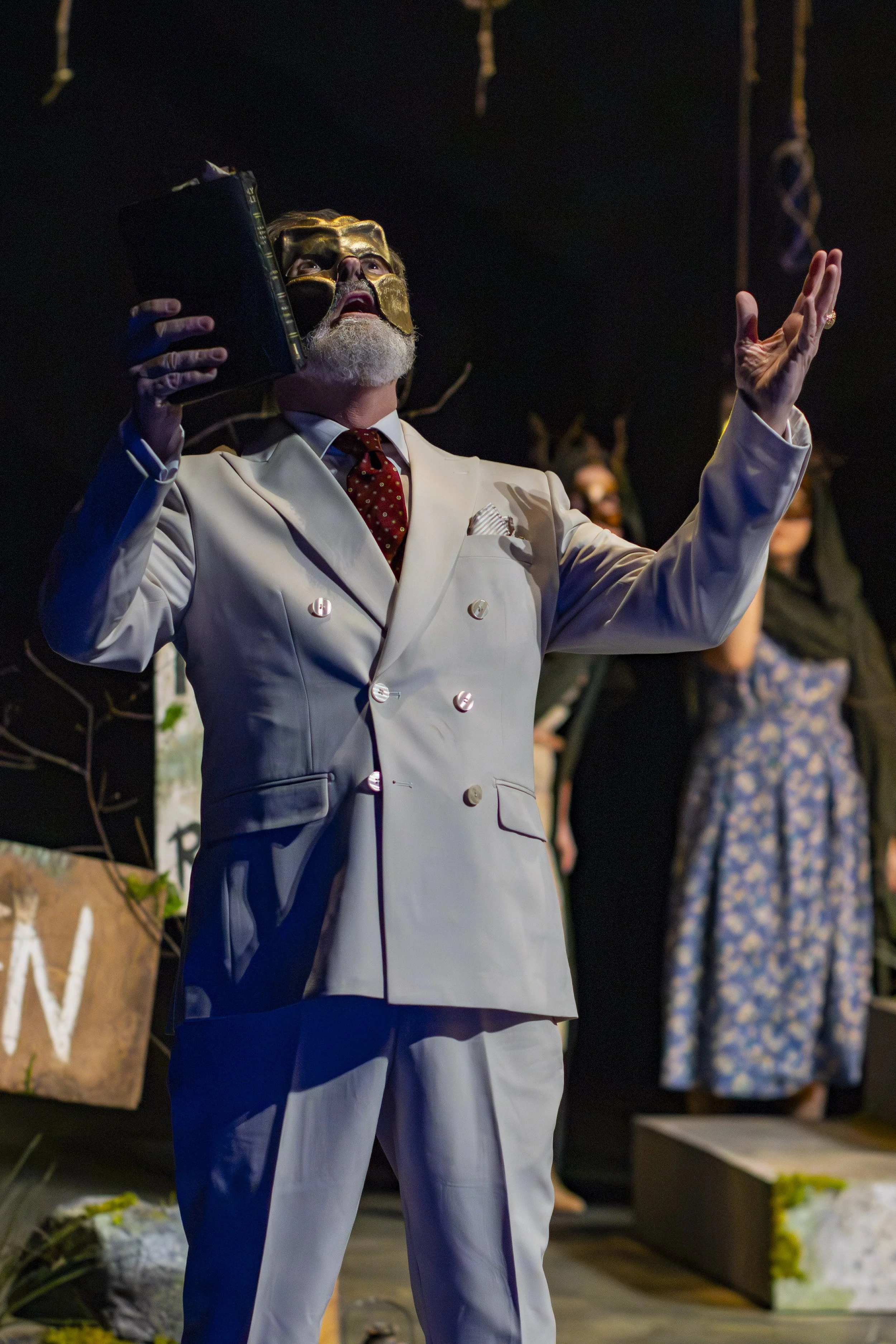
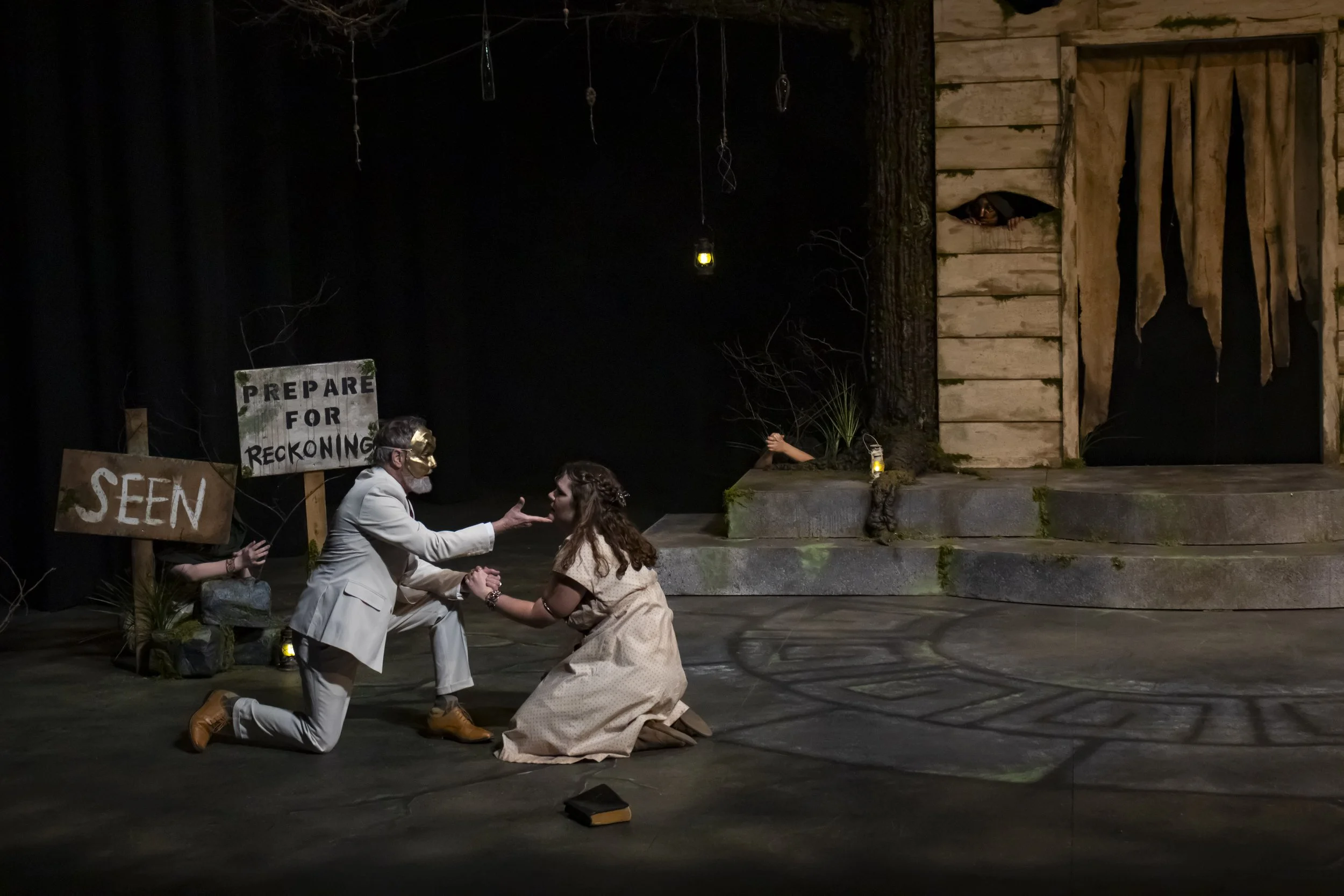
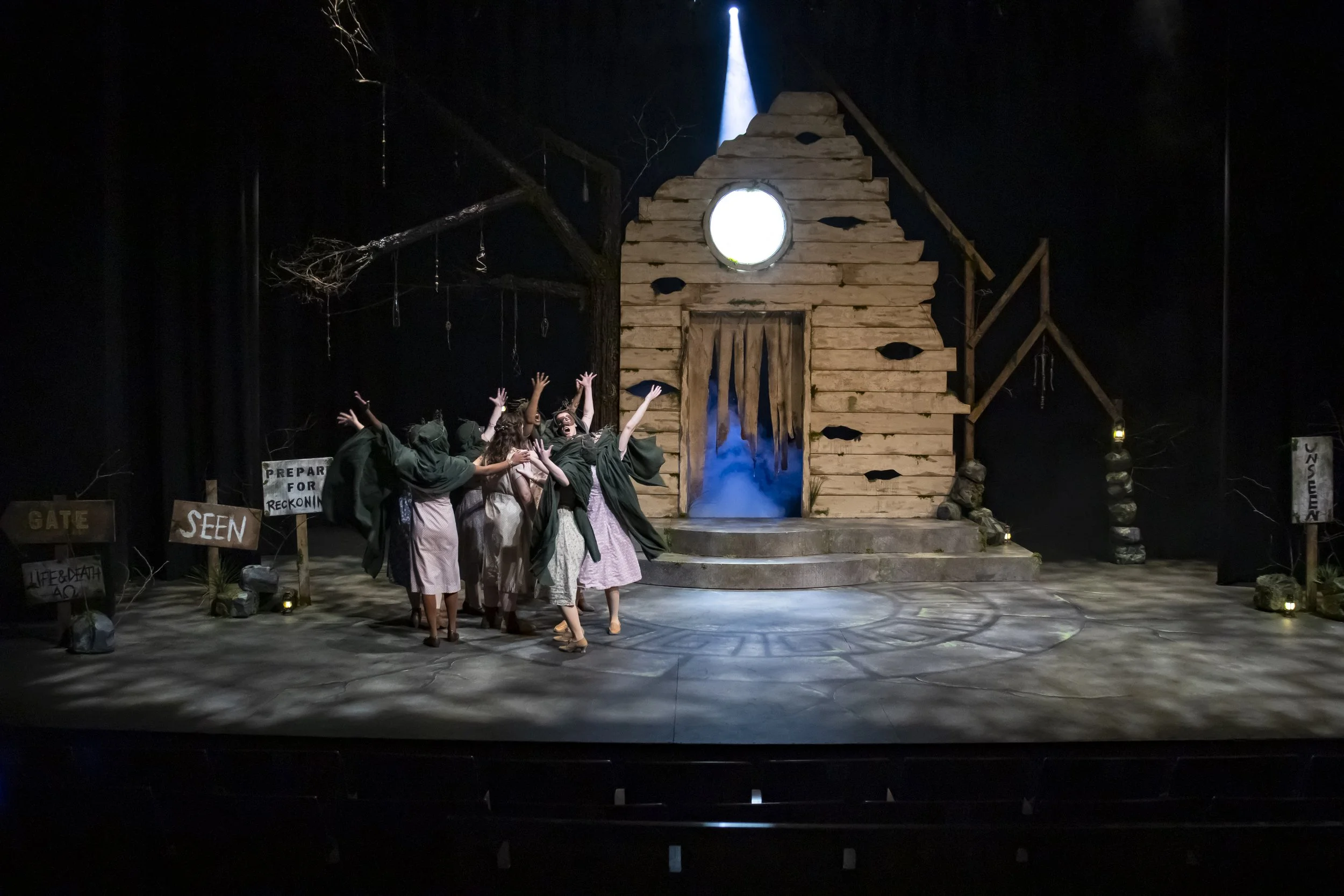
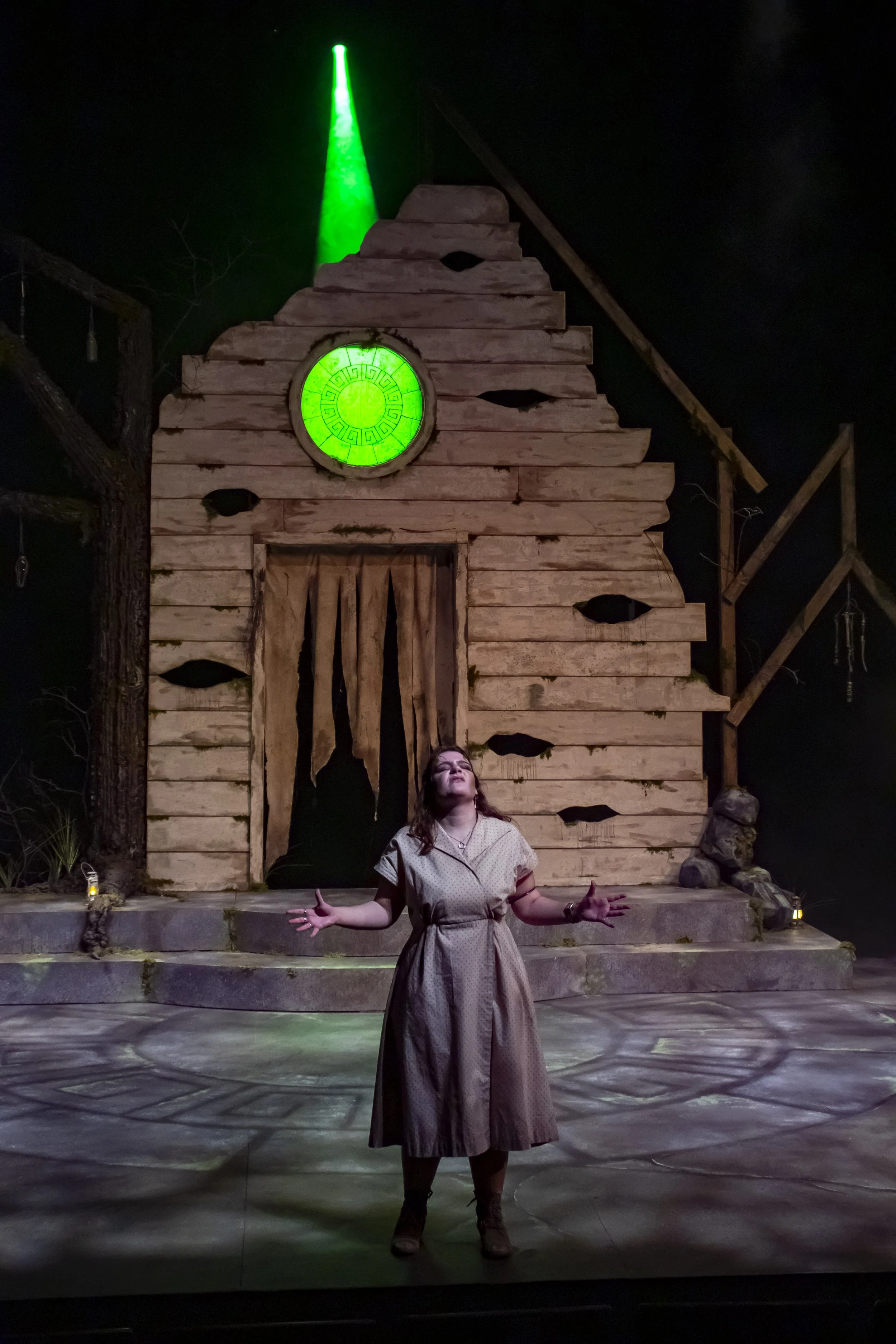
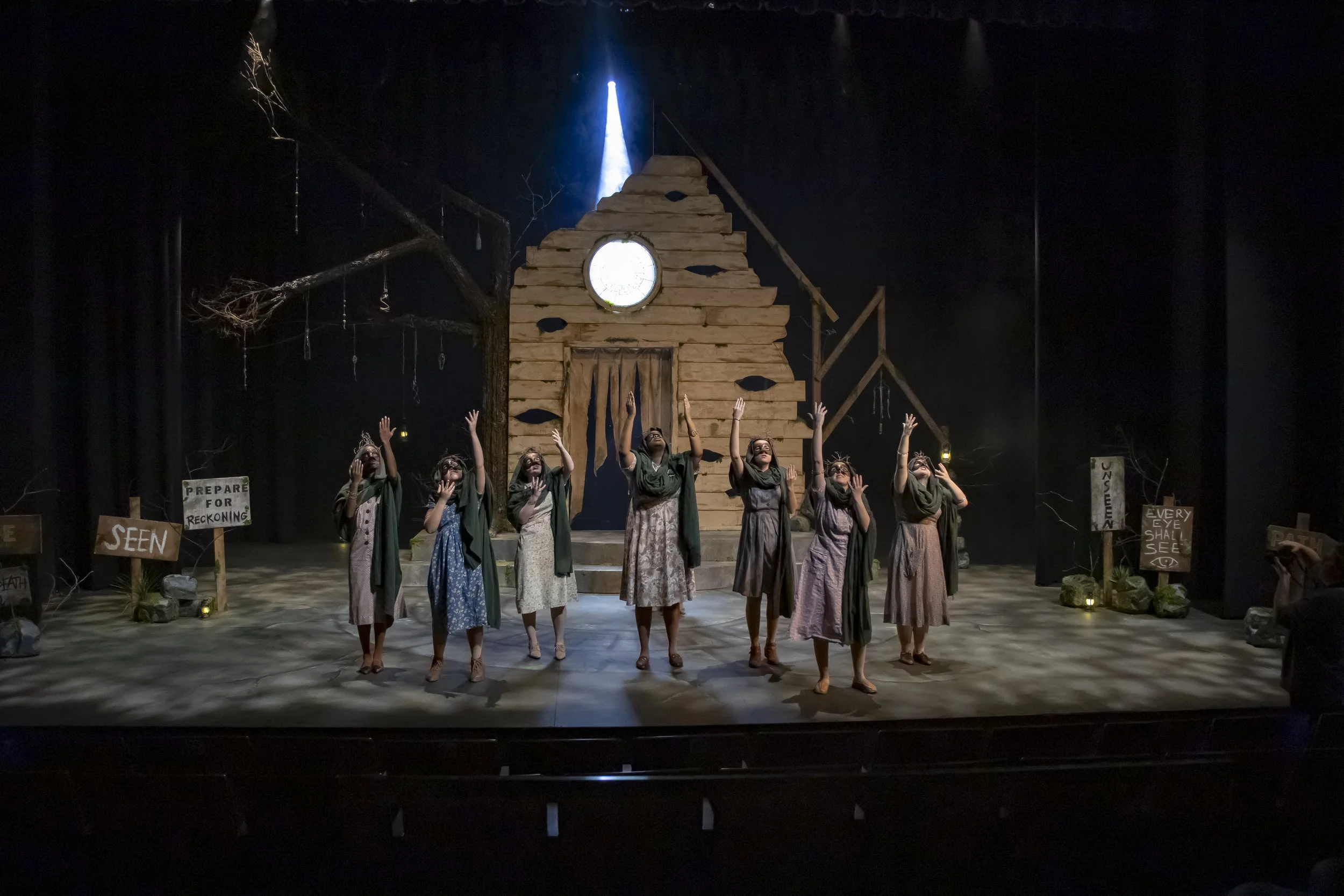
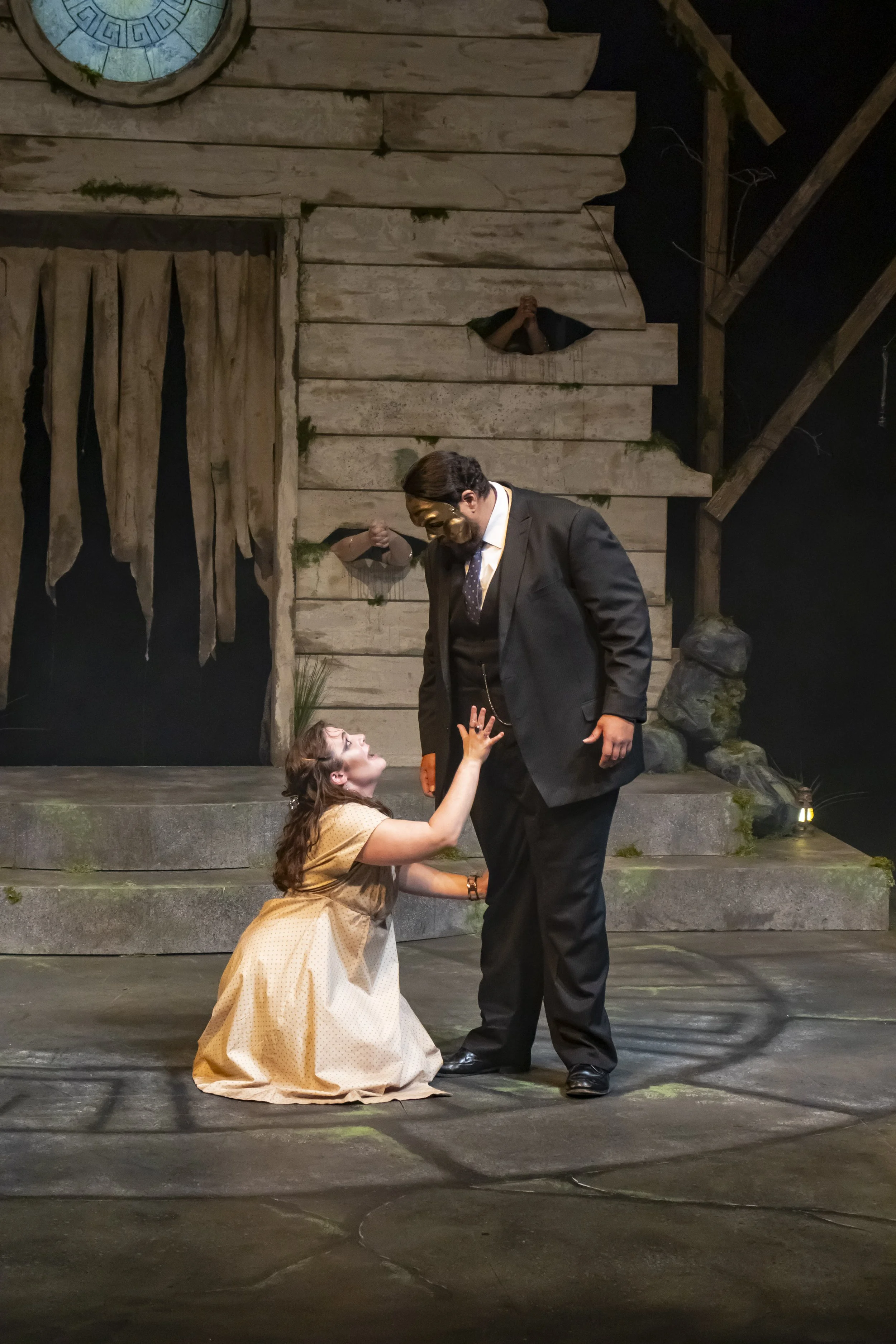
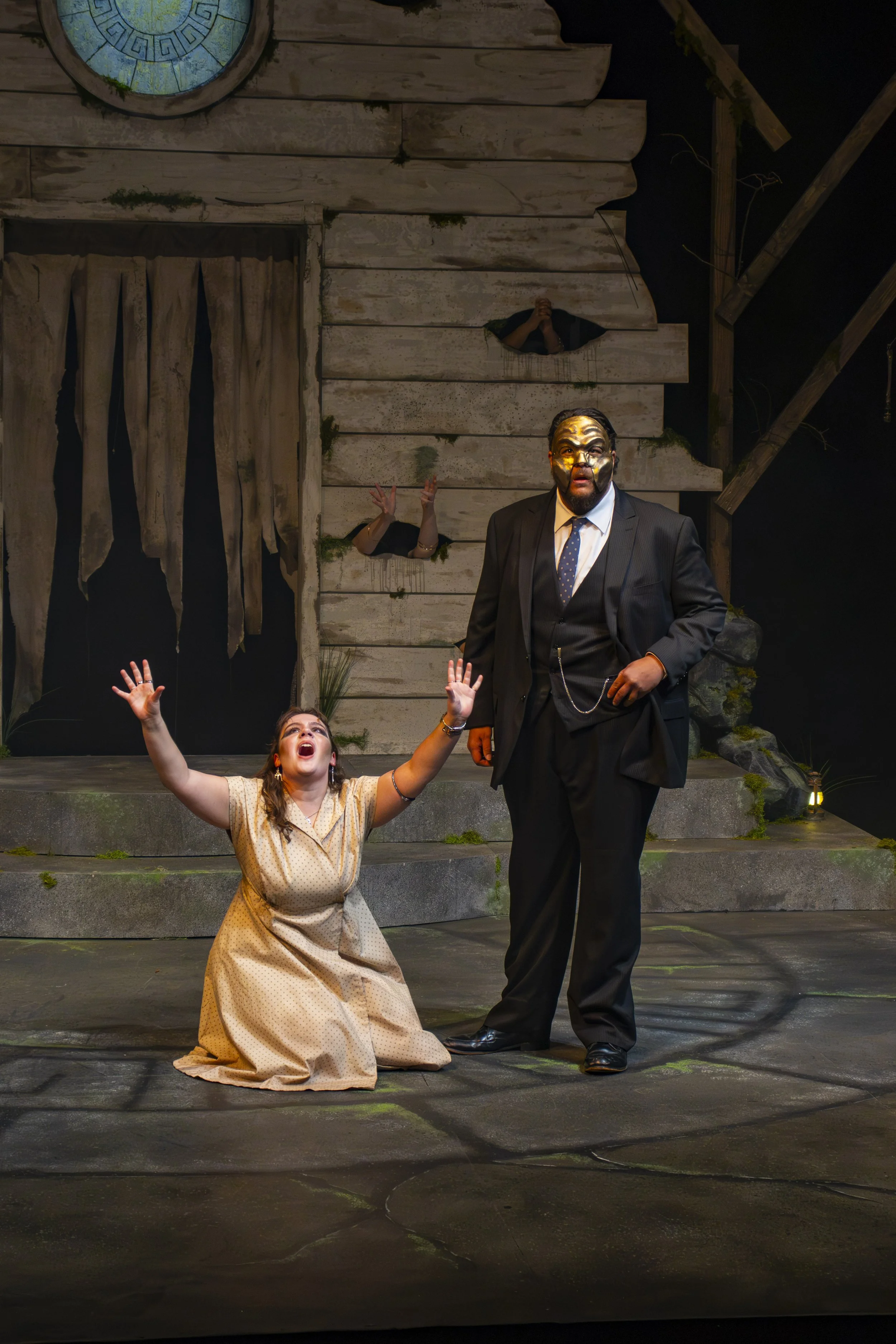
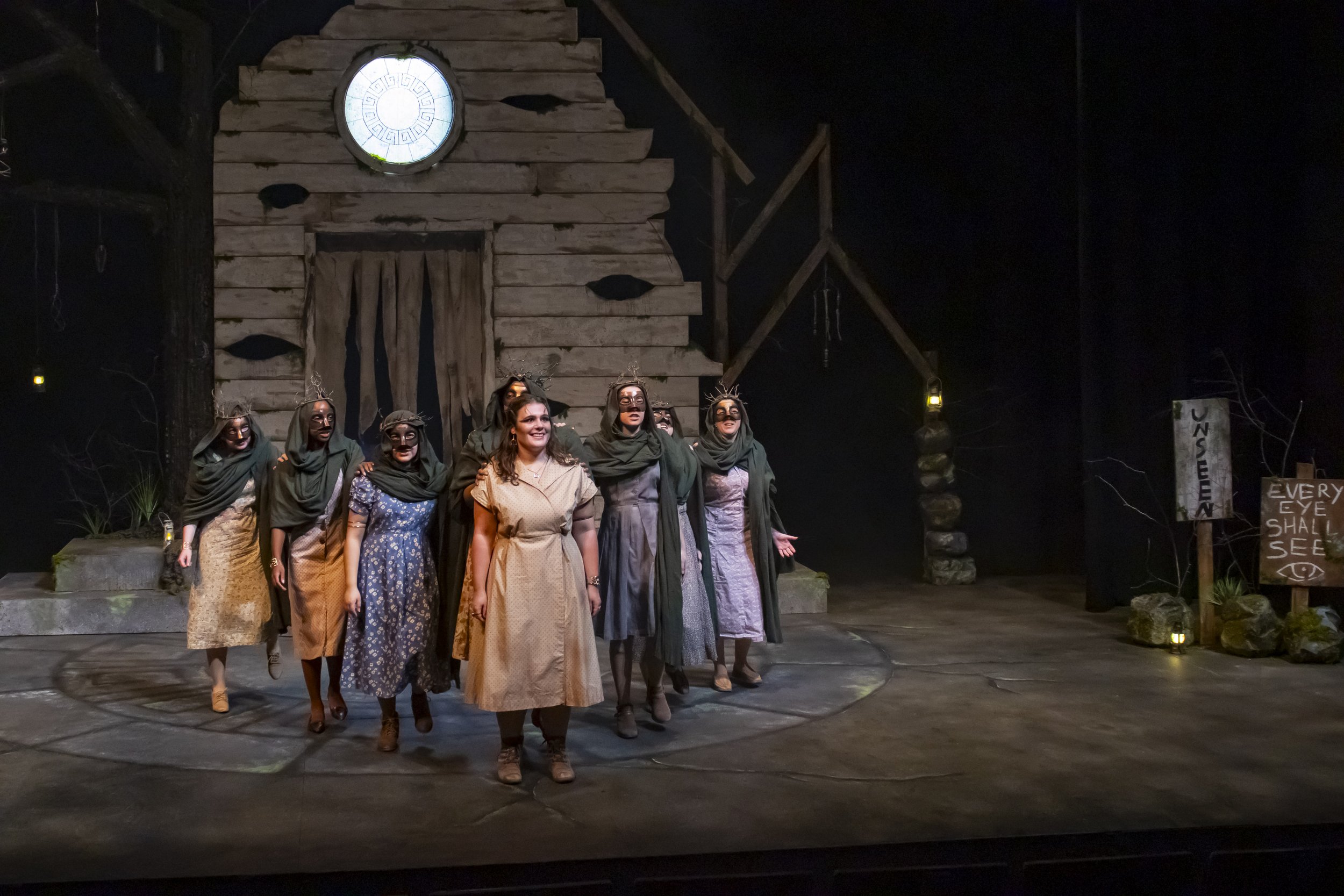
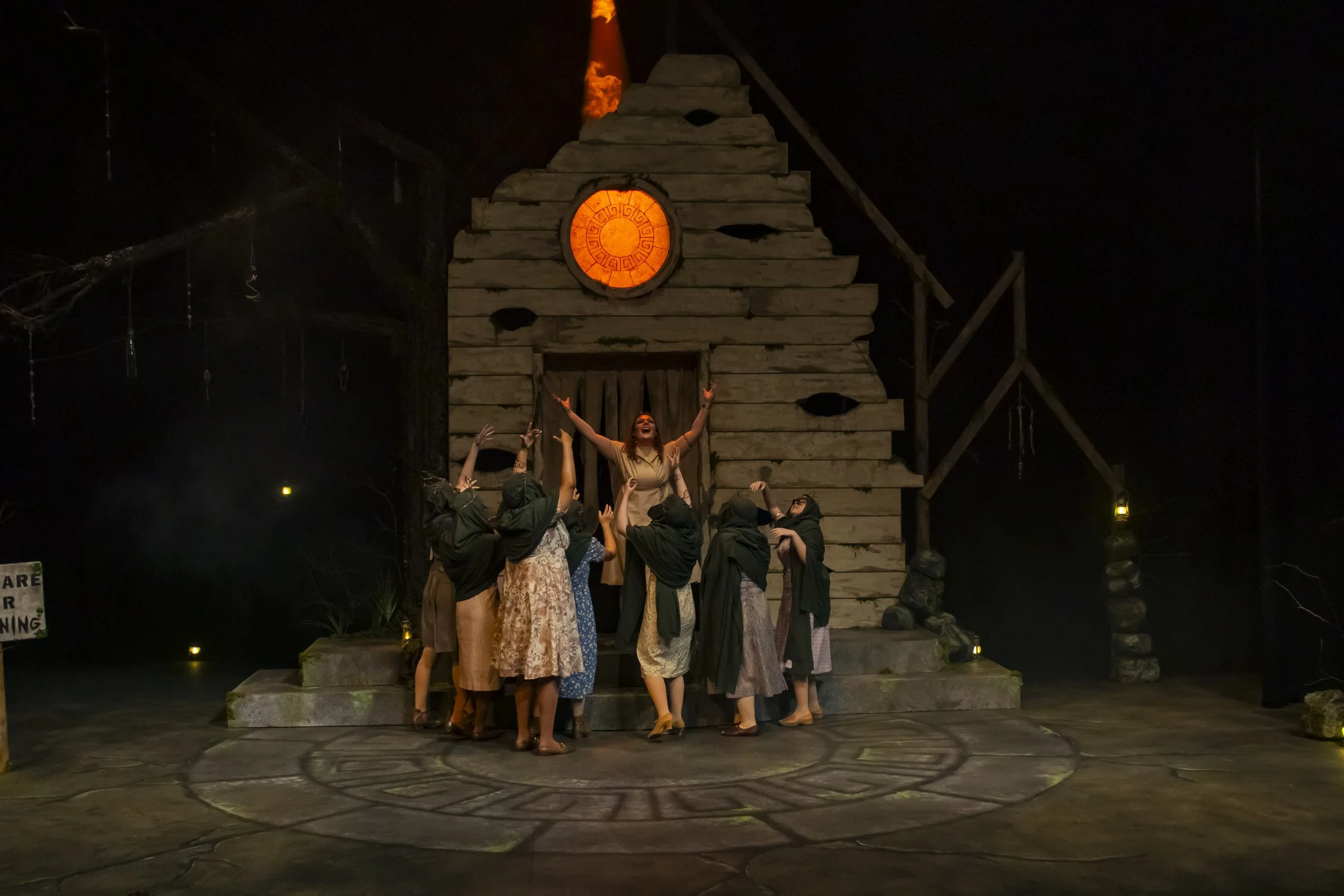
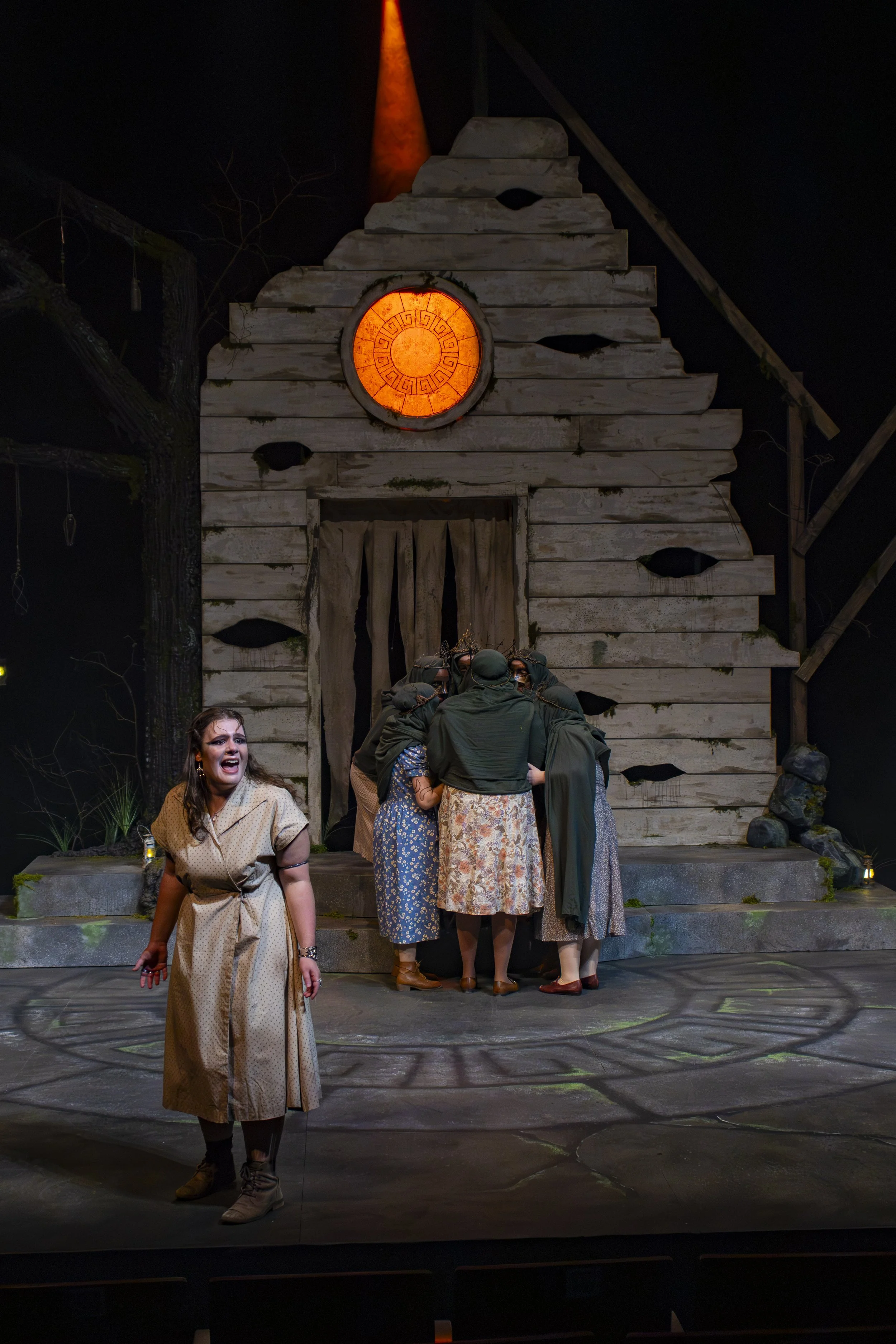
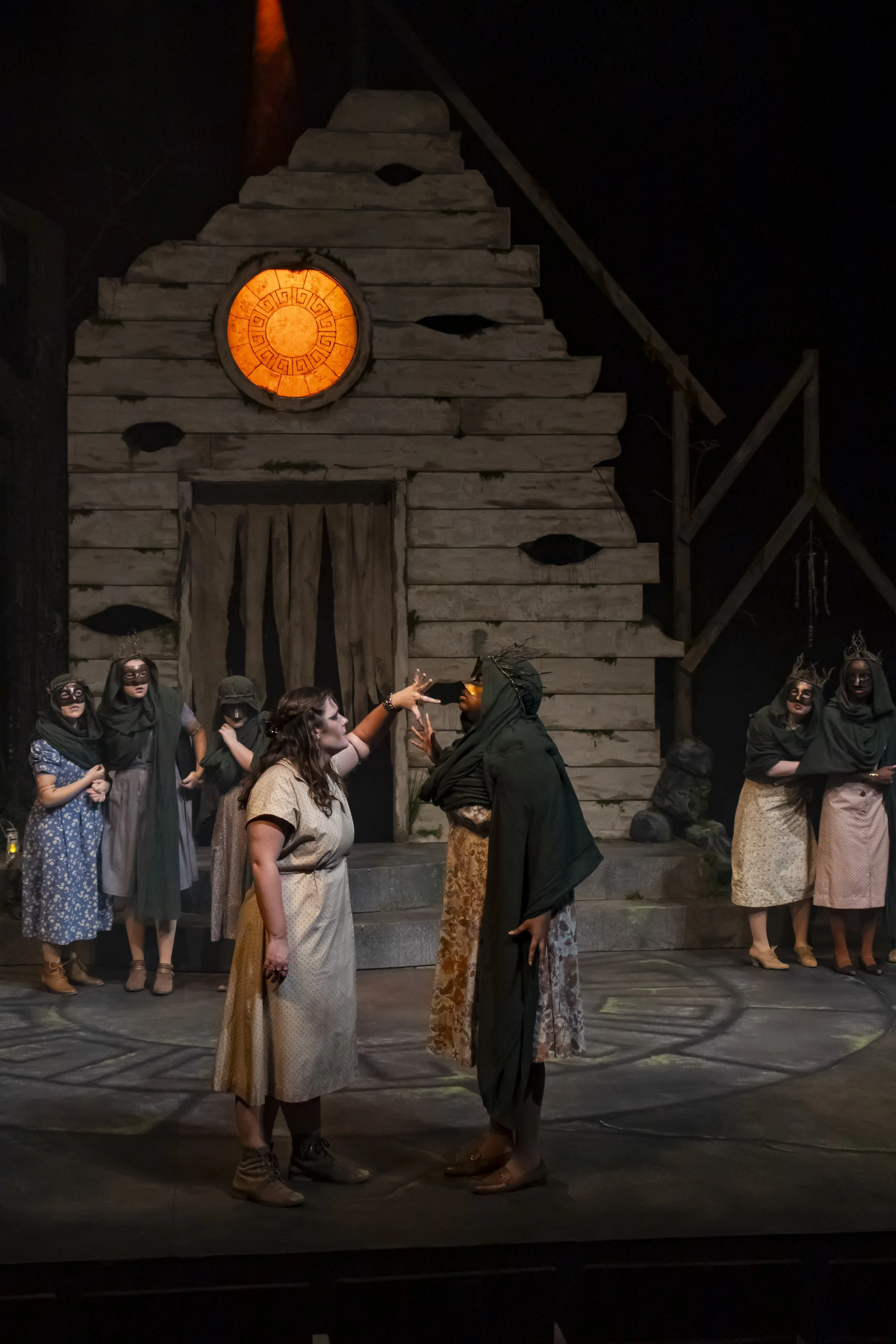
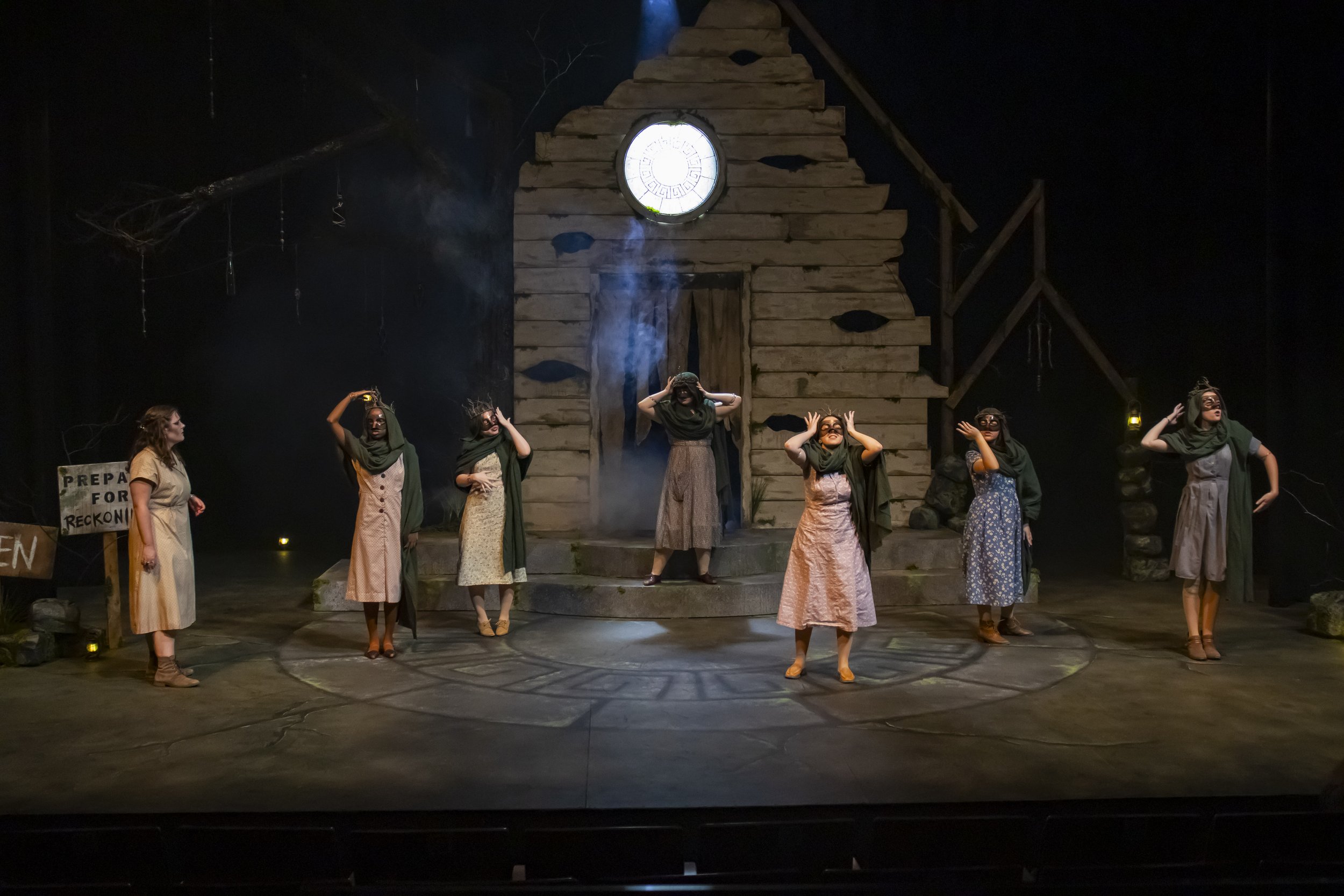
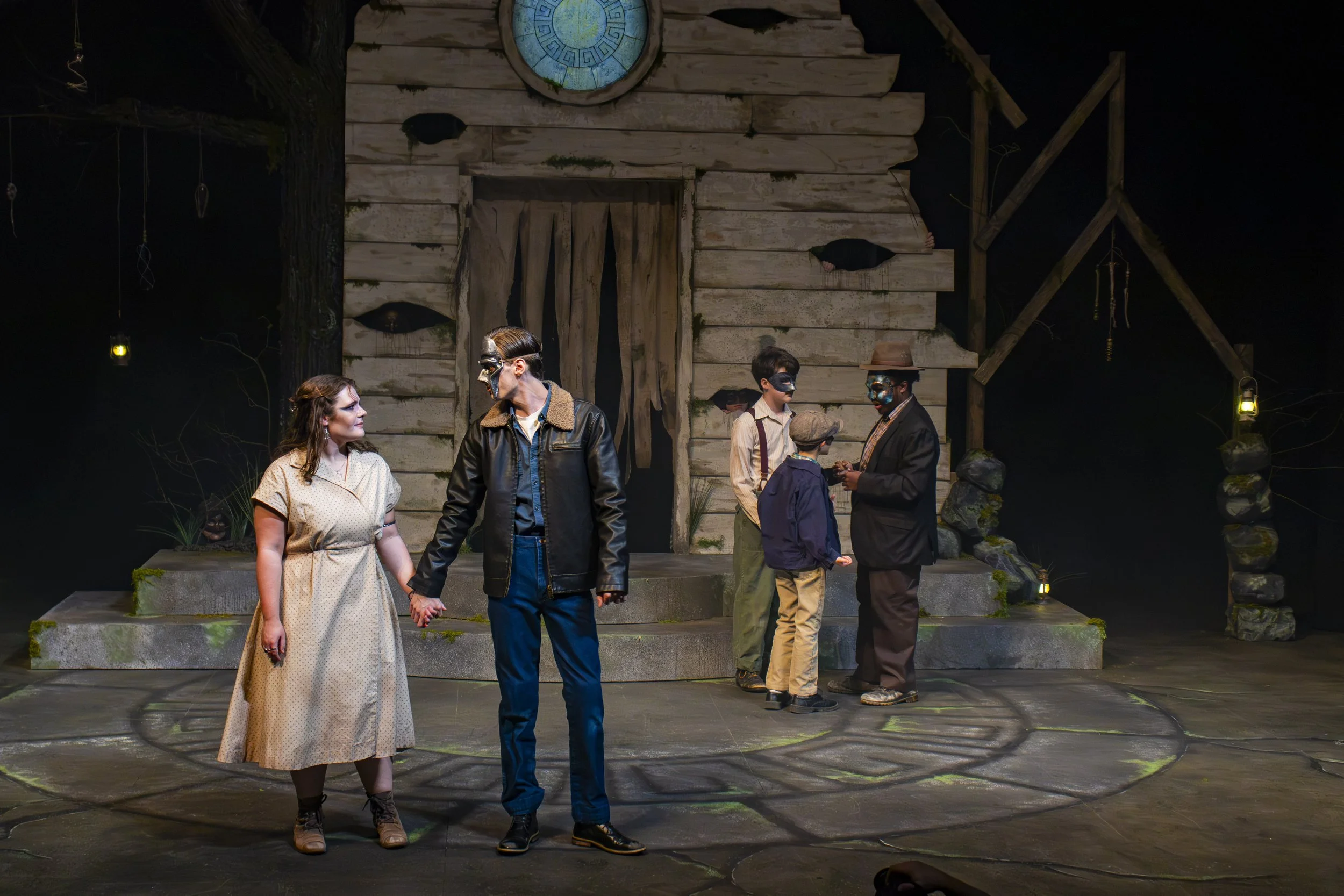
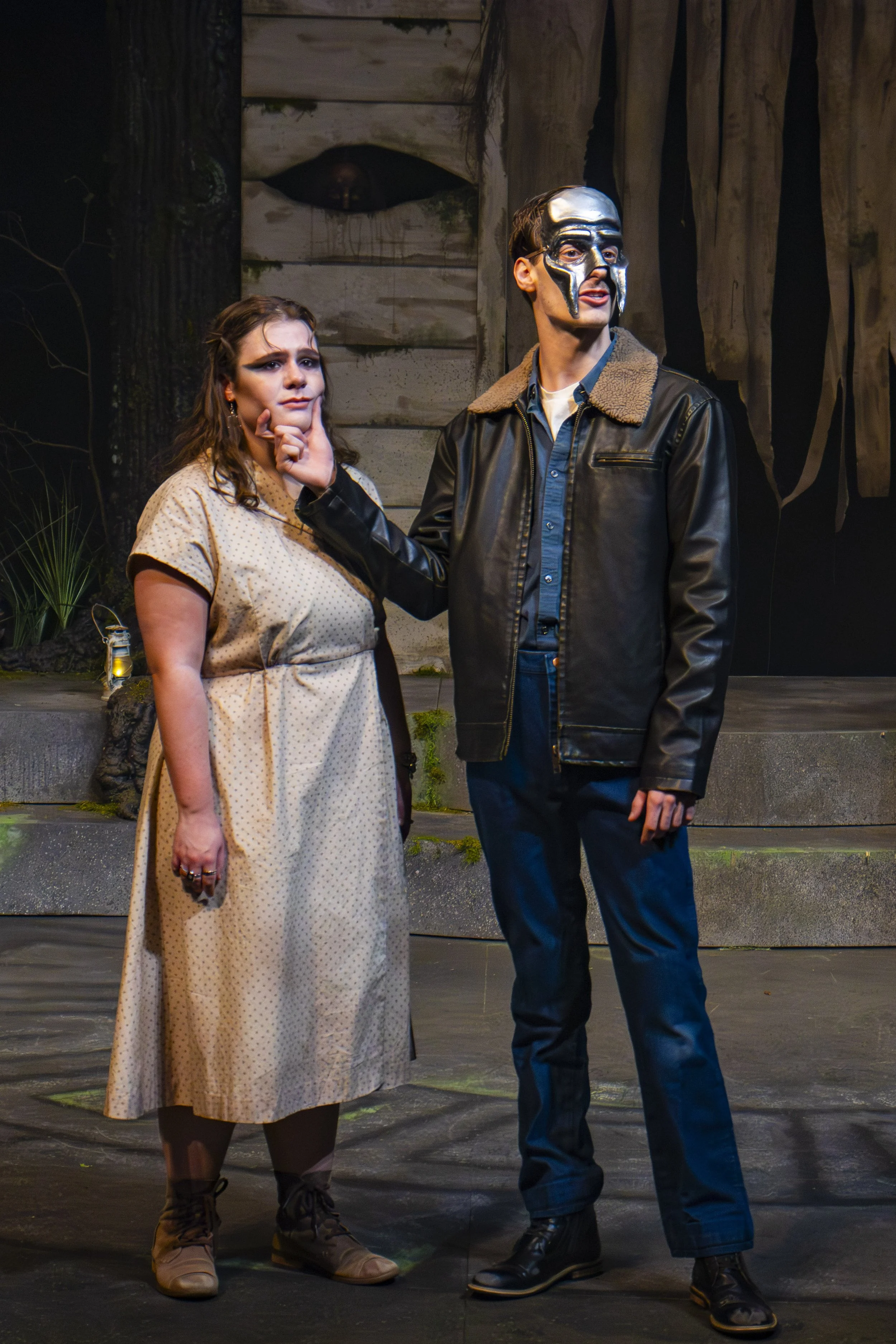
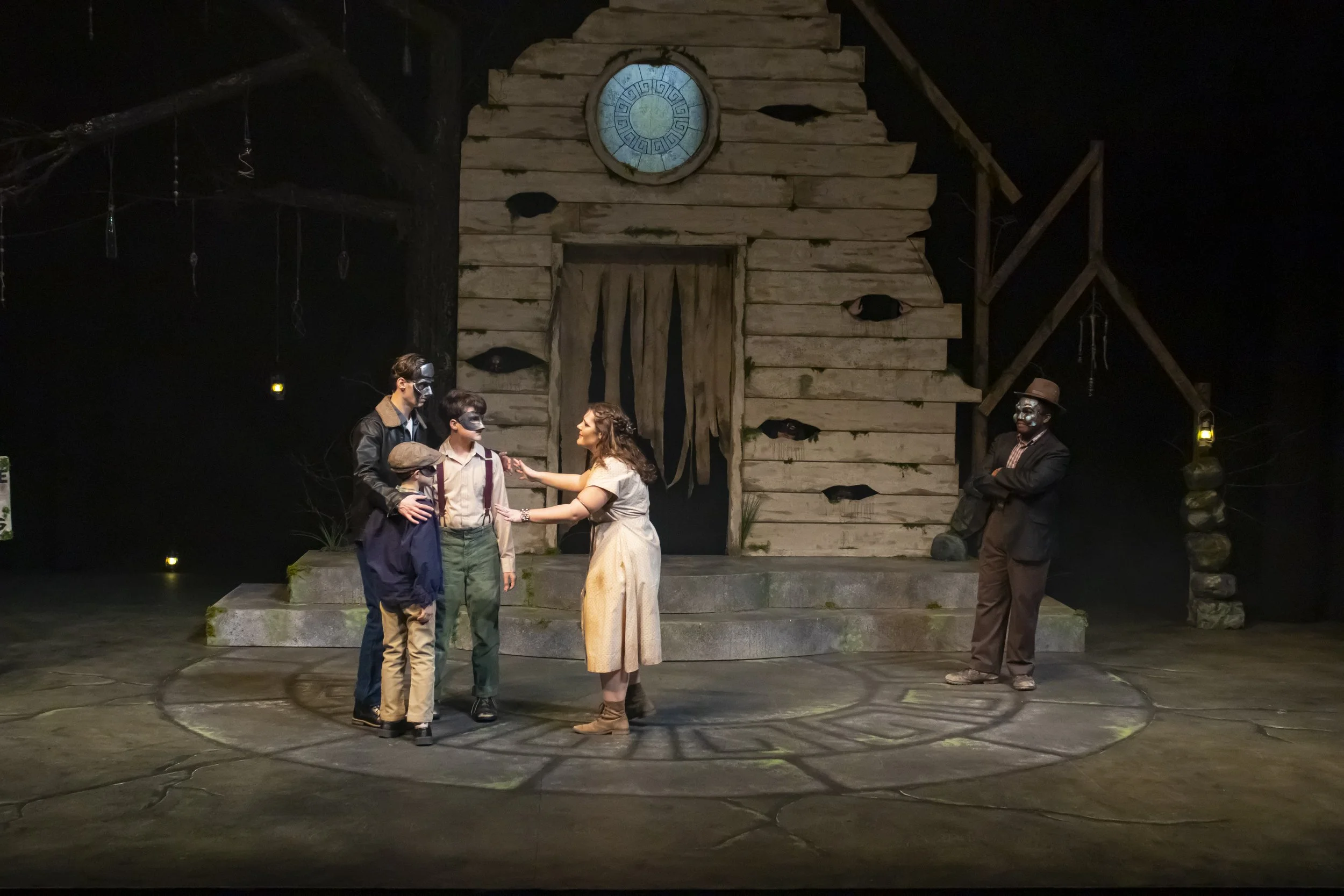
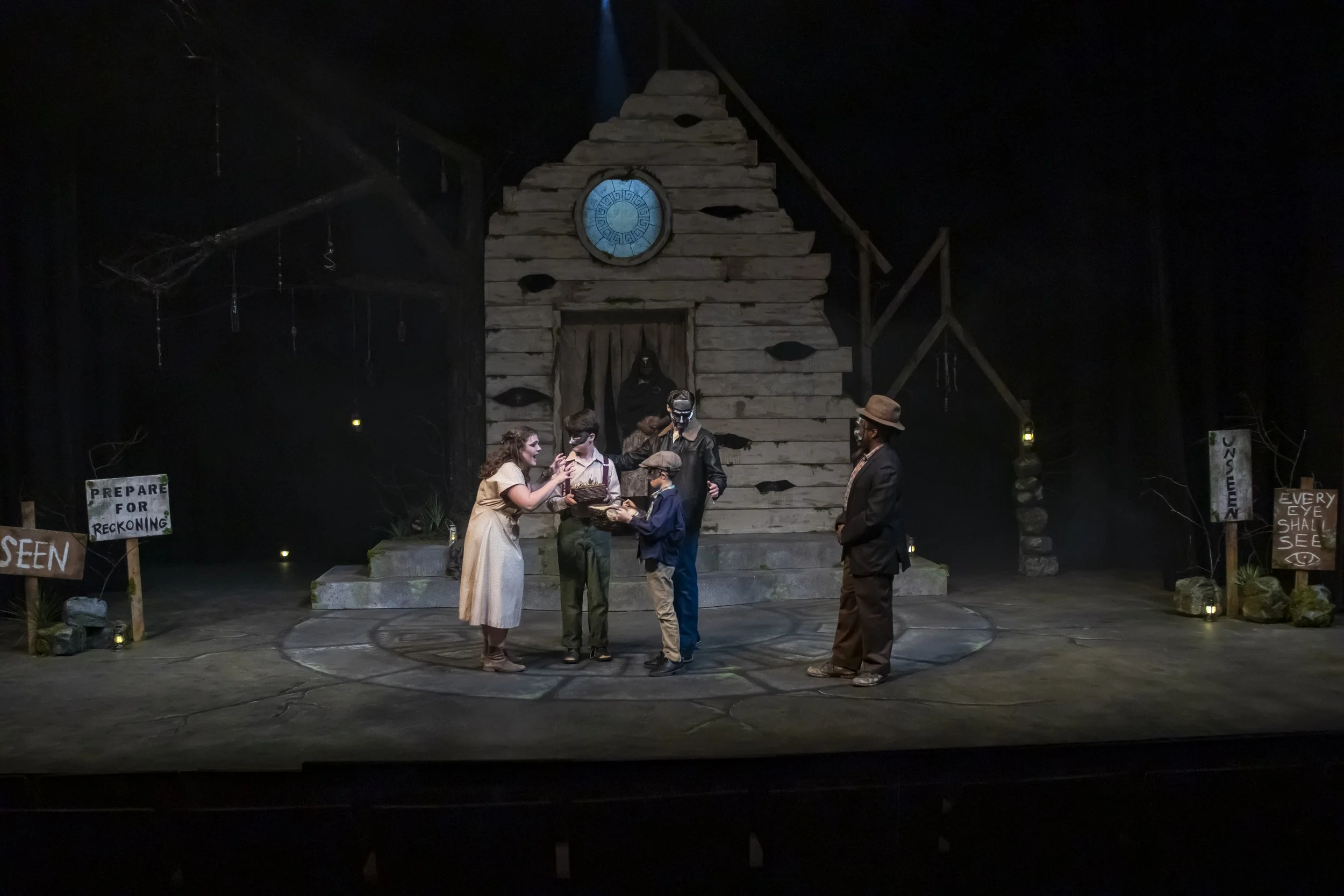
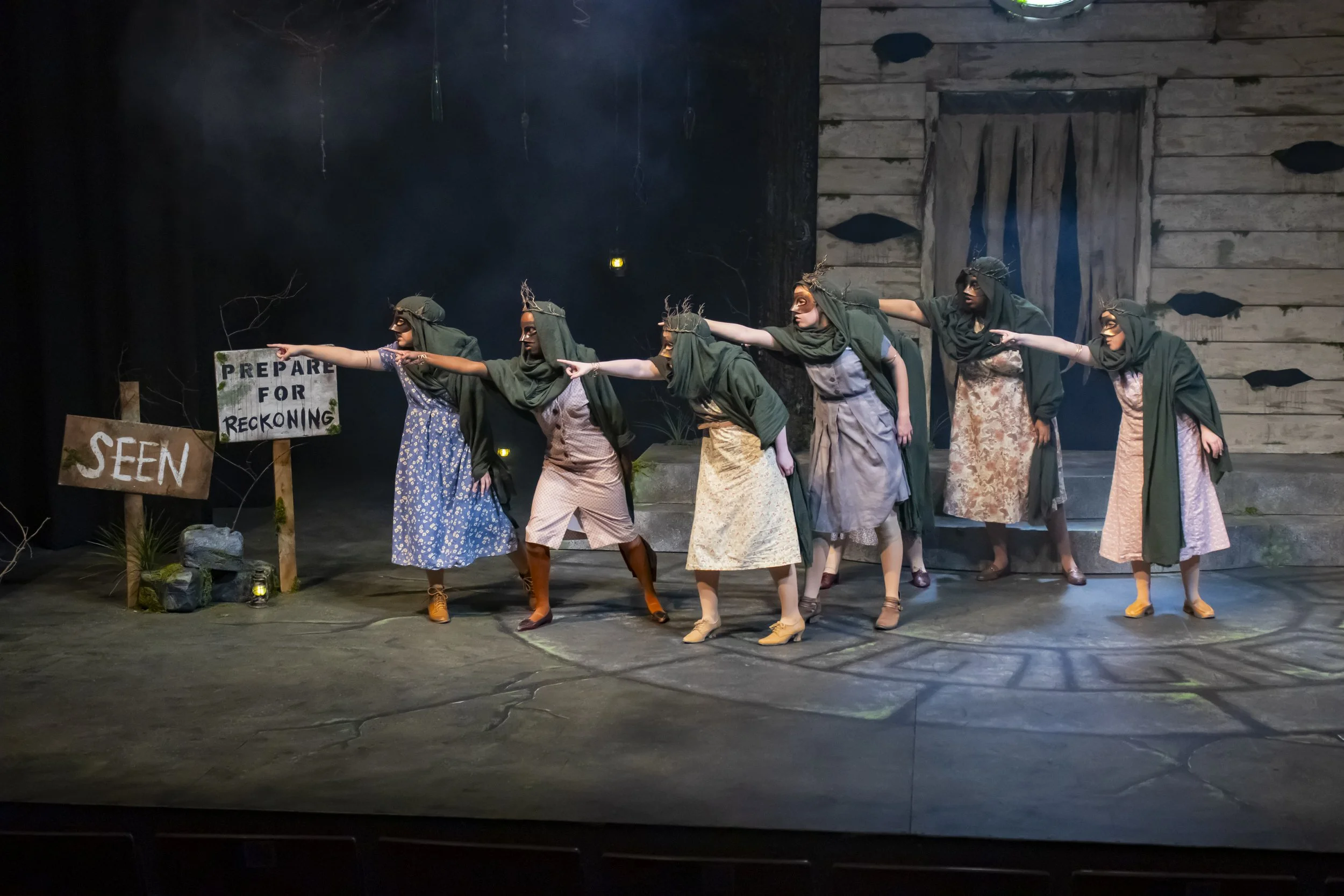

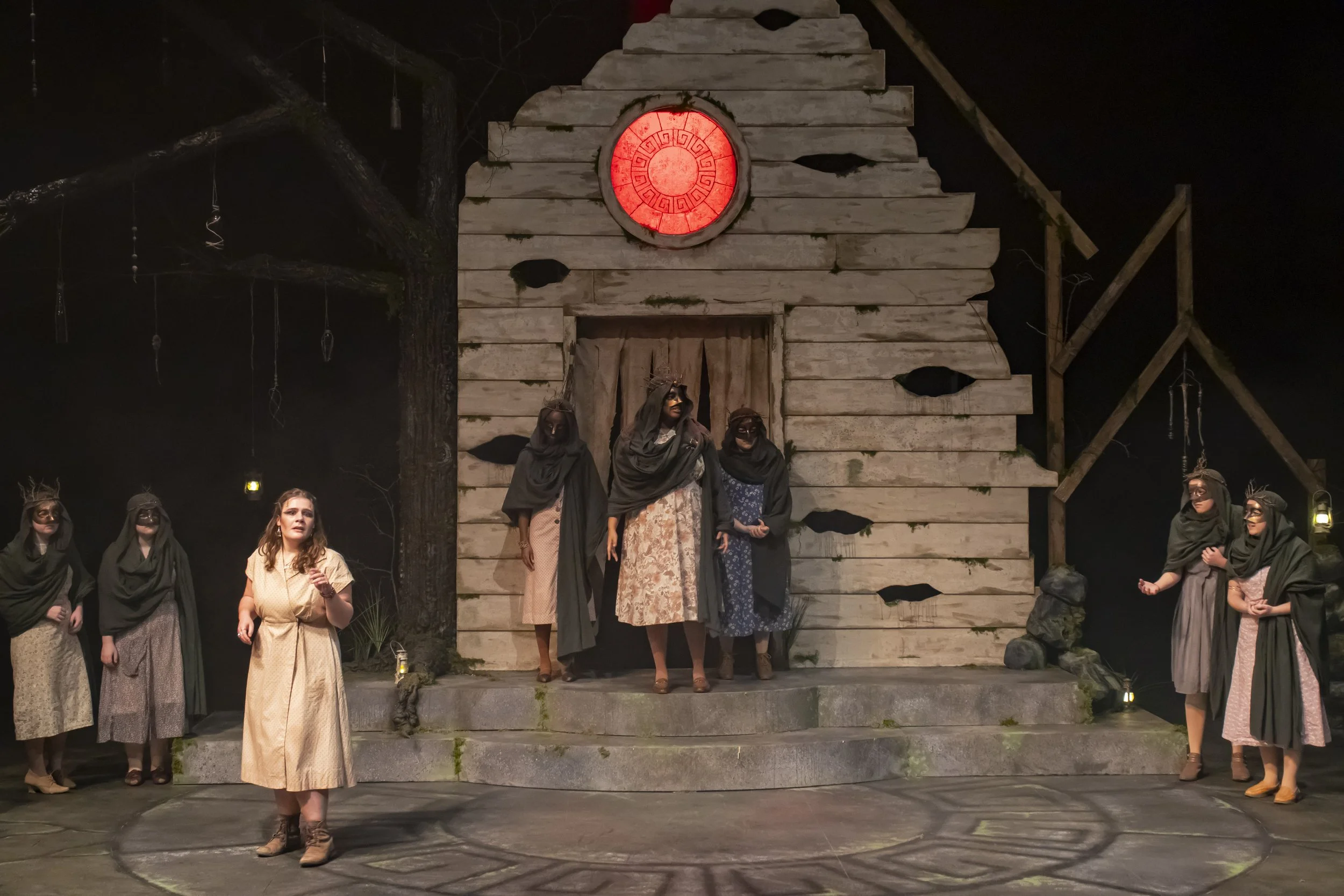
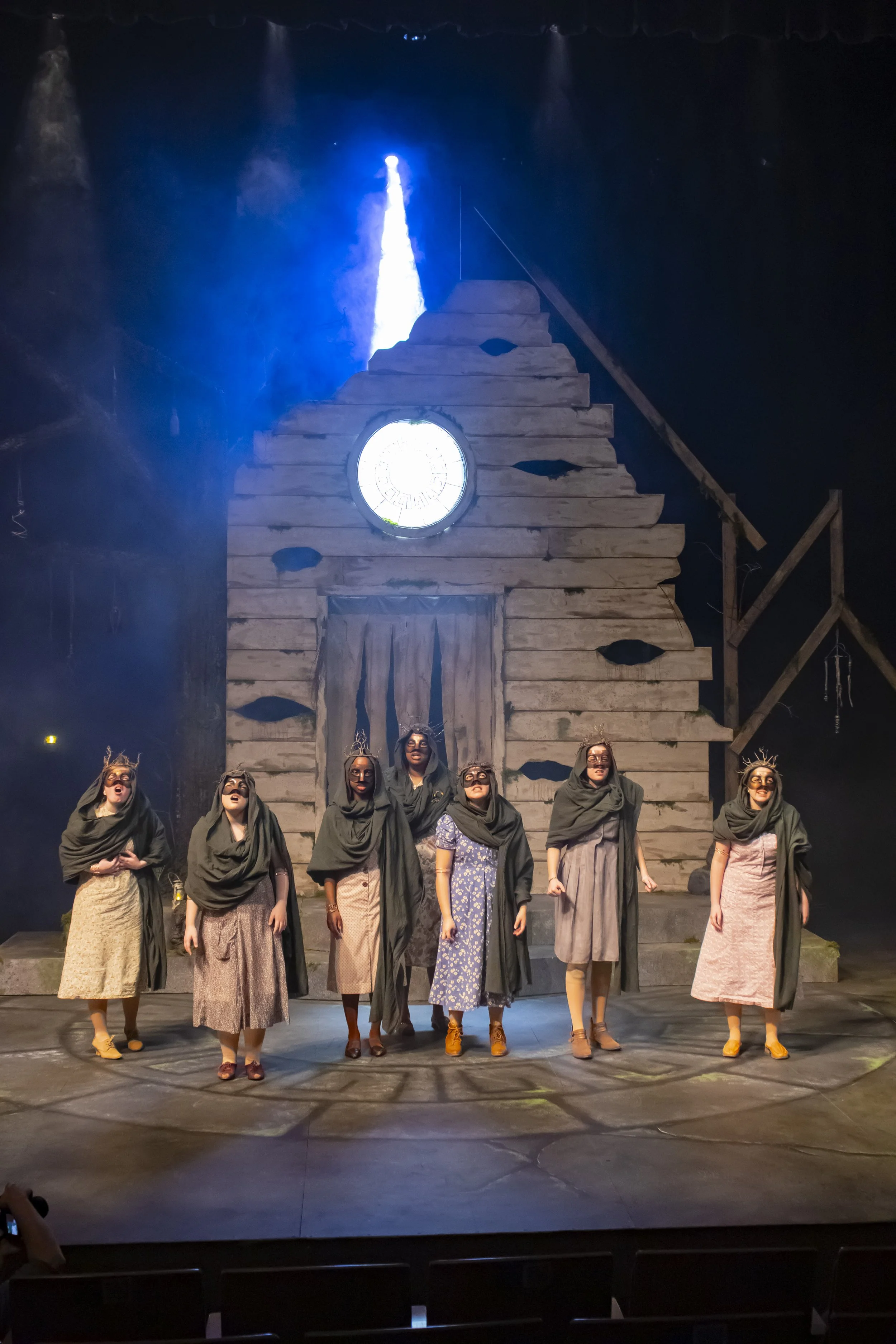
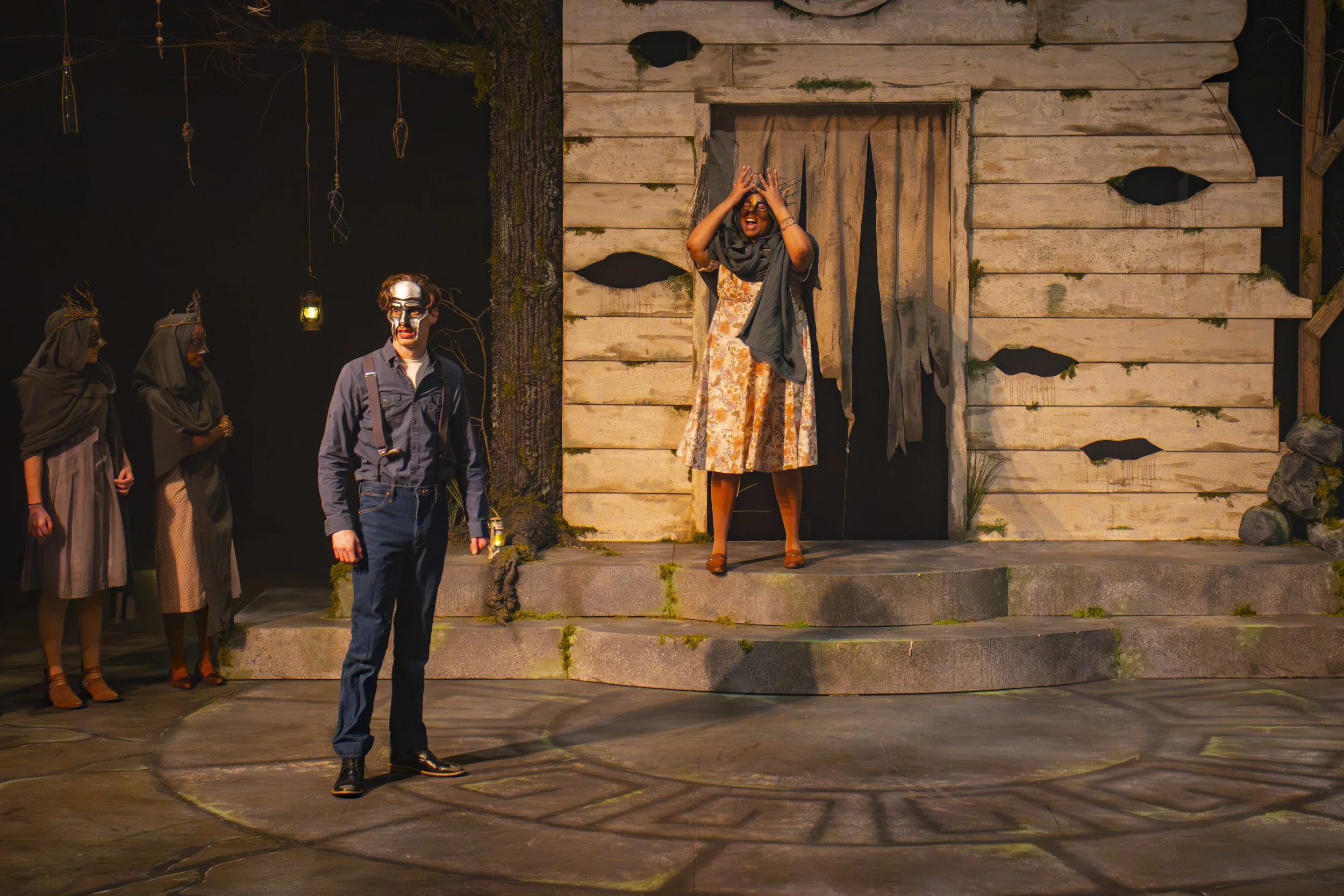
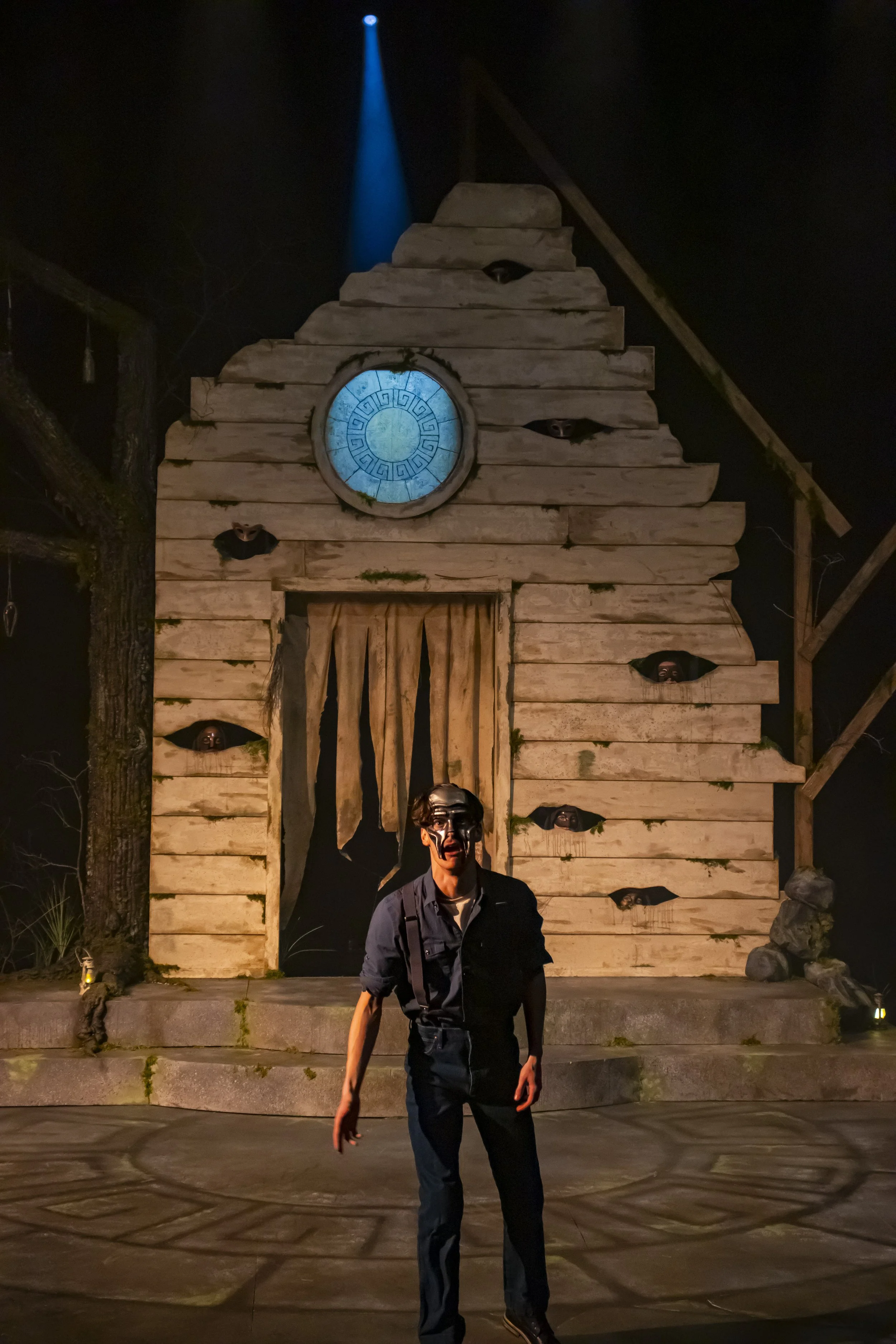
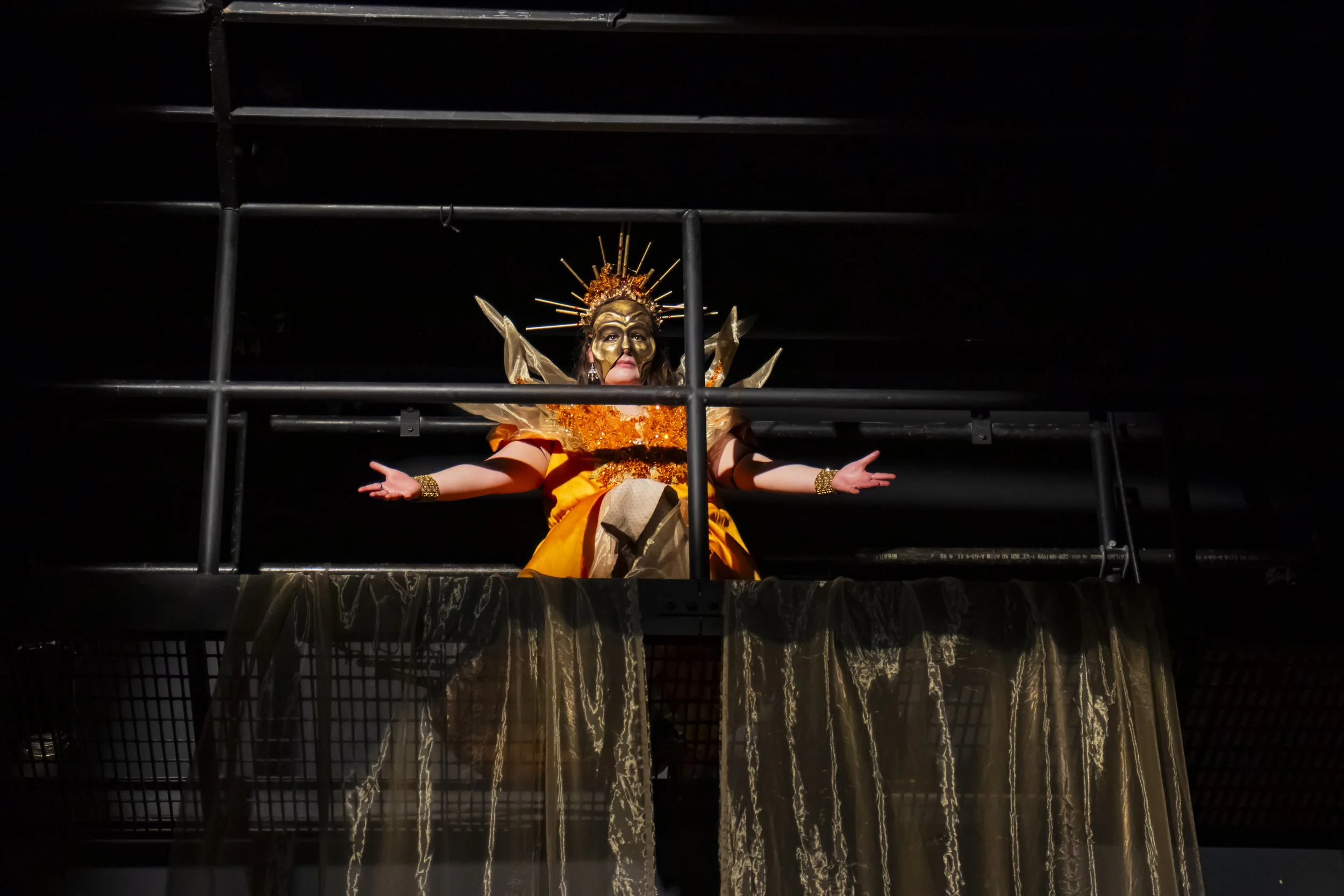
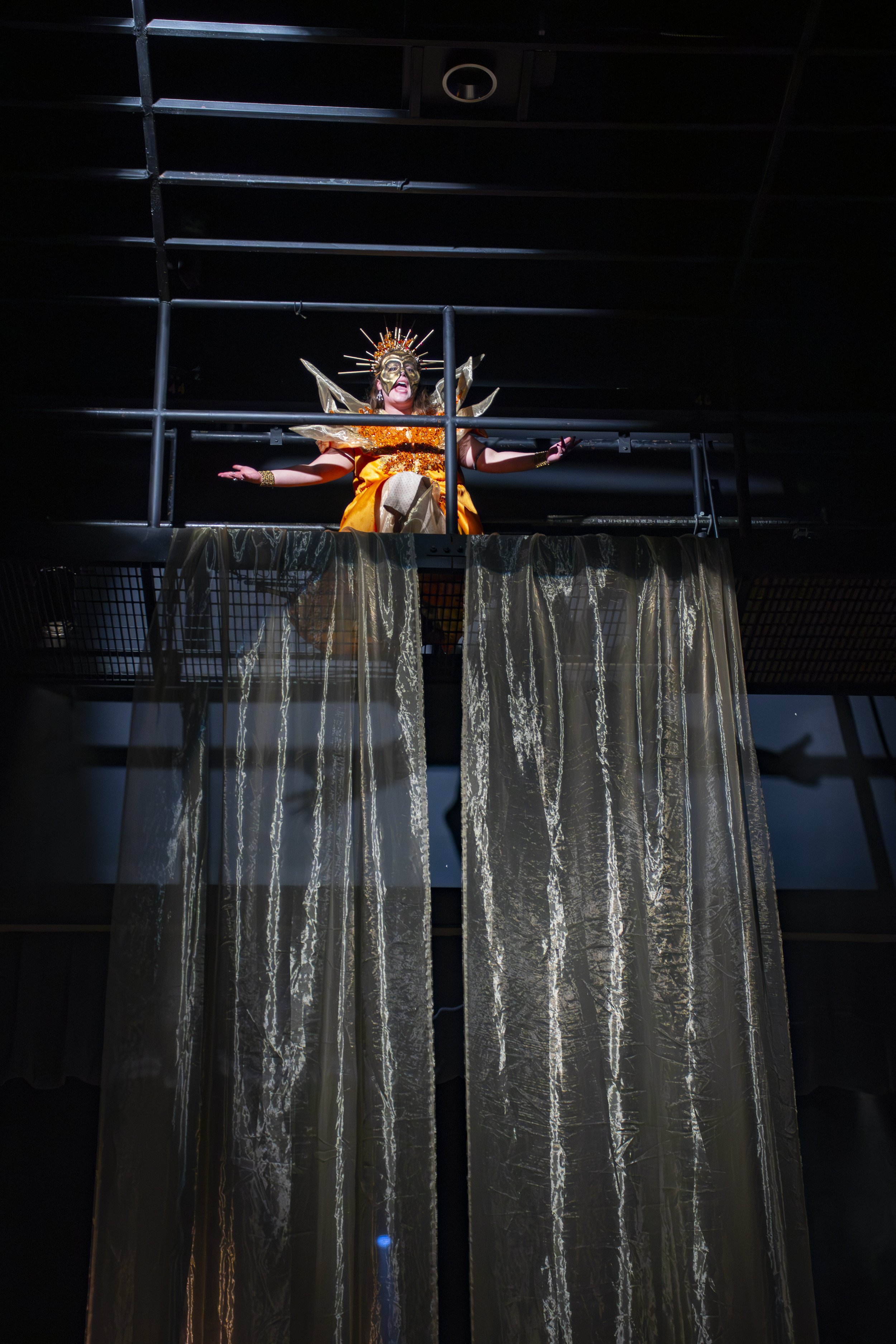
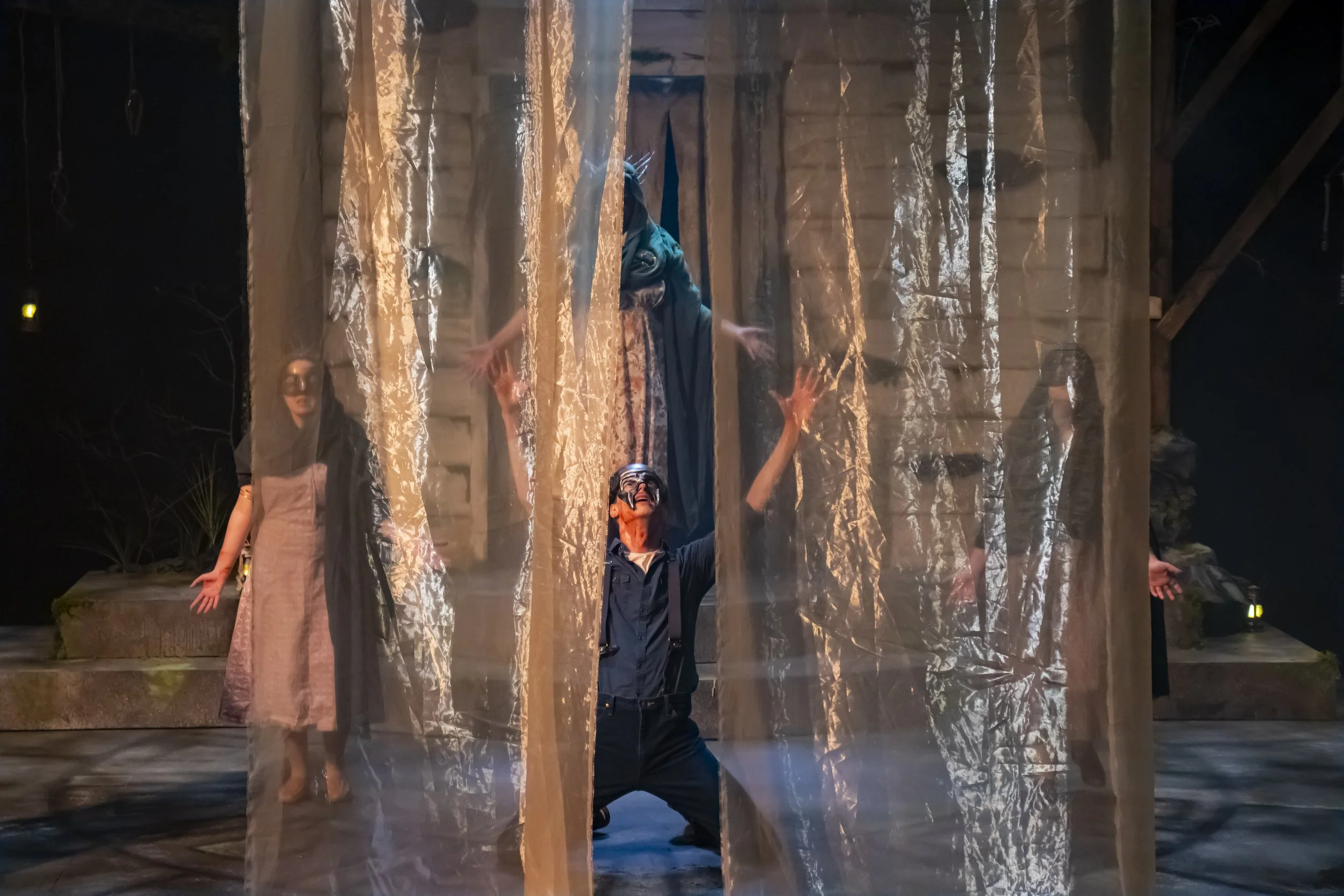
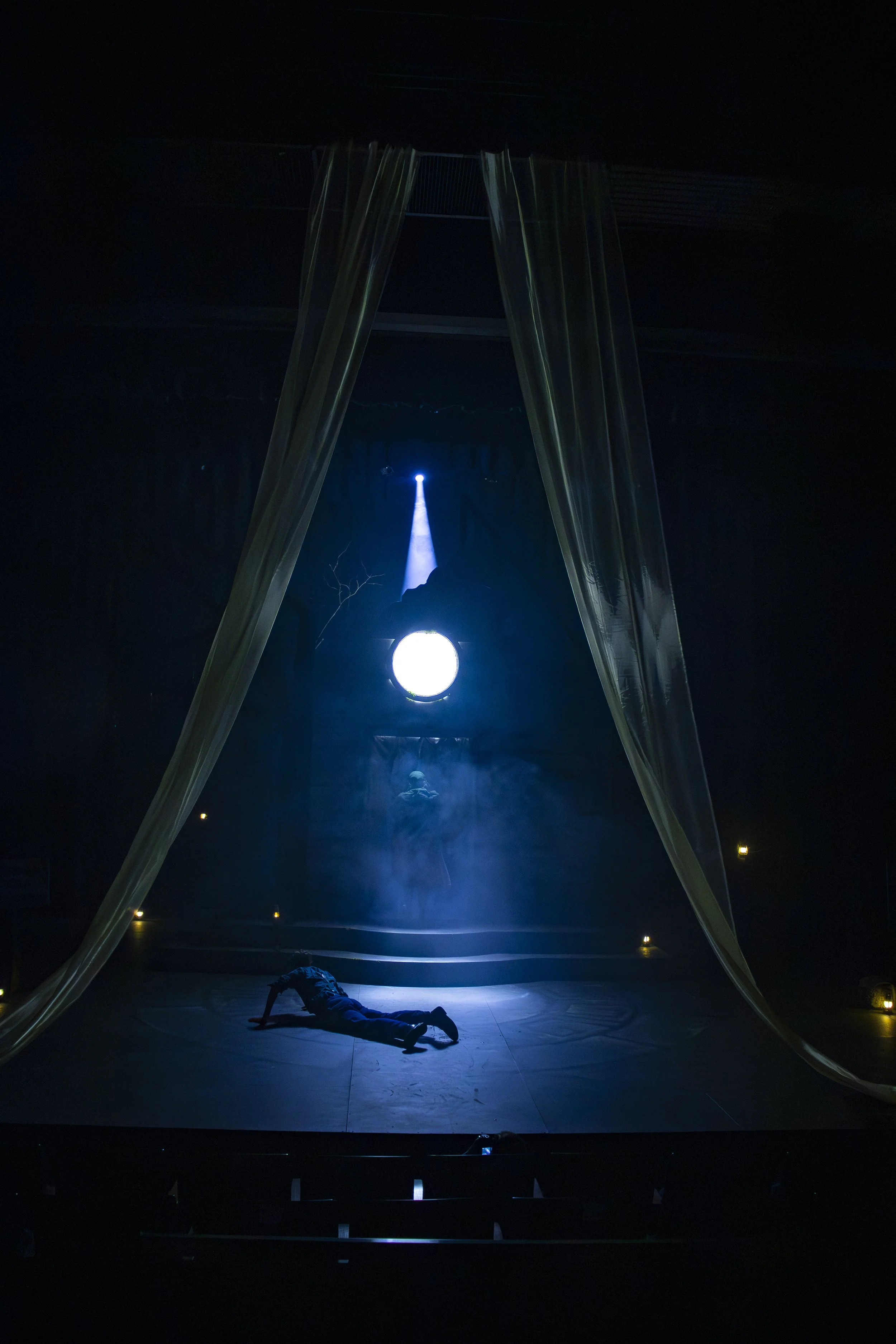

PHOTOS by Emma Laine Hoffbauer
Director’s Note — Medea
Tuesday, November 11, 2025
How do, and welcome to UTCTC’s production of Medea.
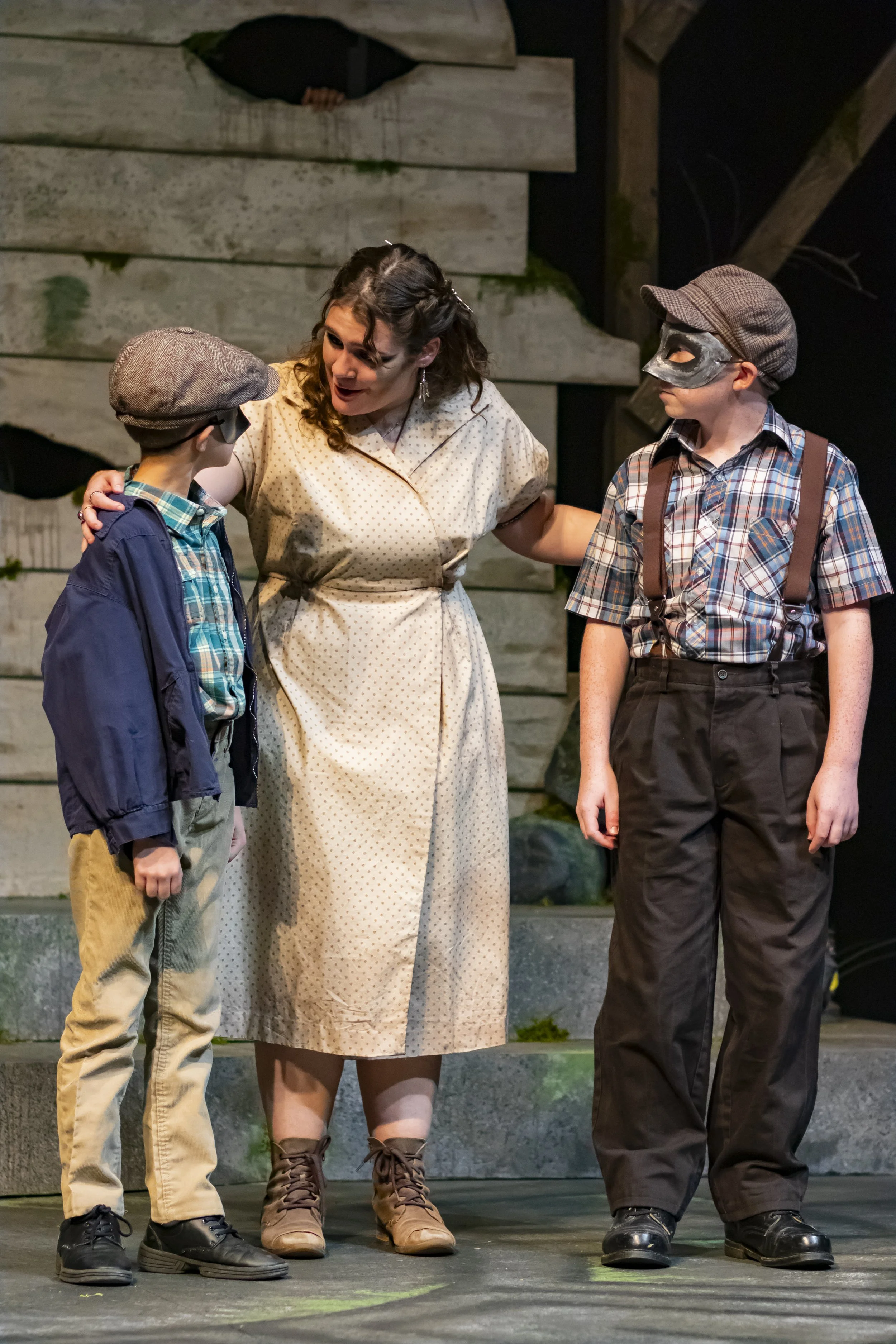
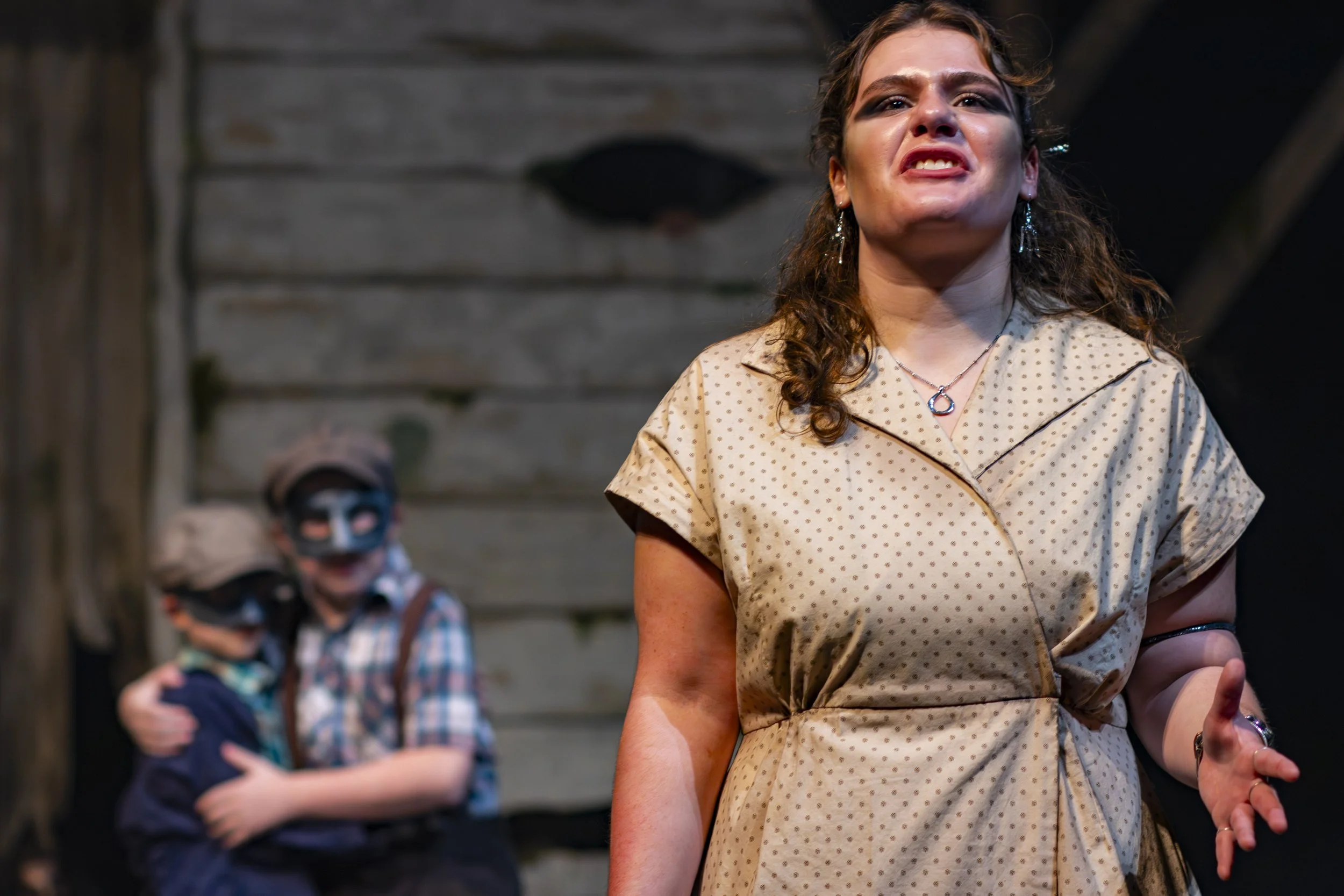
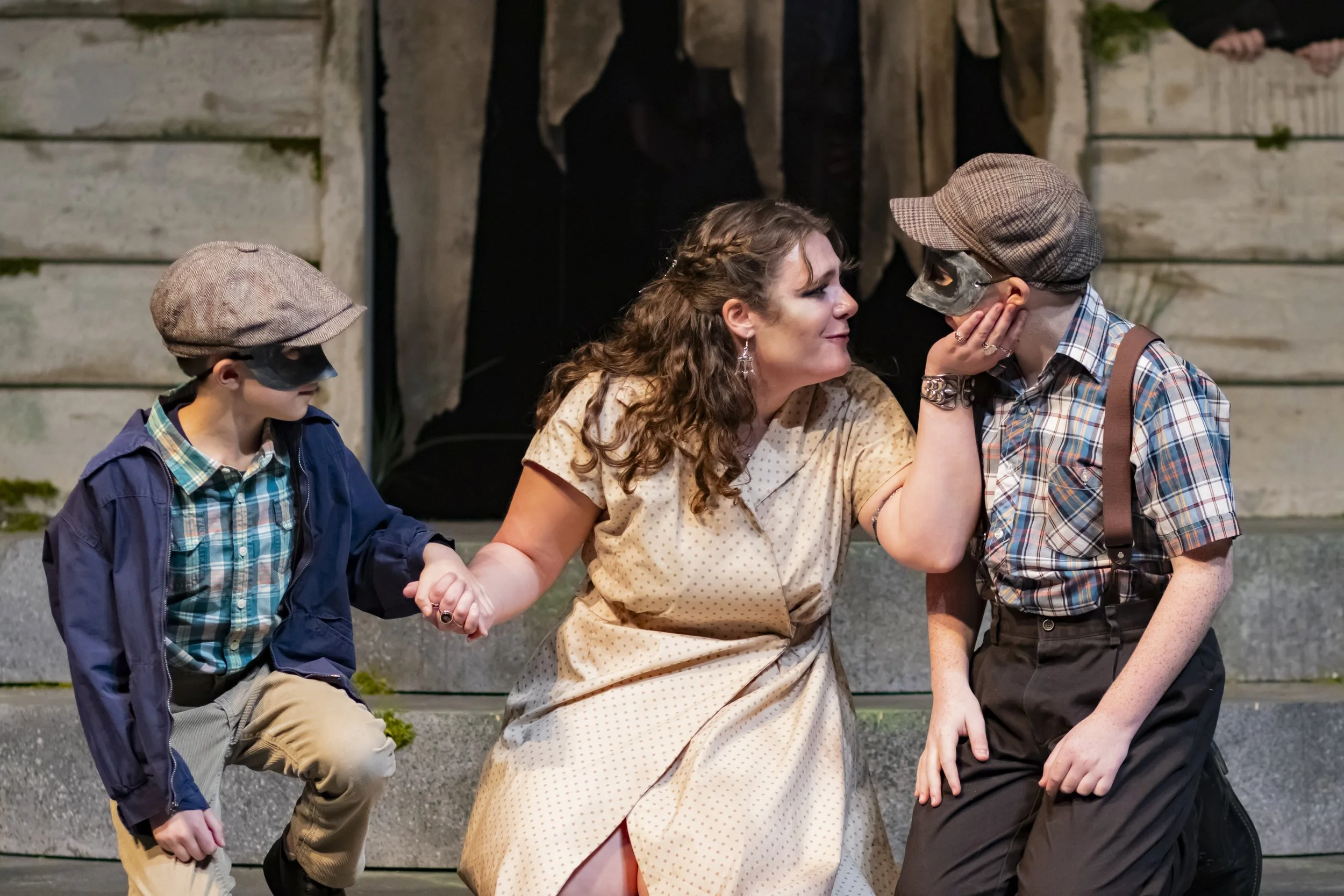
The play begins after Medea has sacrificed everything for Jason. She has helped him and the Argonauts steal the Golden Fleece from her father, killed her own brother, and eloped with Jason to Greece. After bearing him two sons, Jason breaks his oath to her and marries King Kreon’s daughter instead. Medea asks him, “Trust in oaths has vanished. I cannot figure it out: Do you think the gods no longer rule, or that new laws now prevail for humans?”
This play confronts the exploitation of power and the breaking of trust within intimate relationships.
Have you ever been deceived?
Was it by someone you loved?
What happens to a world when you can no longer trust those closest to you?
Betrayal is disturbing—and when it happens, we often find ourselves searching for a reckoning.
In true Greek tragedy form, we began by approaching this production as a kind of ritual—something that might honor the gods, the community, and the traditions of the “City Dionysia”; a grand Athenian festival celebrating Dionysus, during which playwrights premiered new works in a days-long public competition. Euripides, one of the three most influential greek tragedians of fifth century B.C.E, wrote nearly ninety plays; nineteen of which survive. His works reinvent Greek myths and probe the darker side of human nature, and Medea remains his most famous… for good reason.
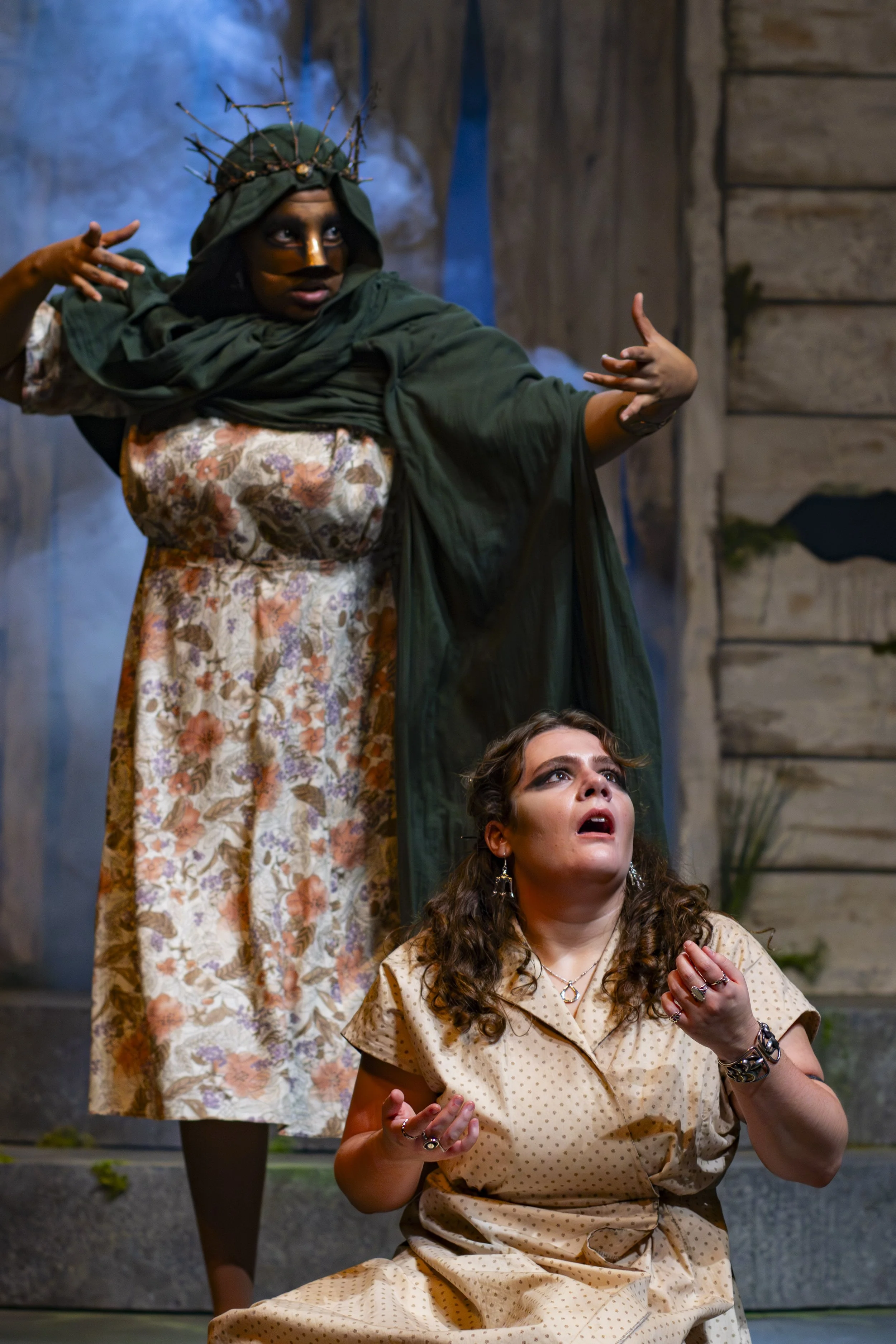
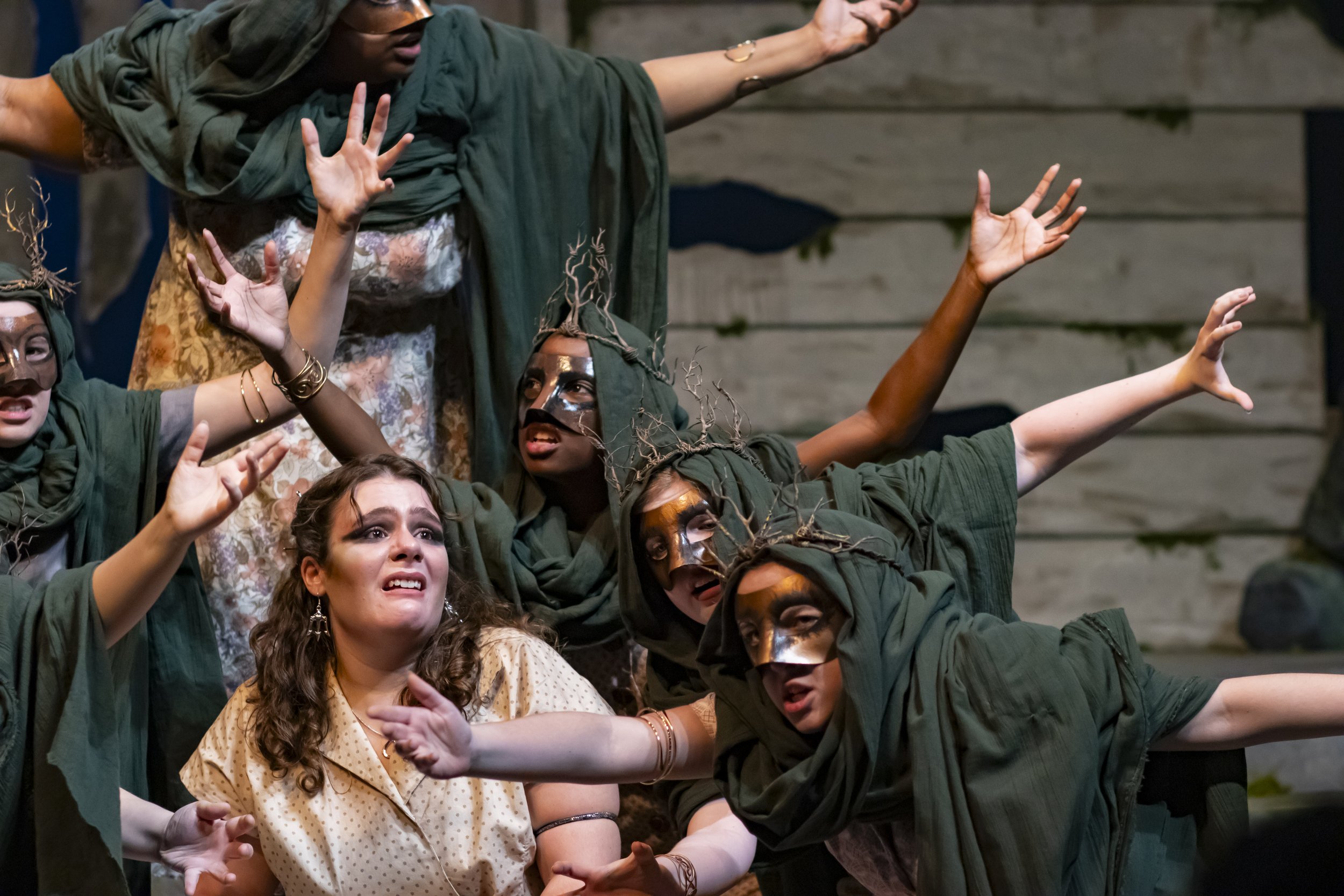
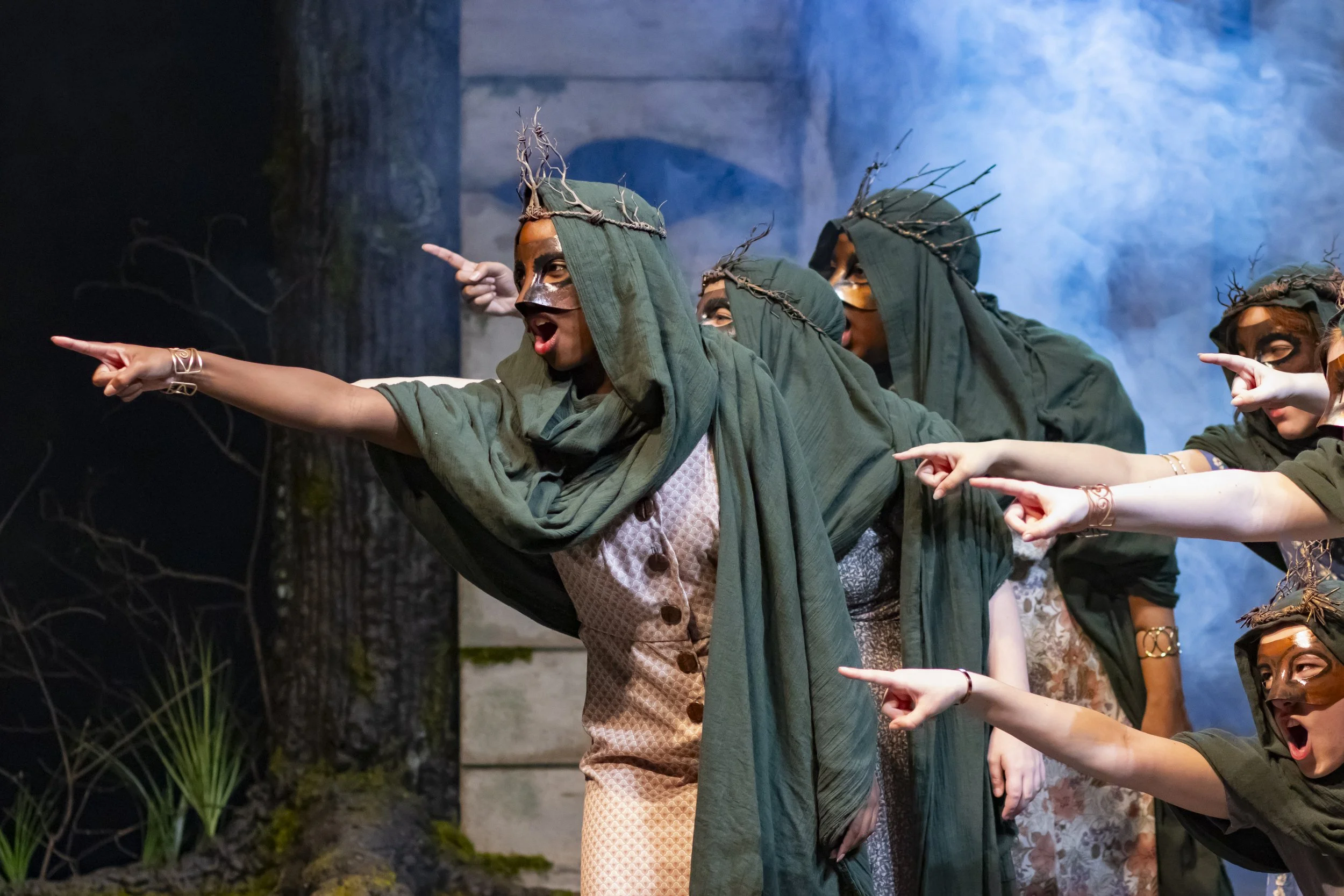
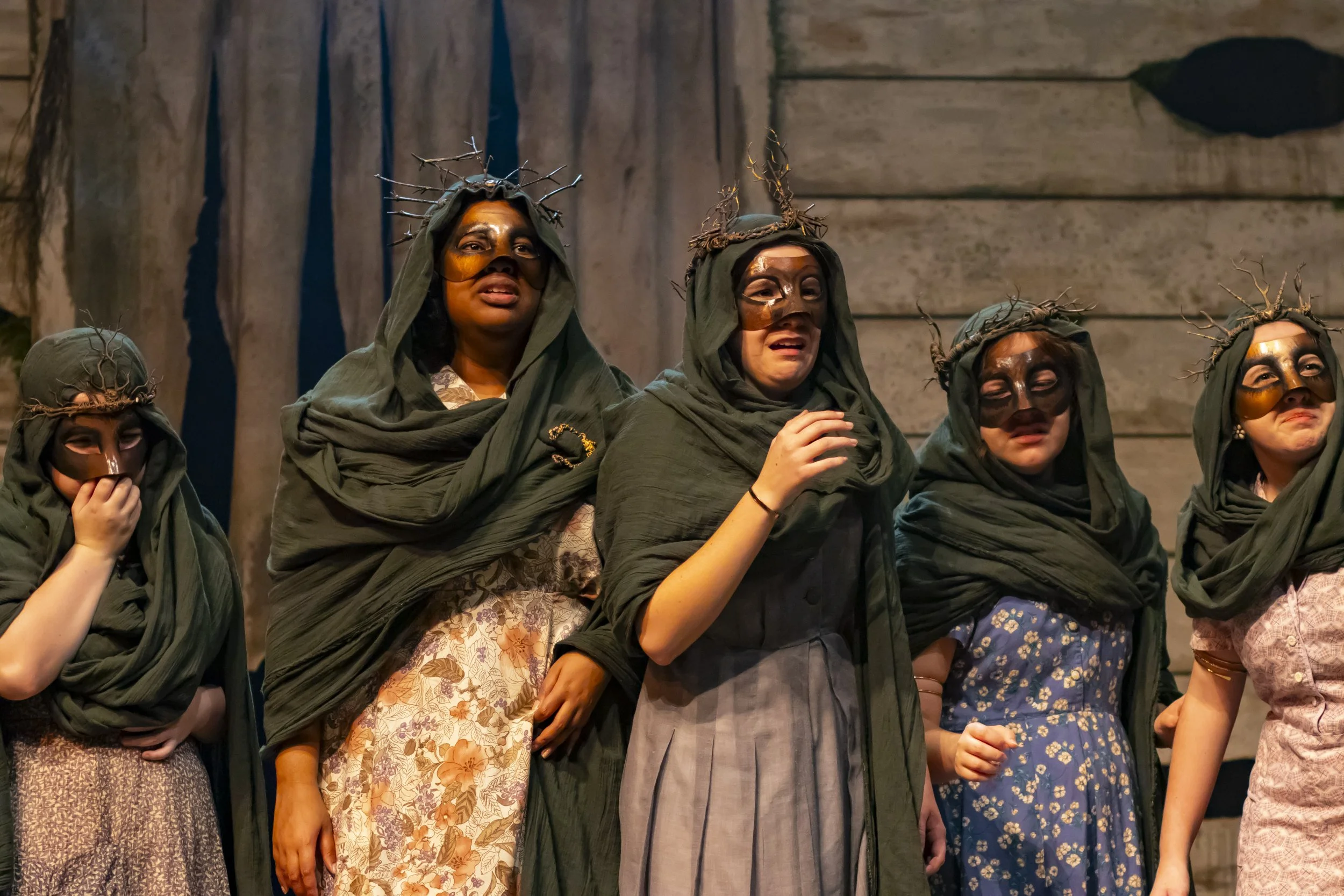
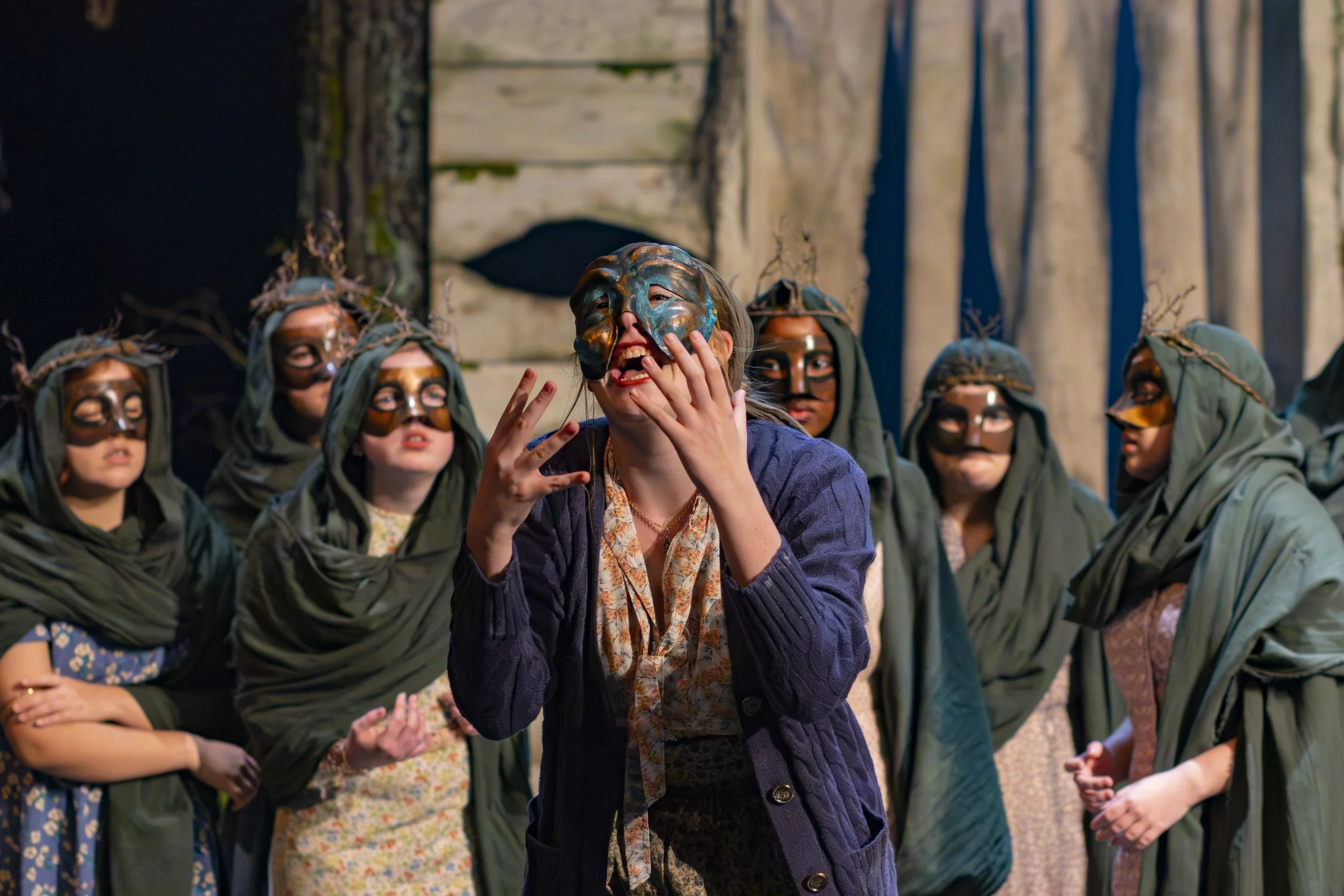
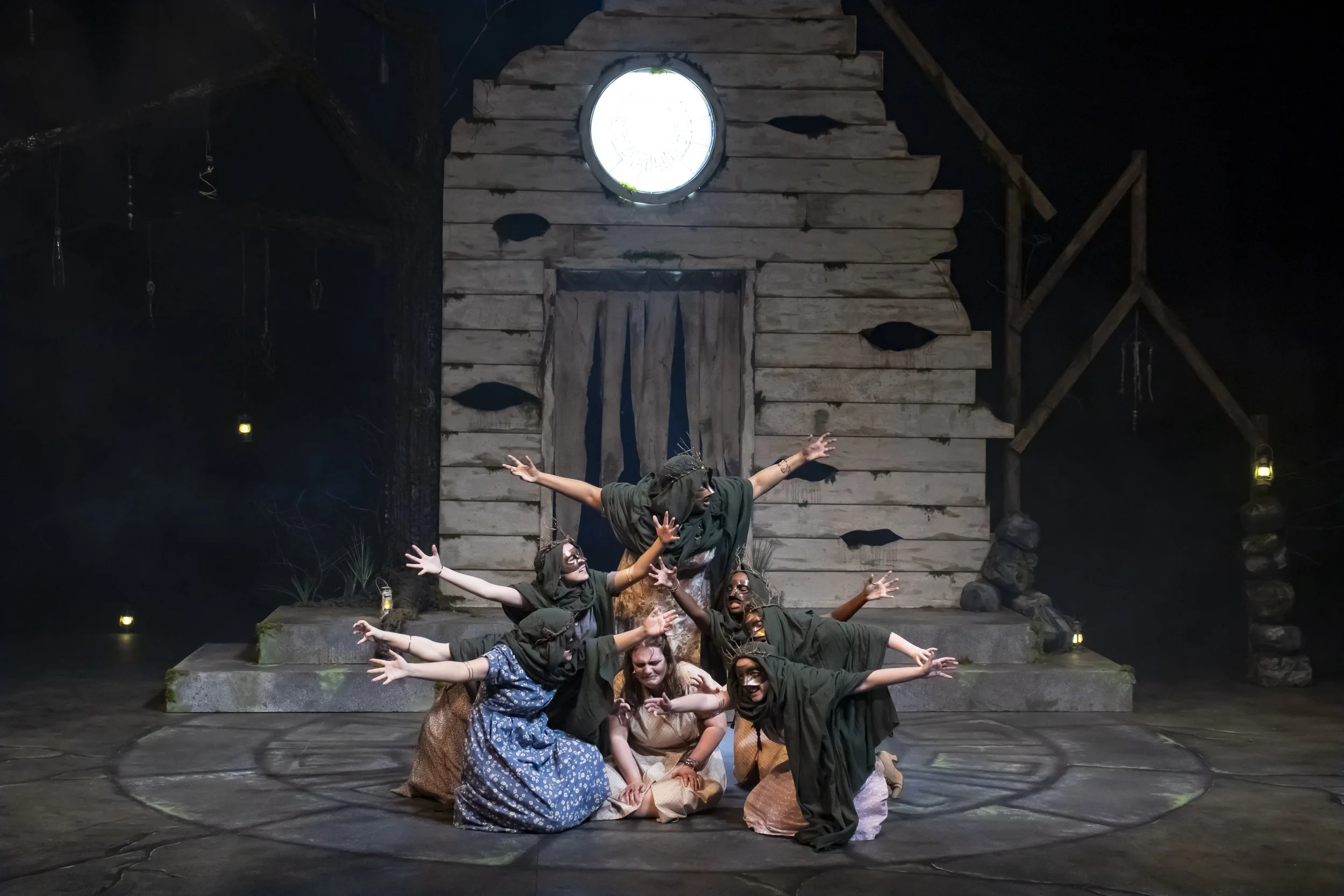
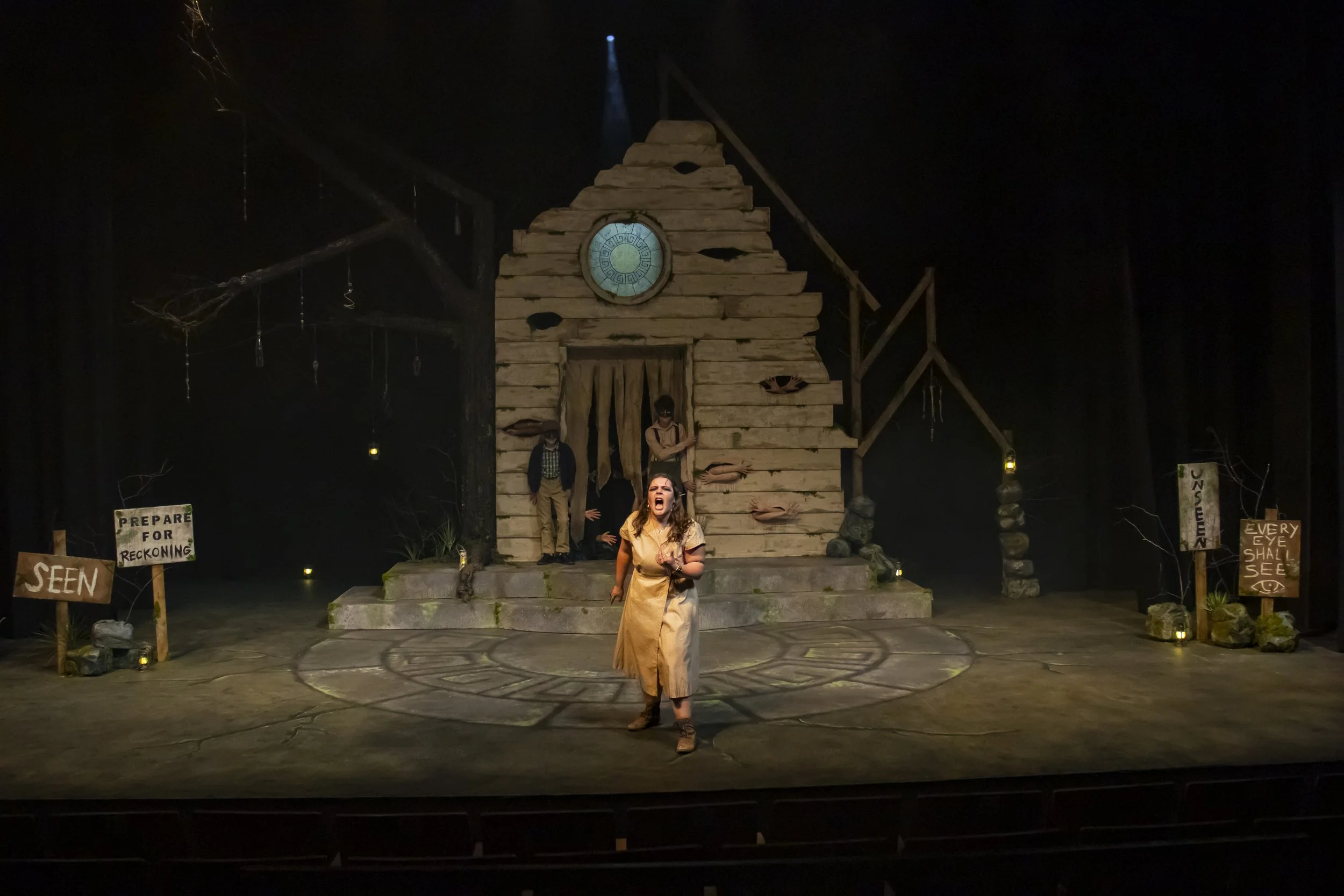
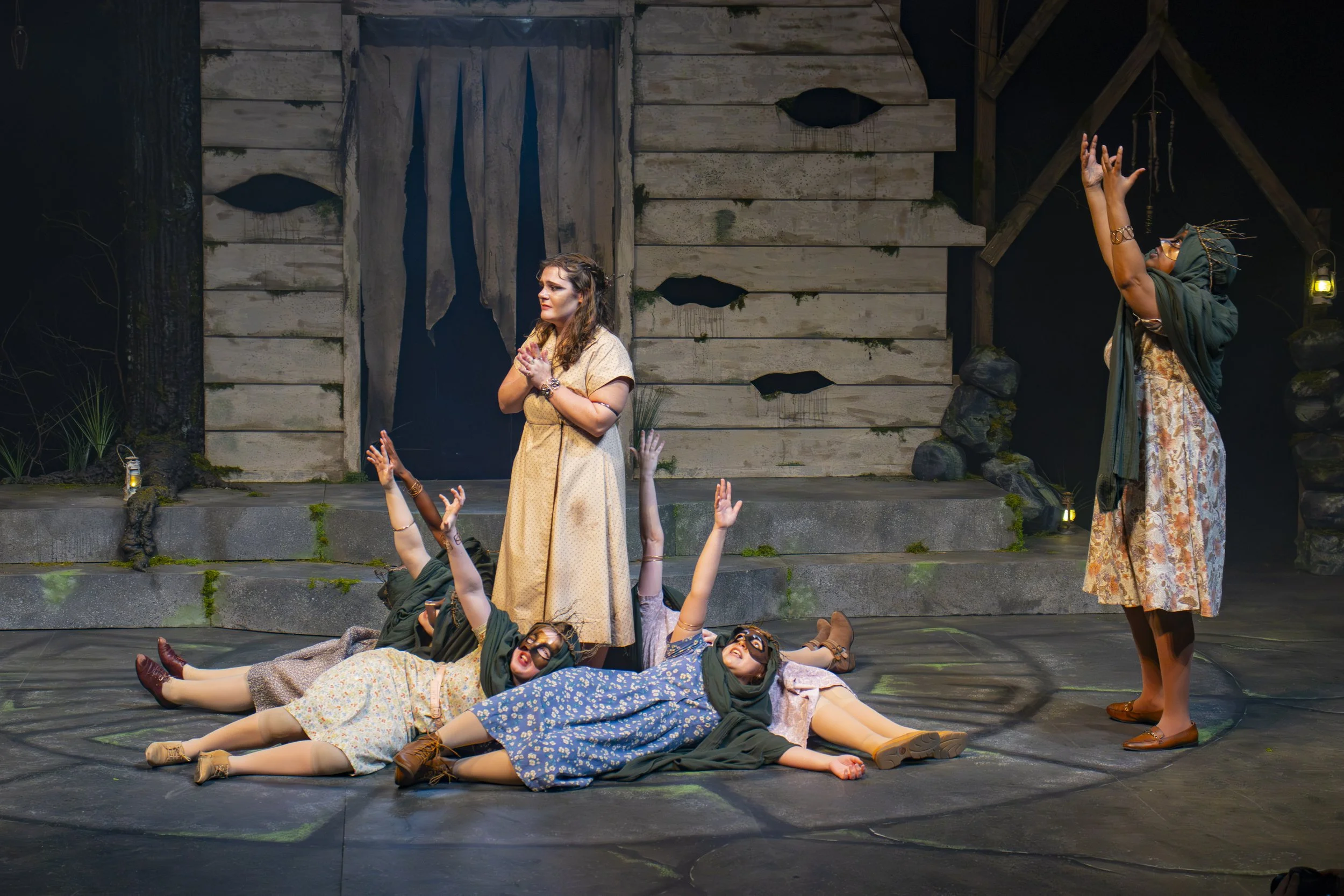
We drew inspiration from ancient Athenian theatrical conventions, incorporating classical elements such as the parodoi (side entrances), the skene (scene building), and a singing/chanting/dancing chorus. We also borrowed inspiration from the instrumentation typical of Greek performance: the double-reed aulos, the lyre, the clacking krotala, frame drums such as the tympana, and even the pastoral syrinx(pan flute). These elements helped us honor the lineage from which this story comes.
But even as I write those words, I can feel myself—and perhaps some of you—being distanced from the story. Originally, I planned to stage this production with full classical fidelity, down to its original Athenian form in 431 BCE. And then, in the middle of all that planning, an Oliver Anthony song—Scornful Woman—came on the radio, and the muses spoke. I’ve learned to listen when the spirit pulls me in a new direction.
I realized that strict adherence to ancient conventions might create too much aesthetic distance: unfamiliar language, unfamiliar mythos, and a setting so far removed from our own that the emotional impact risks slipping away. Accessibility is always my priority. This translation by Diane J. Rayor—built for actors and theatre-makers rather than academics—opened the door. Its clarity and immediacy made space for a different kind of world.
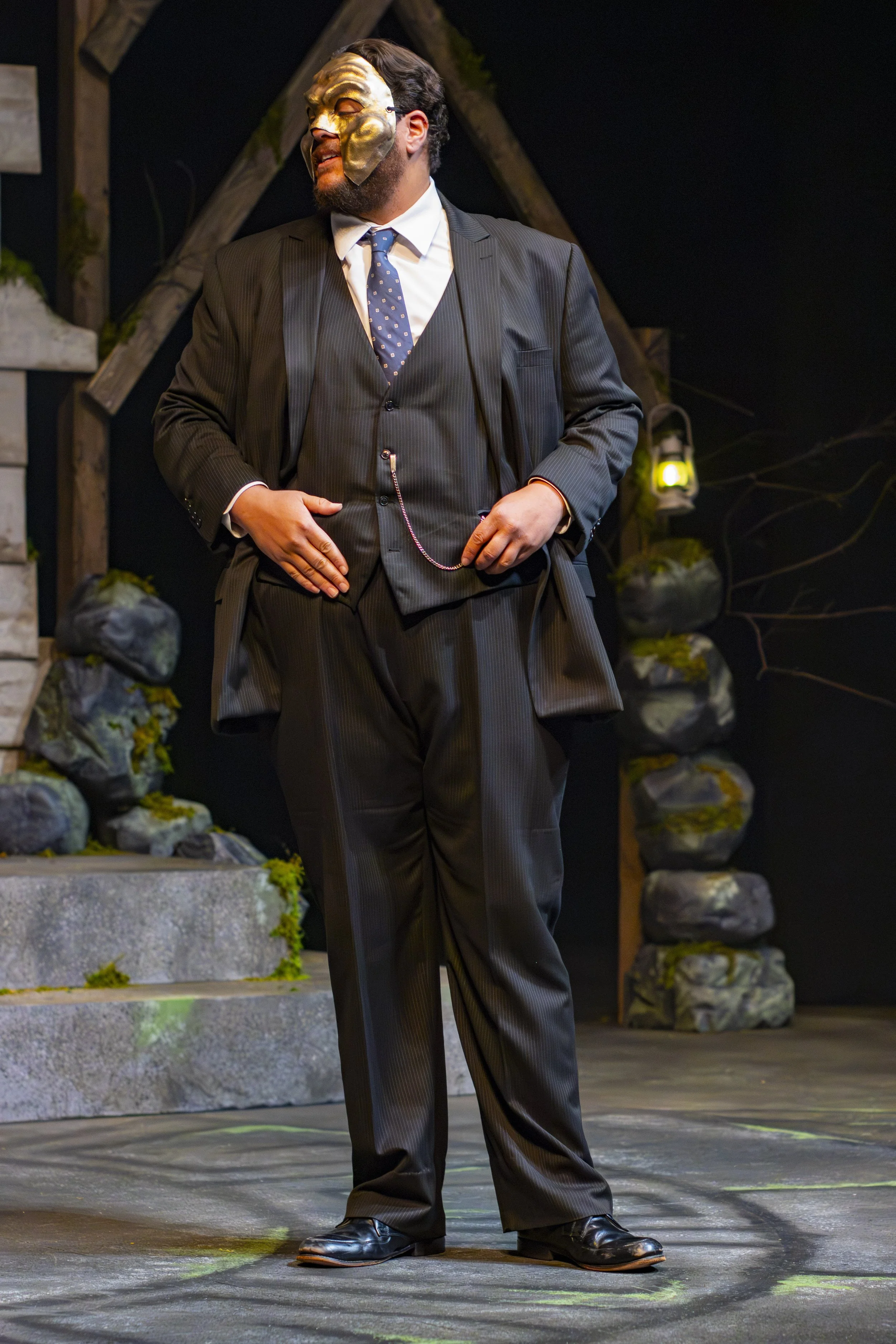
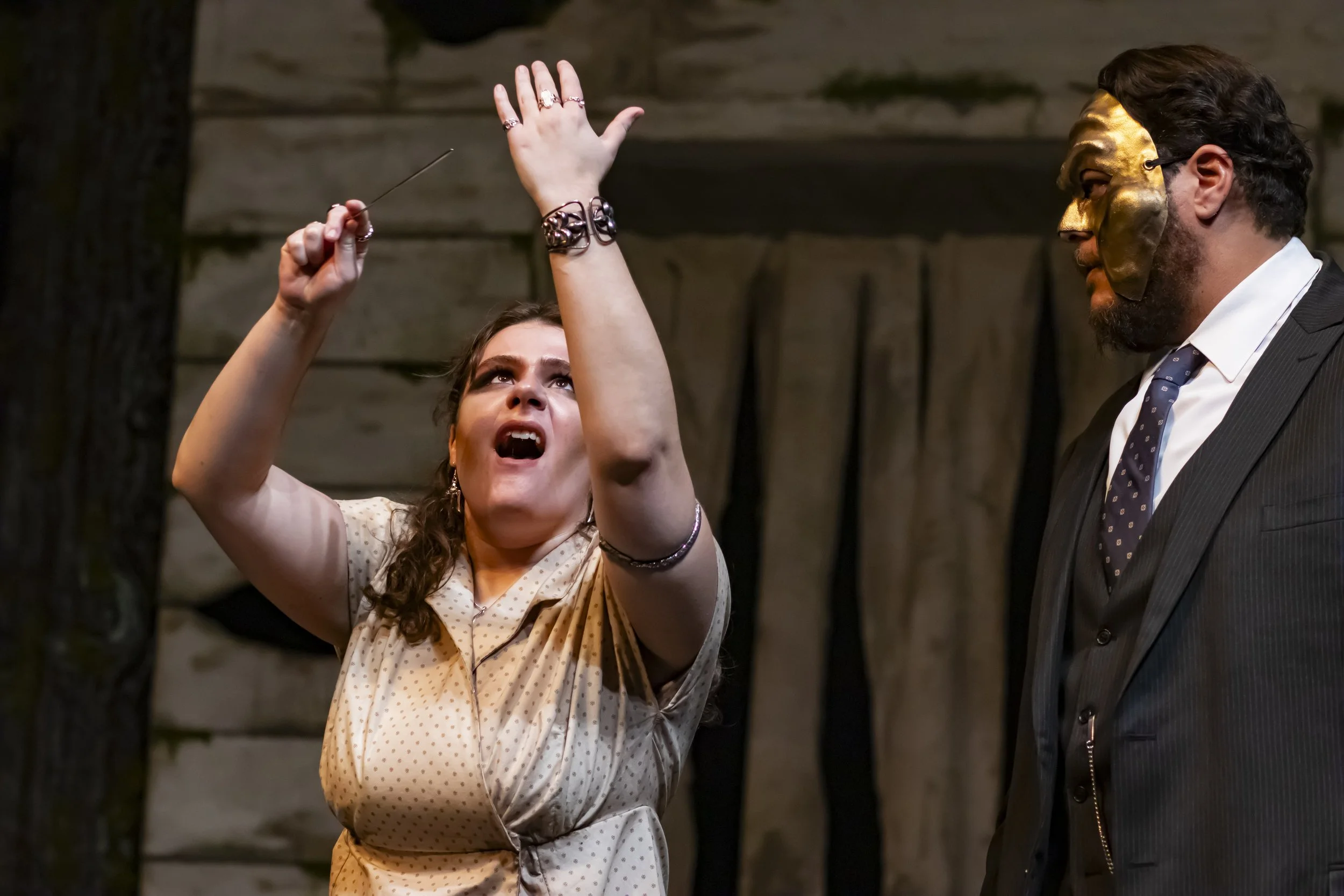
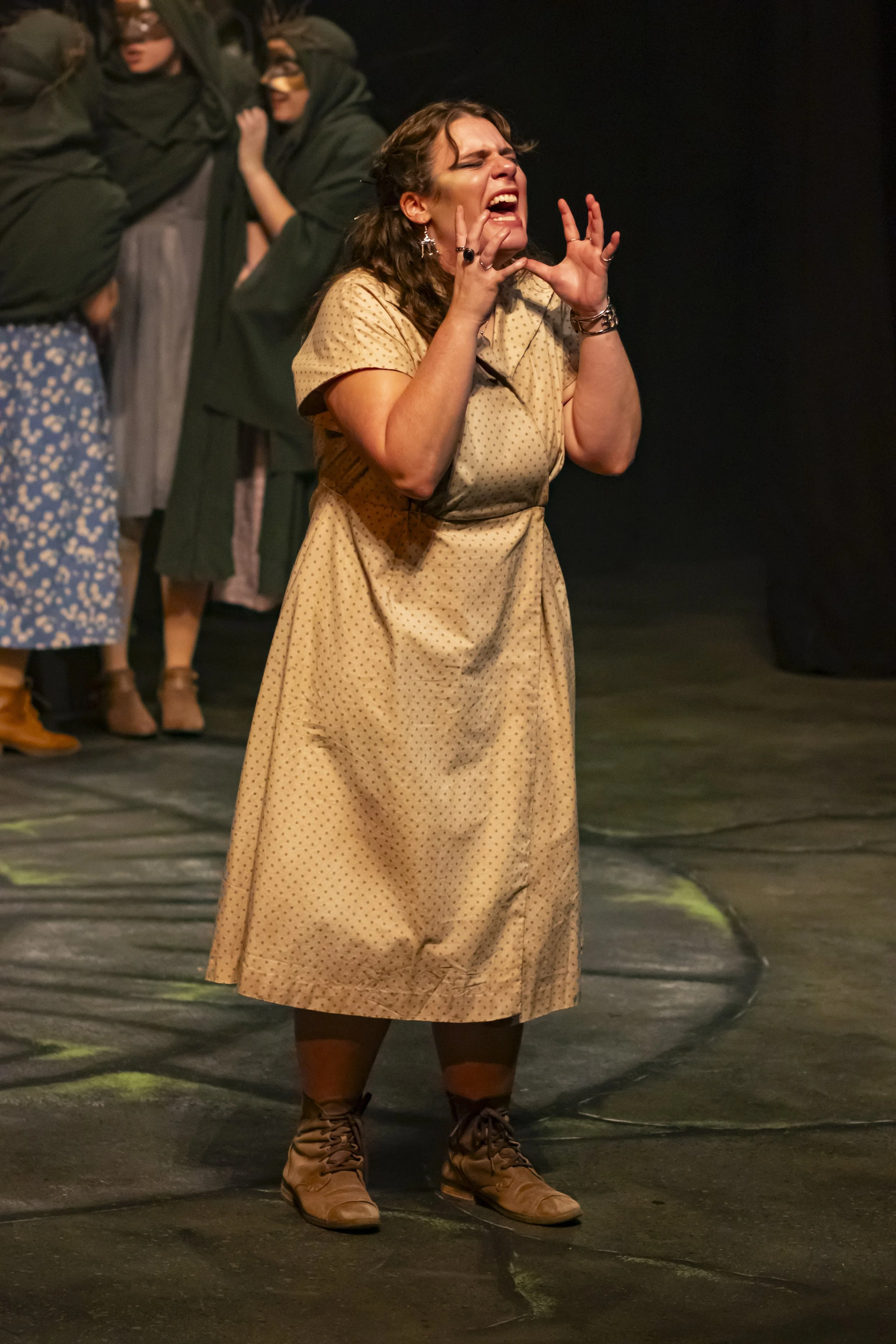
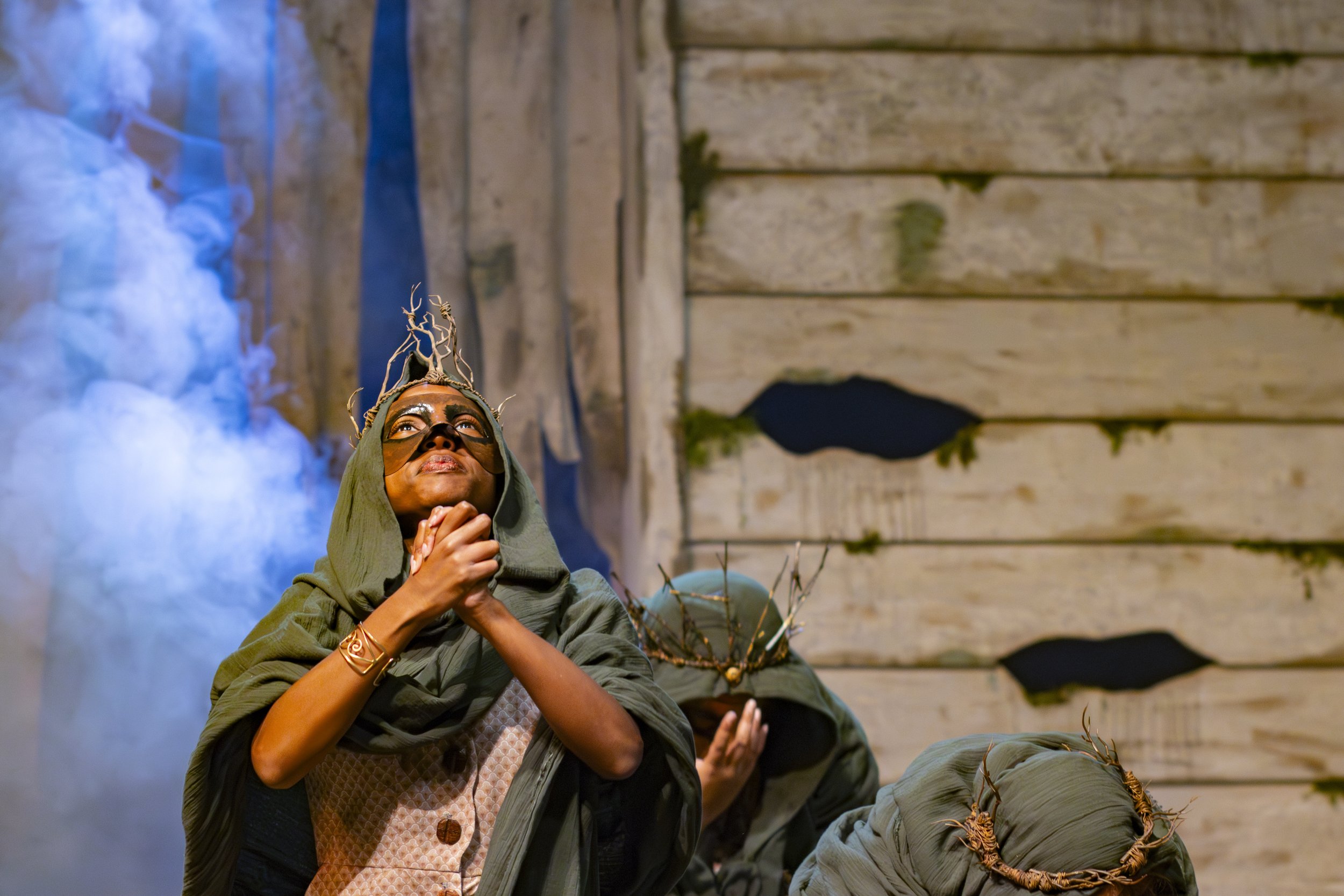
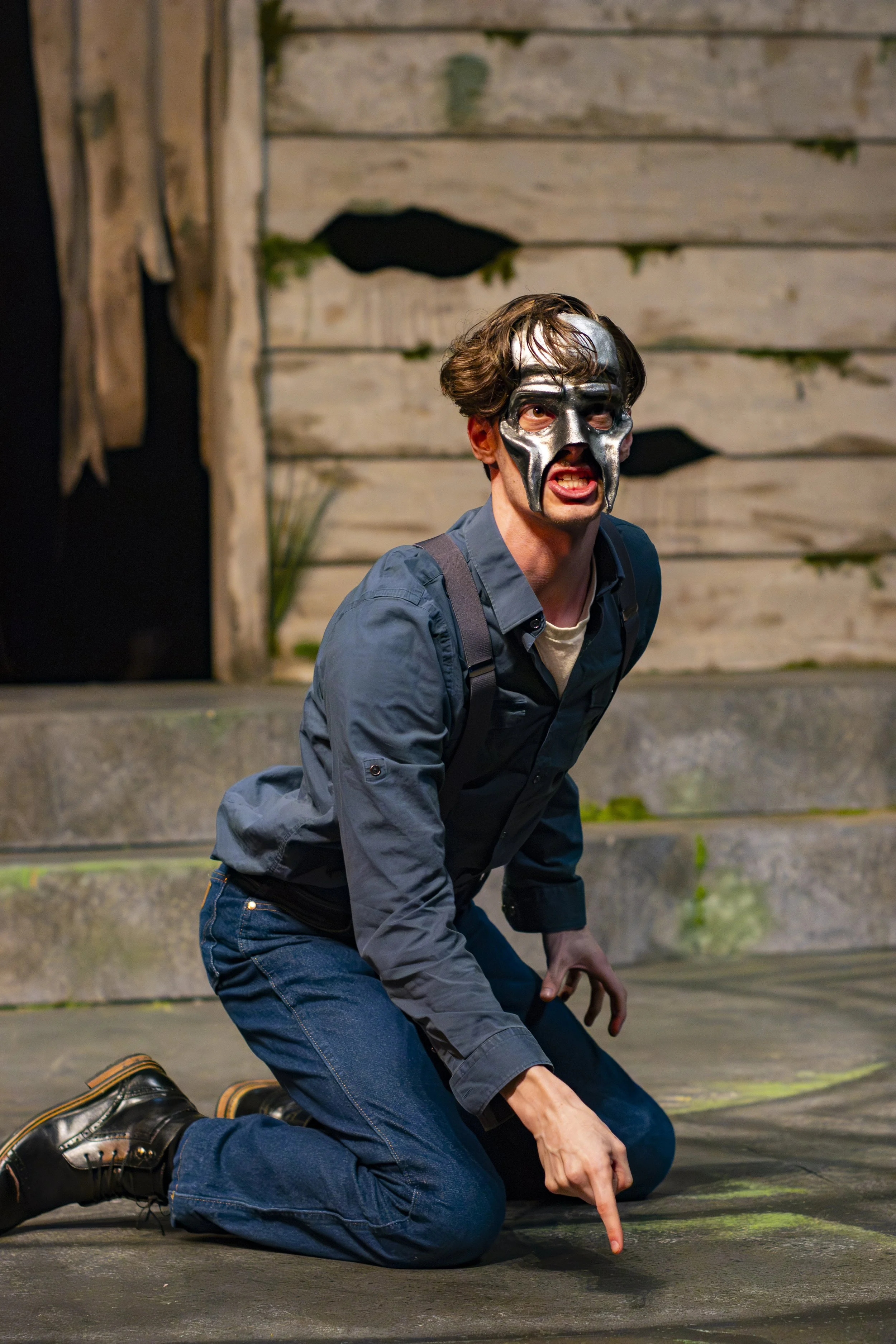
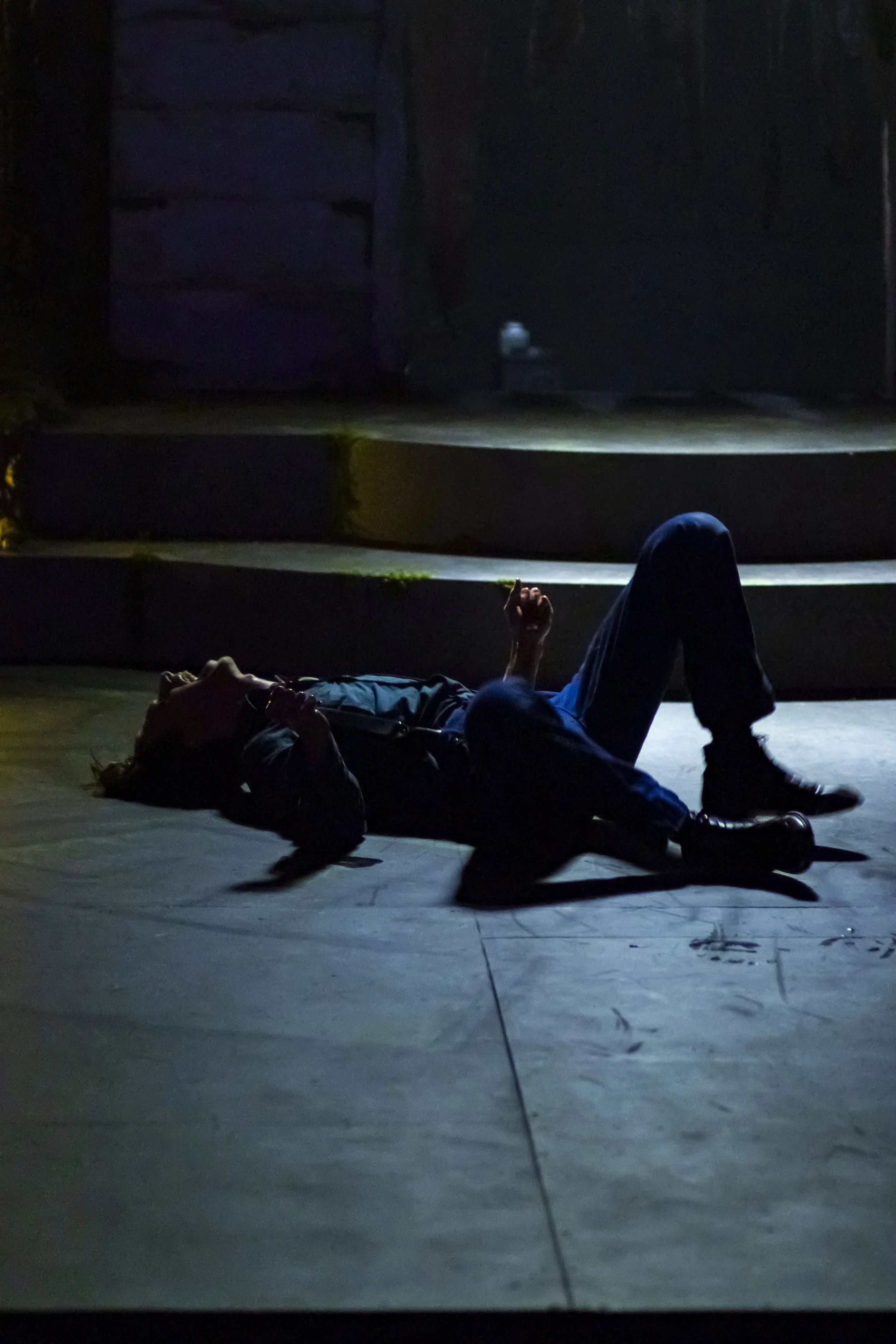
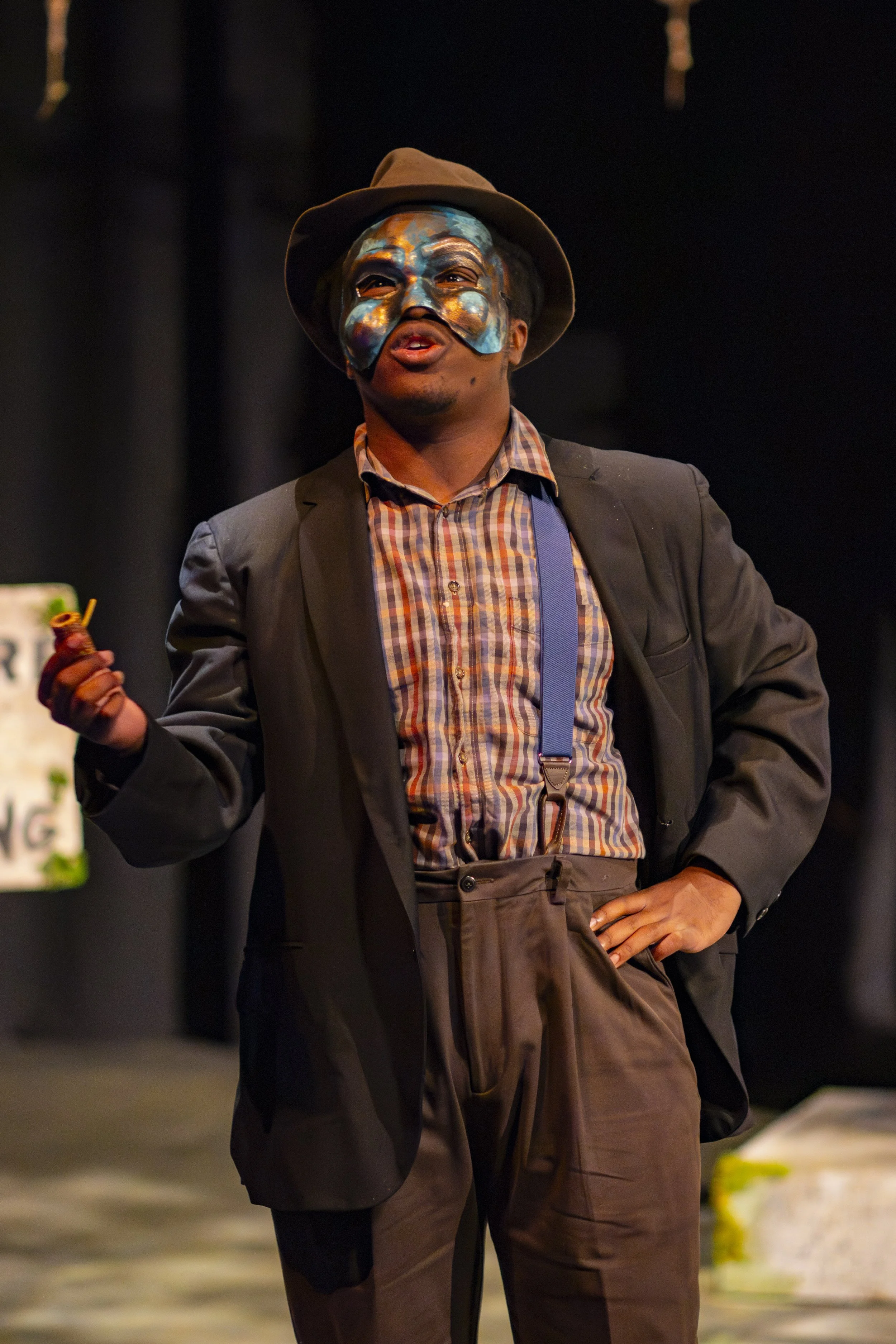
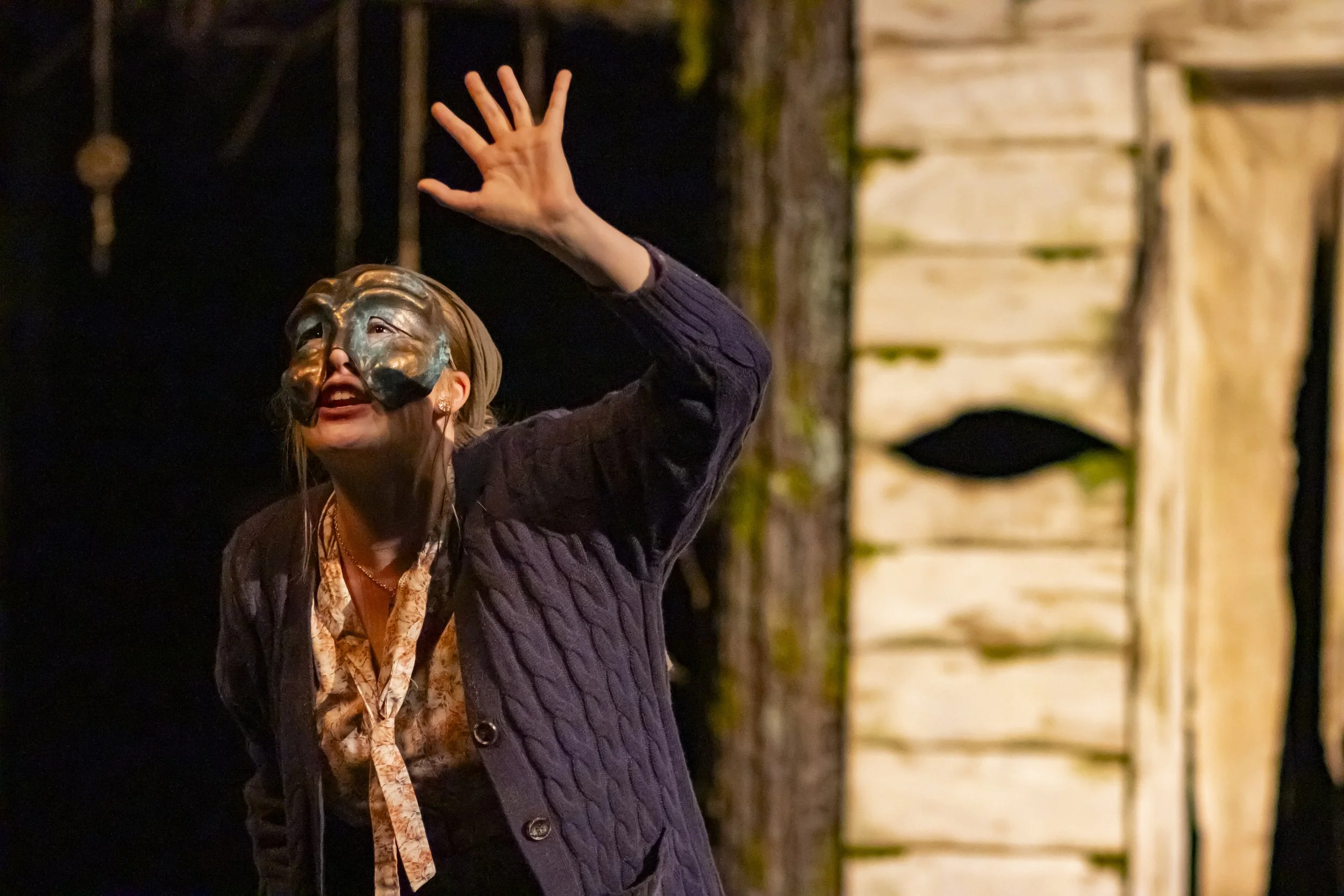
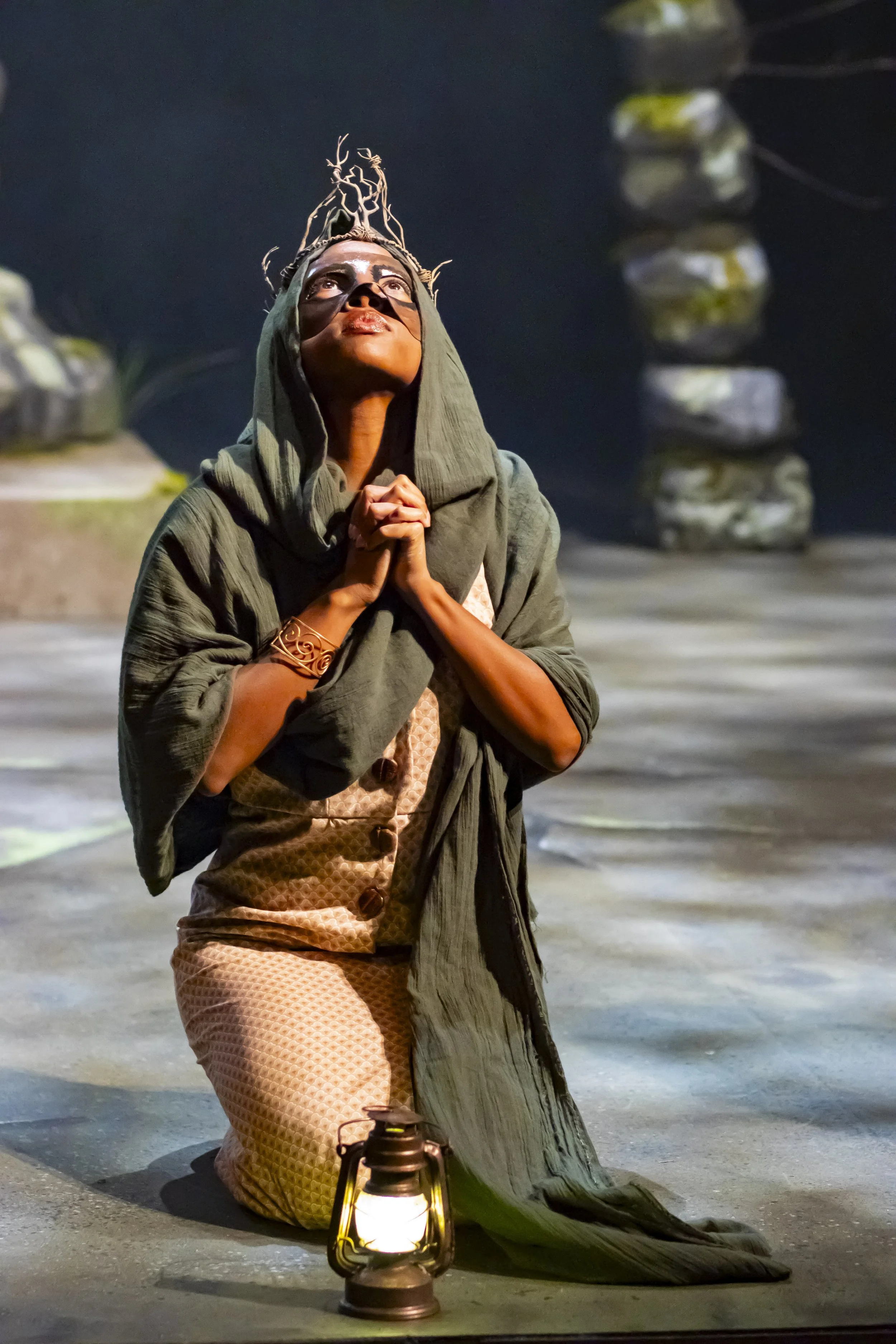
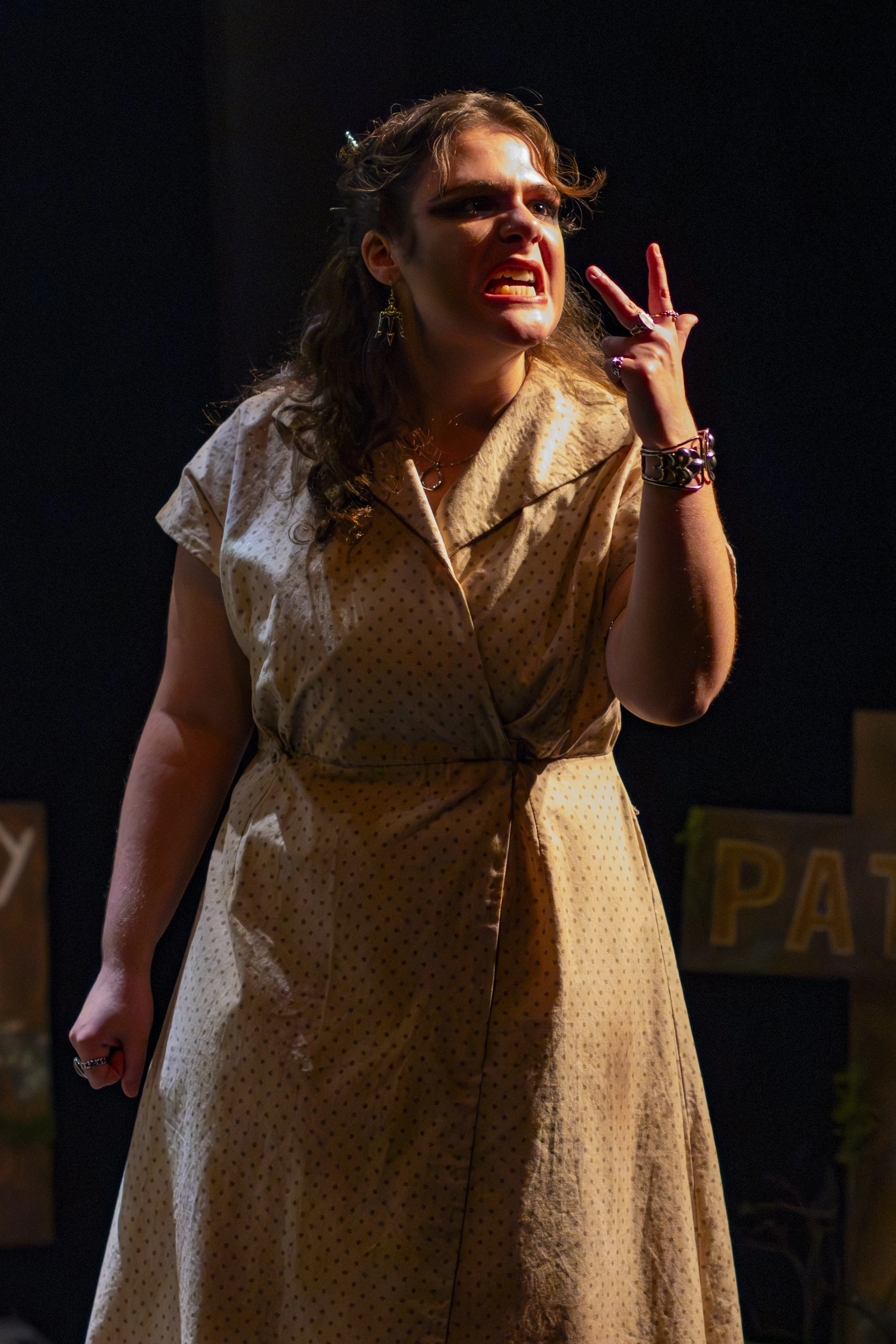
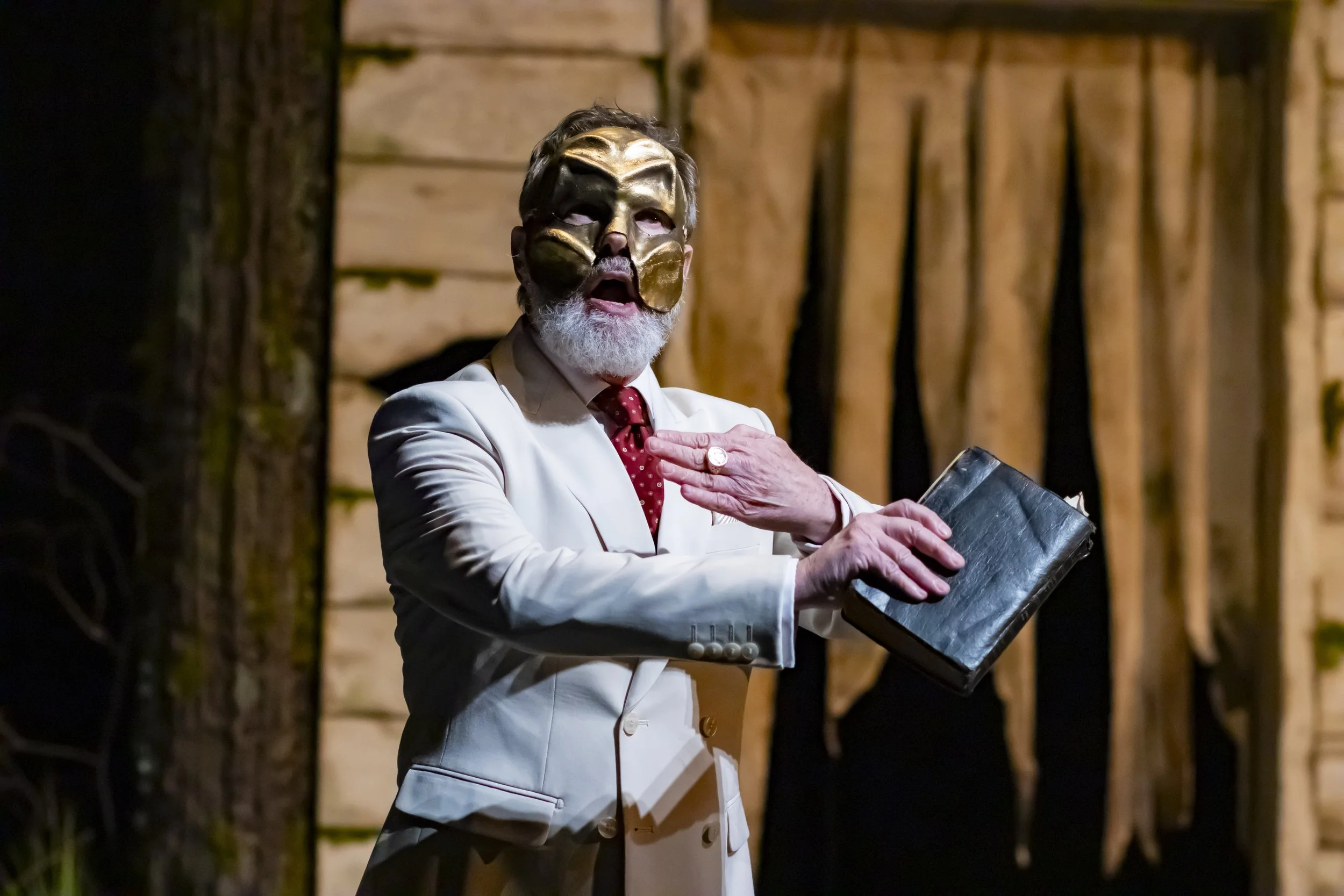
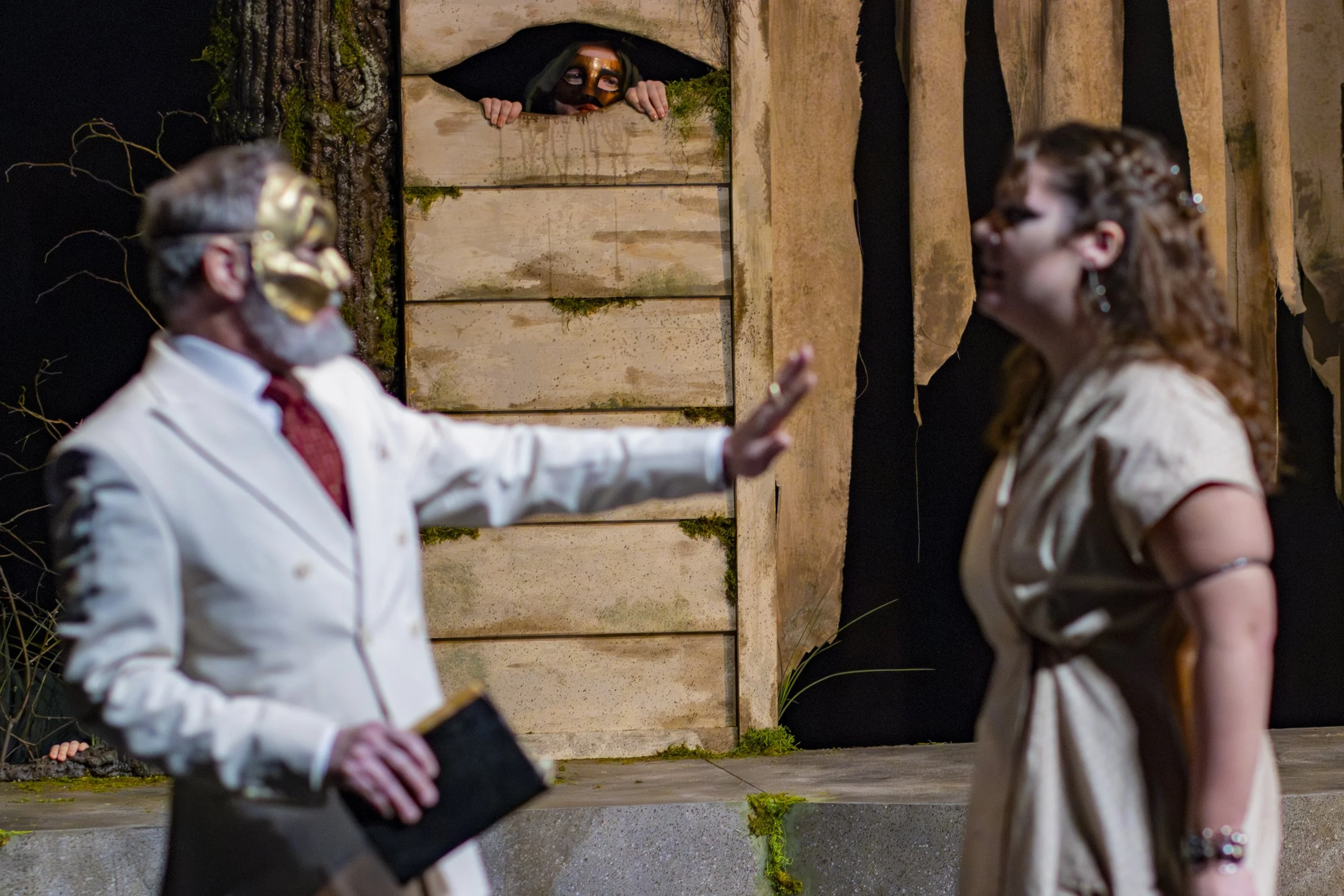
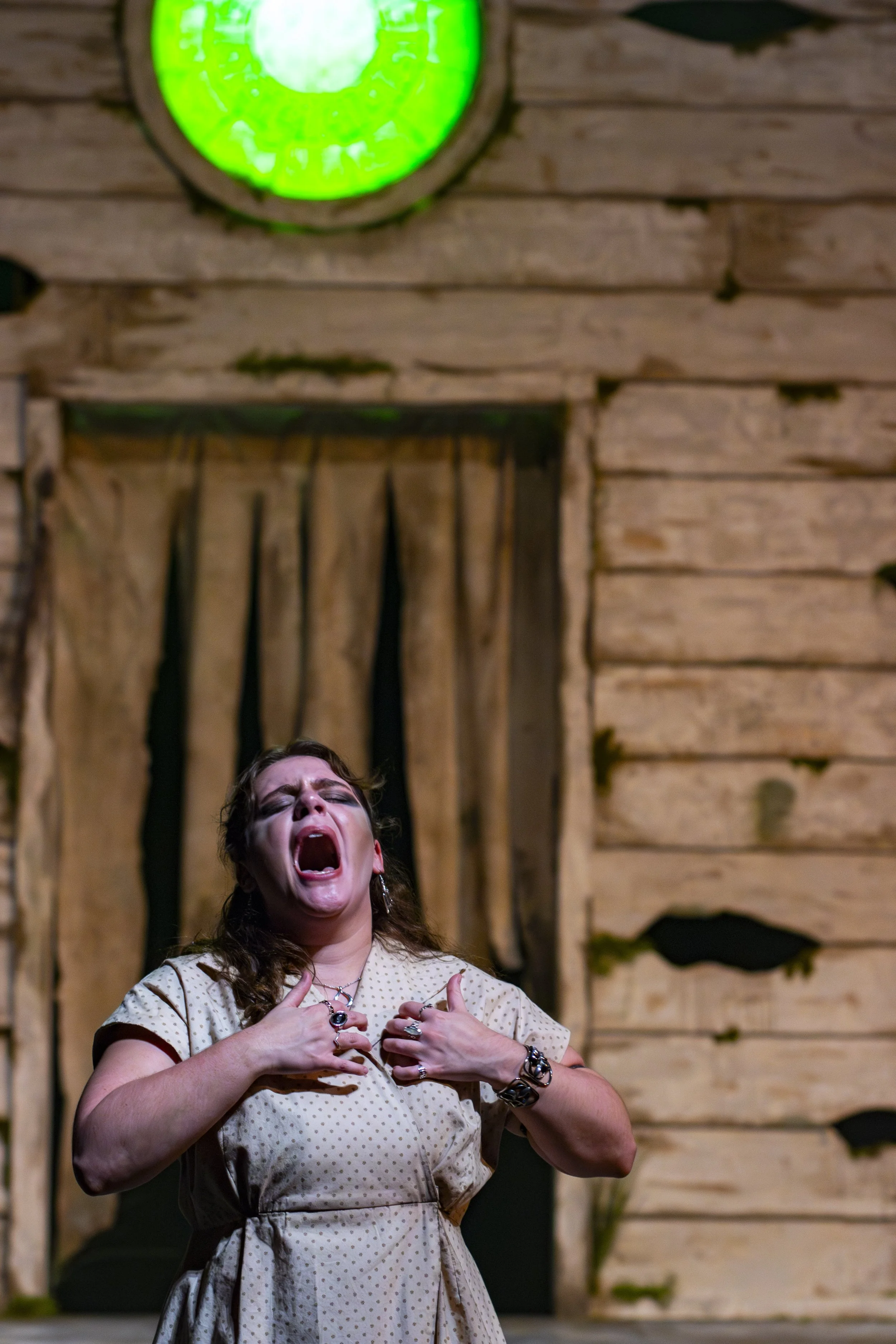
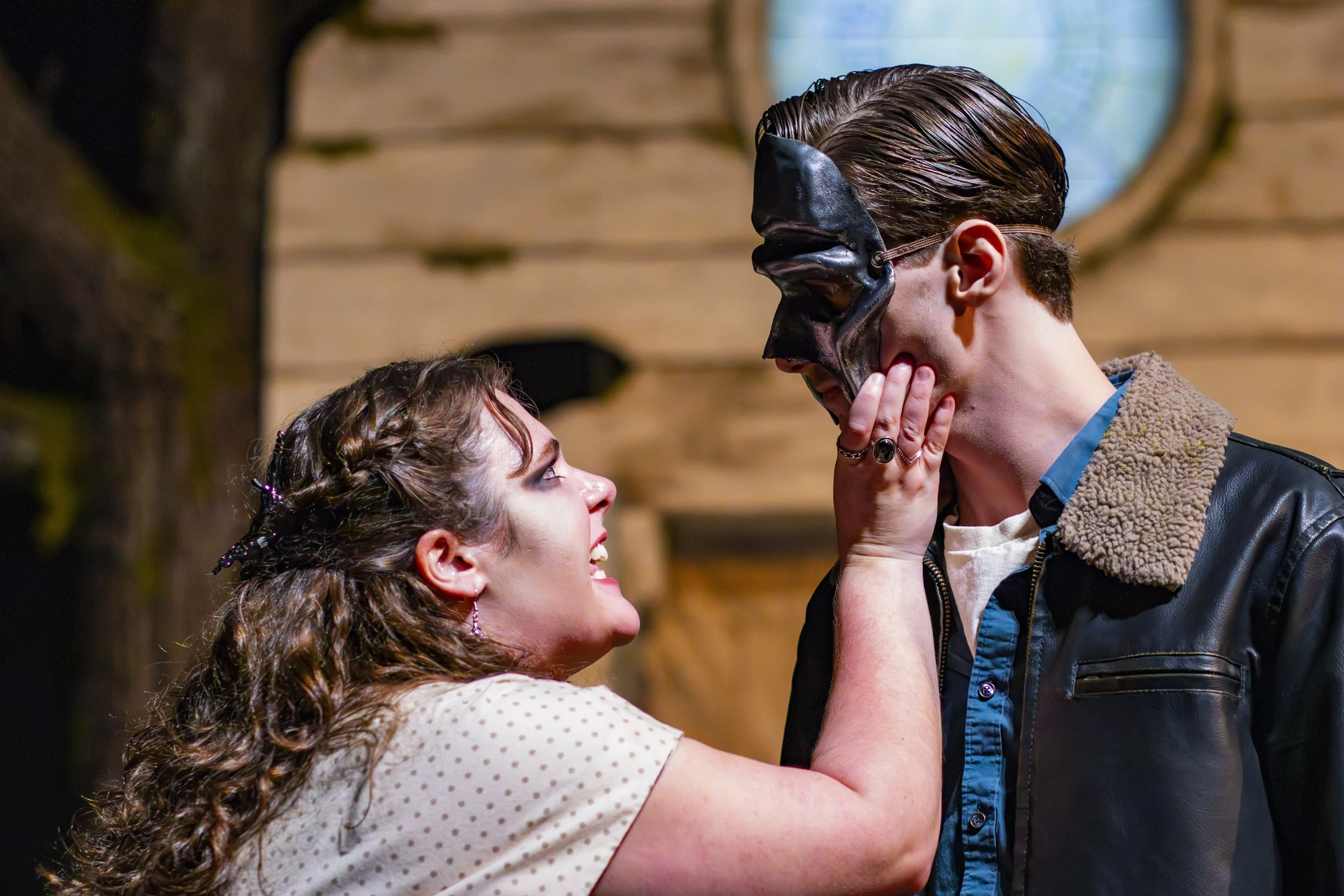
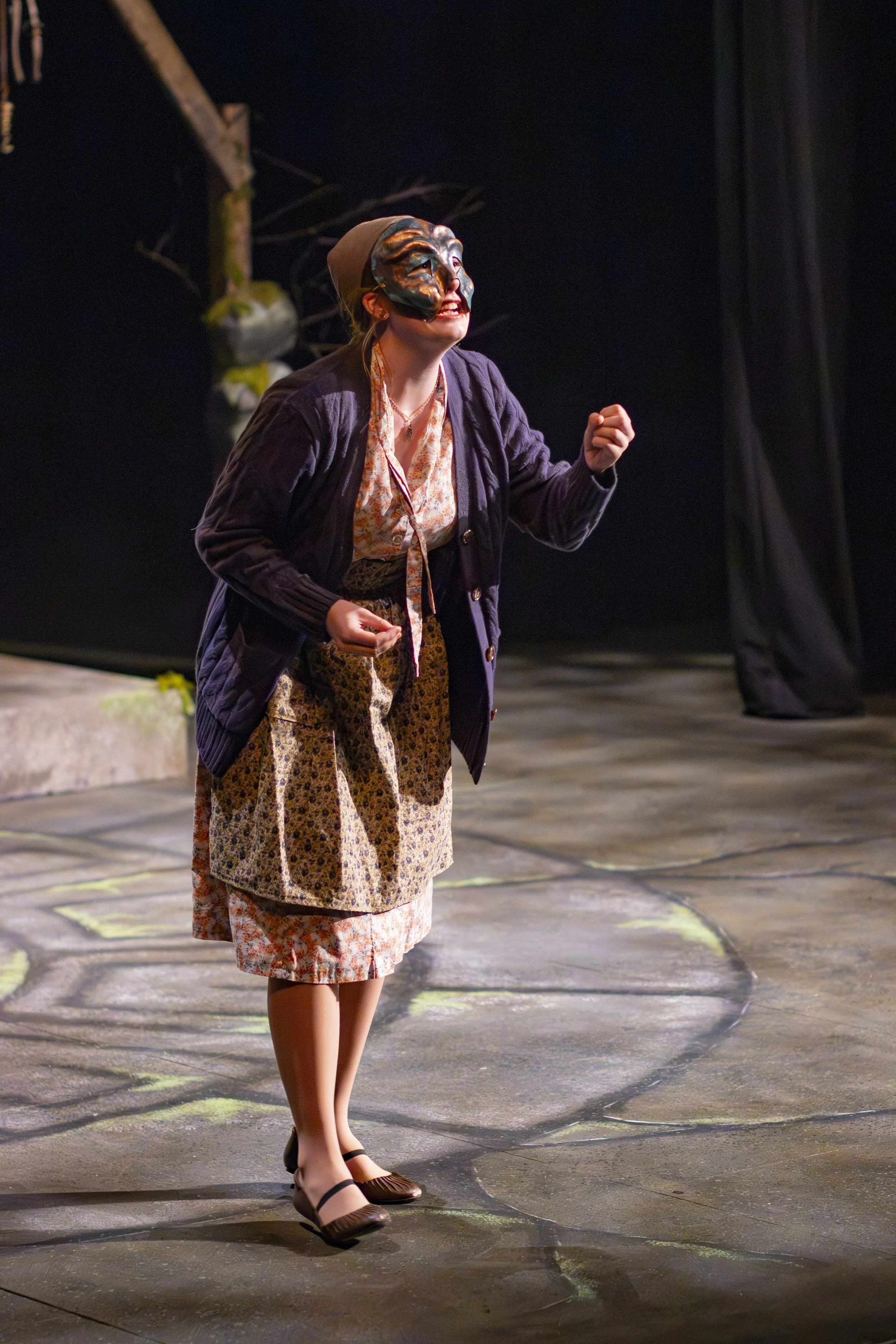
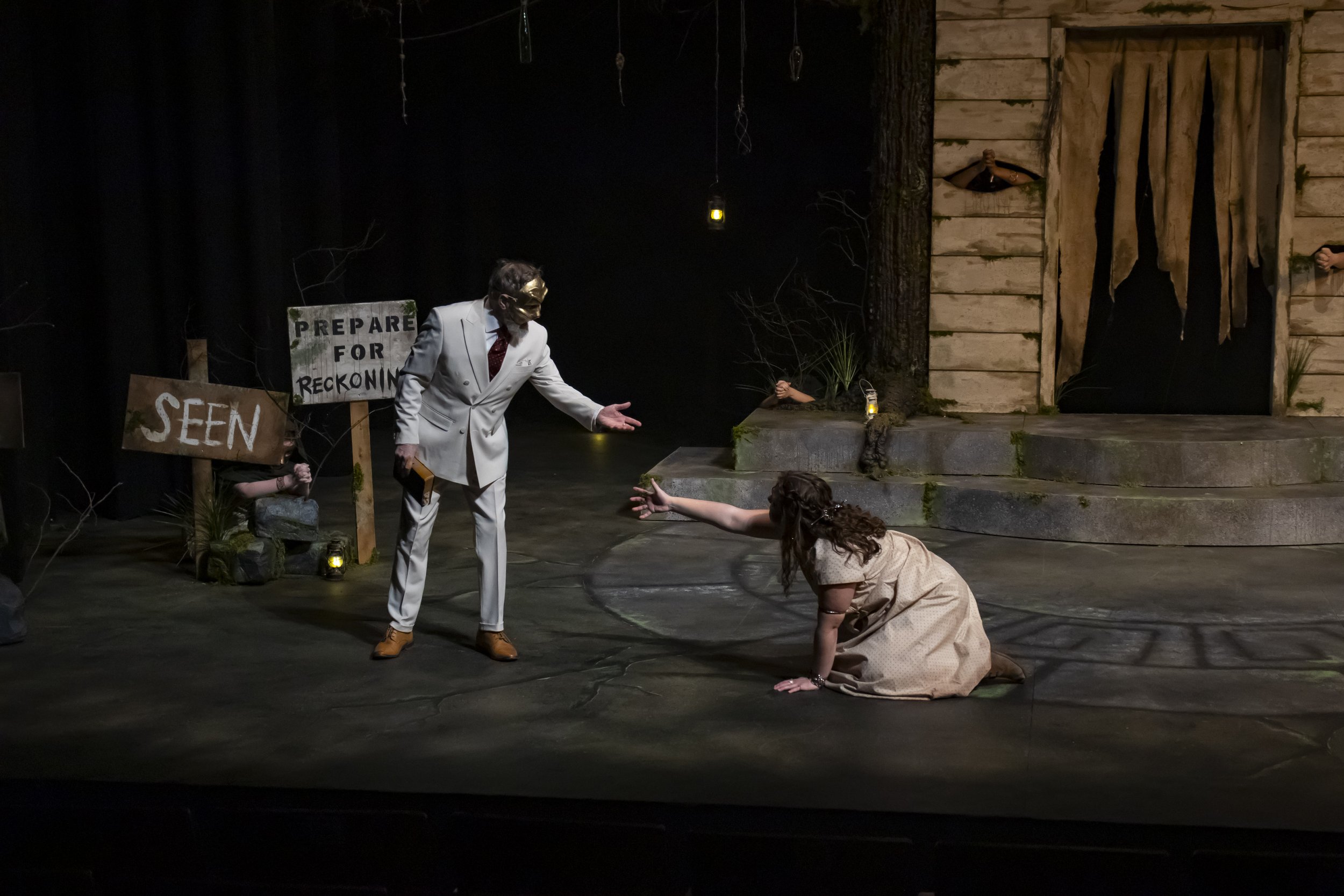
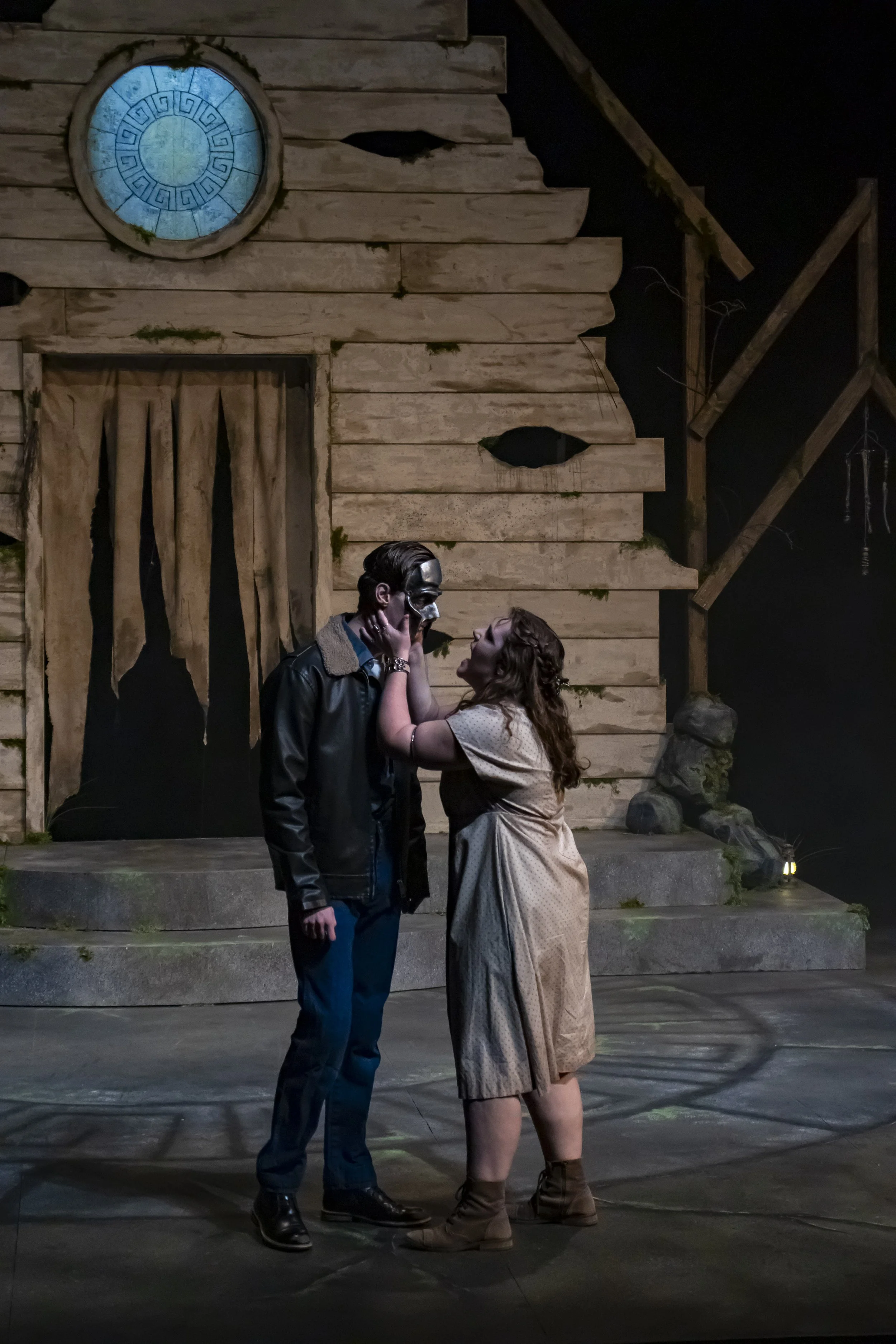
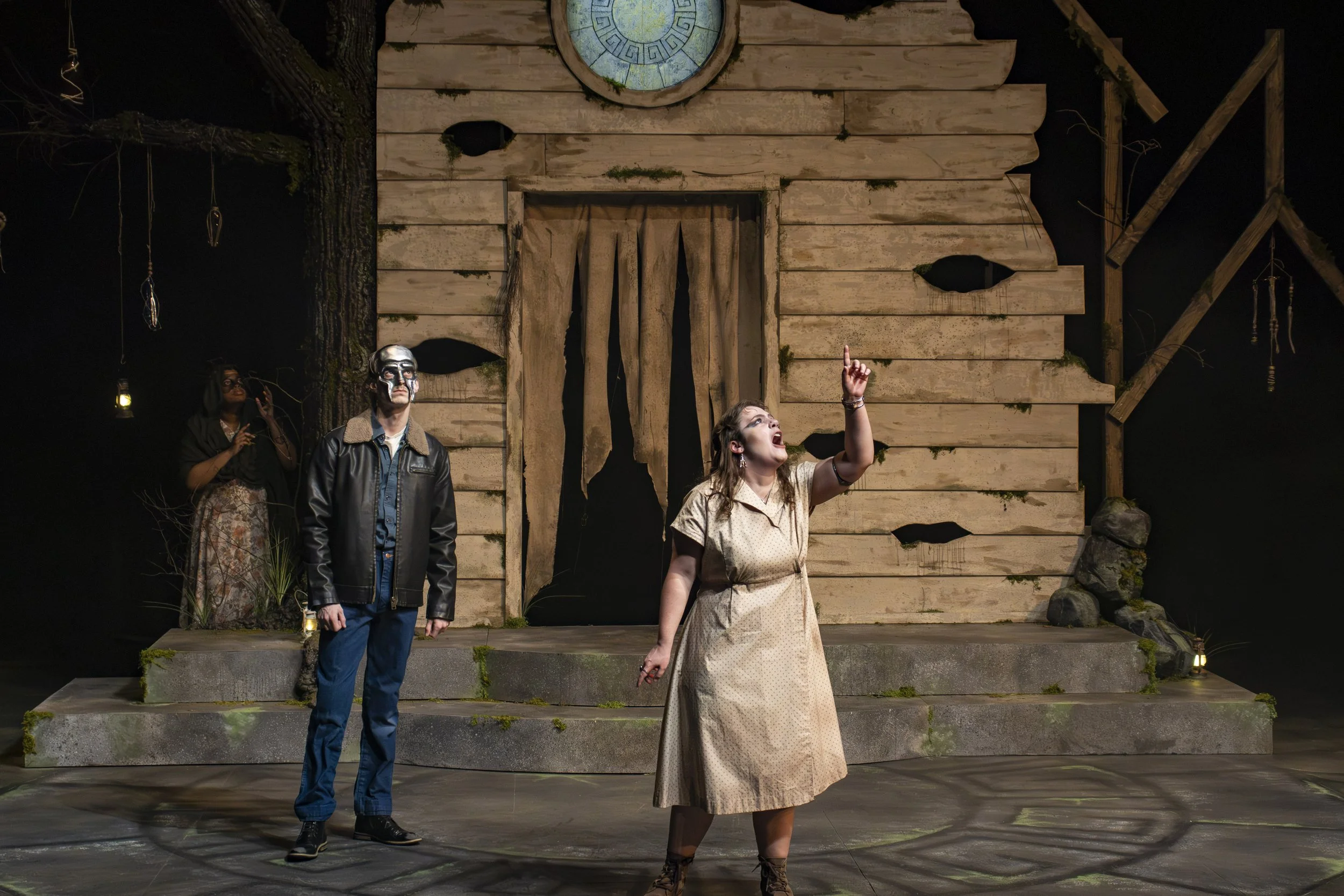
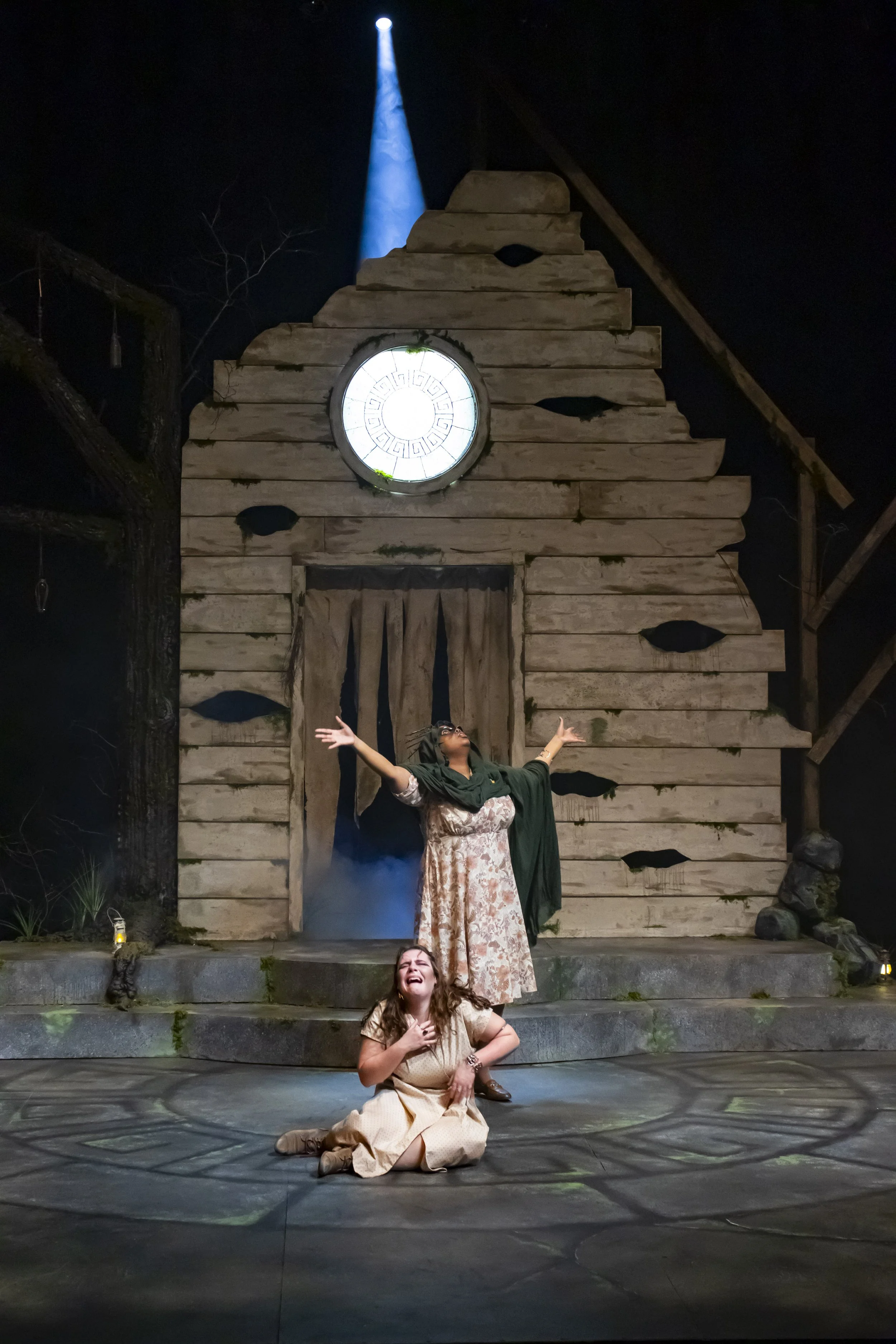
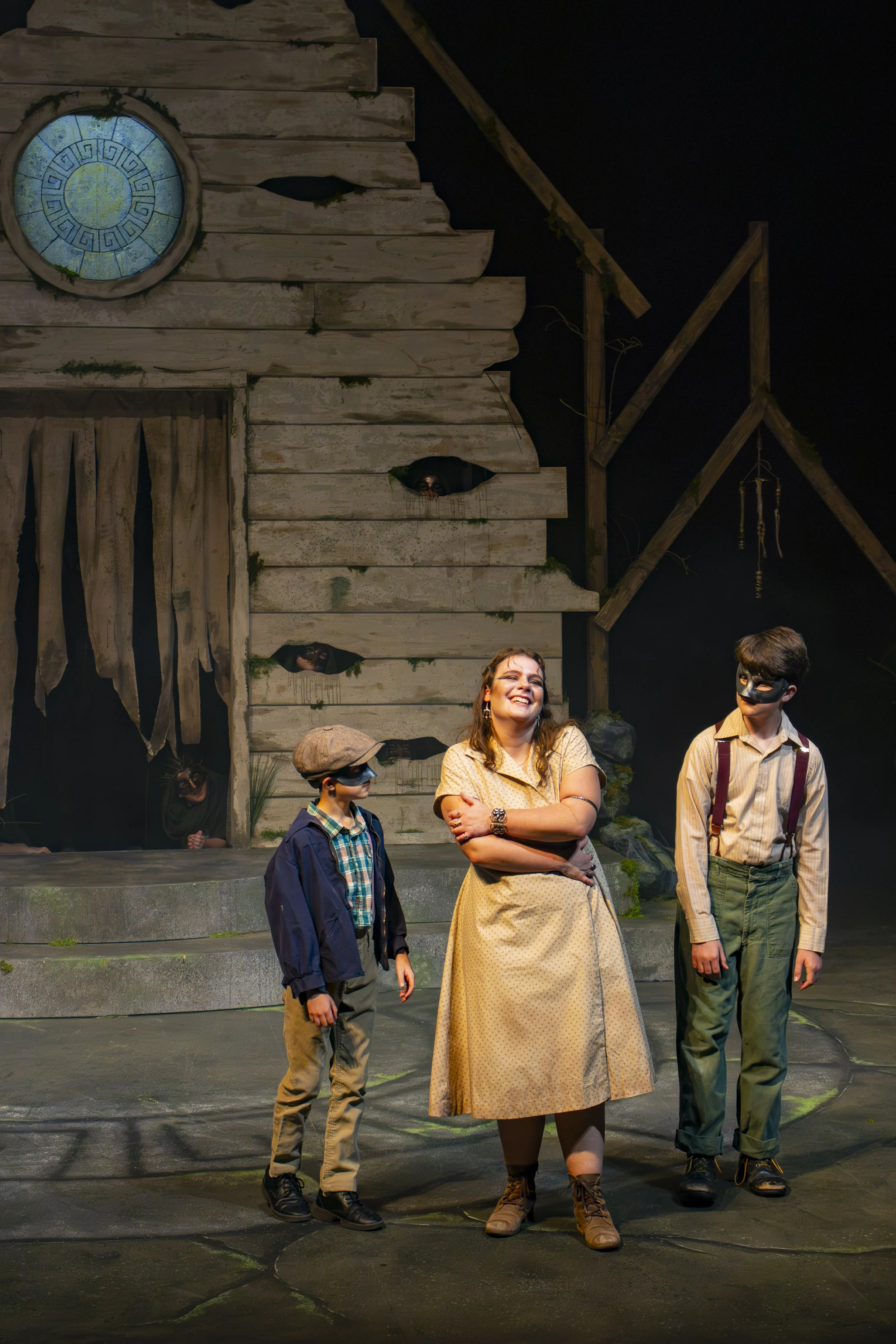
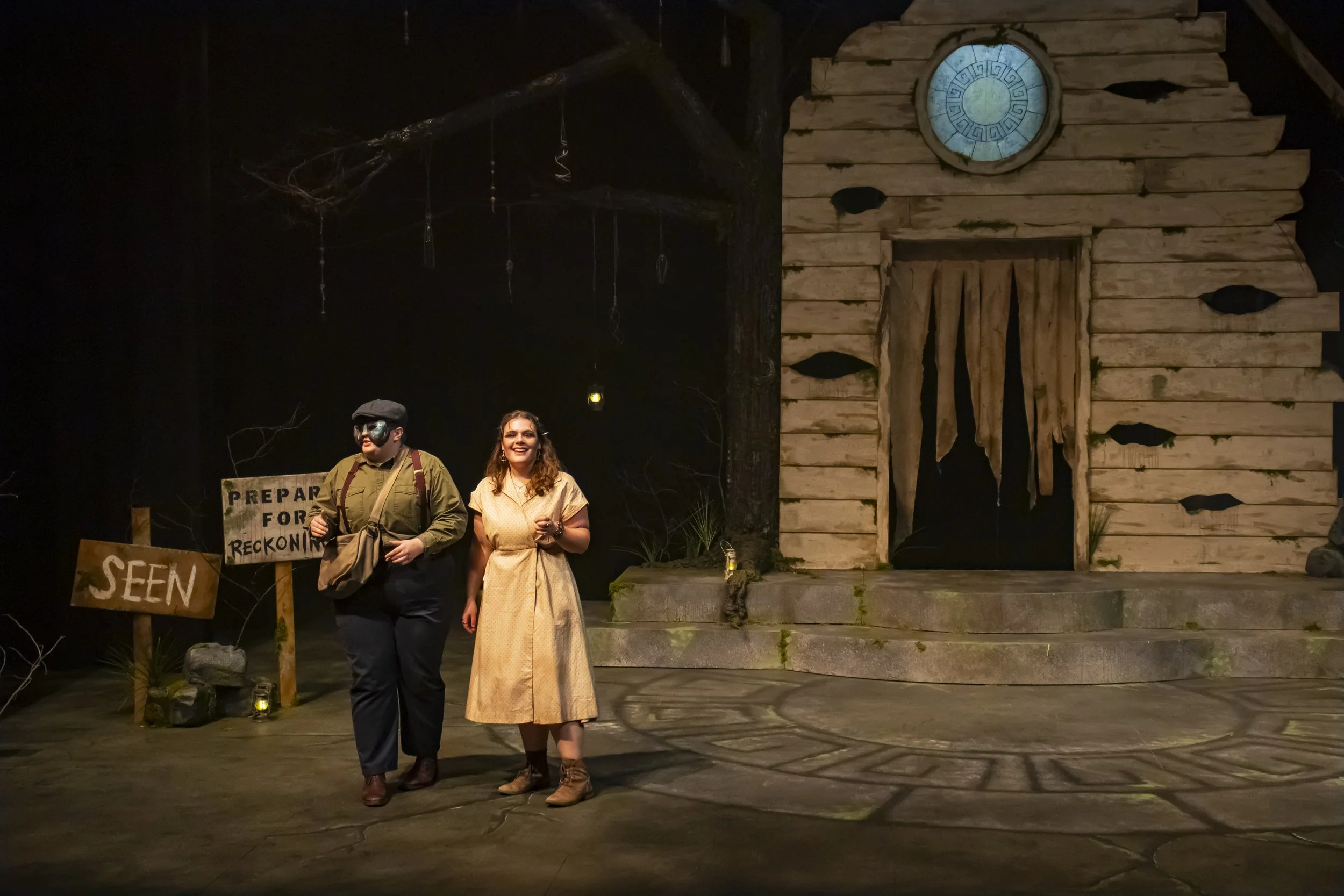
Thus, we shifted toward a High Mythic Appalachian Gothic landscape—a world both familiar and unfamiliar. A world where things are seen and unseen. A world slightly out of time, where the mountains hold secrets and the woods of Appalachia carry their own kind of magic. Not so distant as to feel foreign; yet, not so close that we cannot reflect. In honoring our Appalachian Gothic setting, we translated the greek instruments through a regional lens: a mountain dulcimer takes the place of the lyre, bones stand in for the clappers, drums and found-wood percussion ground the rhythm of the world. This hybrid soundscape lets ancient form and Appalachian spirit breathe the same air.
I hope that, as you sit with this story, something in it speaks to you.
Whether it’s the raw wound of betrayal, the ache of a broken oath, or the unsettling truth that love and destruction often share the same room—may this production give you space to feel, to reflect, and perhaps to recognize familiar shadows in unfamiliar forms.
Thank you for joining us tonight.
May the mountains and the myth guide you somewhere new.
θεᾶσθε τὴν τραγῳδίαν - Behold the tragedy.